What Is a VIN Check? What It Reveals for UK Used Car Buyers
Protect your used car purchase. Learn what is a VIN check, how to uncover hidden finance or theft, and where to find the 17-character code on a UK vehicle.
What Is a VIN Check? What It Reveals for UK Used Car Buyers
Every used car on UK roads carries a 17-character code stamped into its bodywork, and that code can tell you more about a vehicle's past than most sellers ever will. A VIN check uses this unique identifier to pull together a vehicle's full history, from factory specifications to accident records, outstanding finance, and theft markers. It's one of the most reliable ways to verify that what you're being told about a car actually matches the official records.
For UK buyers, knowing what a VIN check covers, and what it doesn't, can be the difference between a solid purchase and an expensive mistake. Whether you're inspecting a car on someone's driveway or browsing listings online, understanding this process gives you a real advantage before you hand over any money.
In this article, we break down exactly how a VIN check works, what specific details it reveals, and how you can use Vehiclepedia's vehicle history check tools to run one yourself using a registration plate or VIN.
Why a VIN check matters in the UK
The UK used car market is large, active, and unfortunately attractive to fraud. Thousands of vehicles change hands privately every week, and not every seller discloses a car's full history. A VIN check gives you direct access to official records rather than relying on what someone tells you face to face. For anyone wondering what is a VIN check and whether it's worth running, the answer is yes, every single time, regardless of how trustworthy a seller appears.
The scale of vehicle fraud in the UK
The problem is bigger than most buyers expect. Tens of thousands of vehicles are sold each year with undisclosed outstanding finance agreements, previous write-offs, or stolen status. Buying a car with outstanding finance means the lender can legally repossess it even after you've paid the seller, leaving you with nothing and no legal recourse. Clocked vehicles, those with deliberately tampered mileage readings, are also widespread, and a VIN check can surface patterns in MOT history that expose exactly these kinds of discrepancies.
If a car has outstanding finance in the UK, the finance company retains legal ownership until the debt is cleared, regardless of who physically holds the vehicle.
How UK databases make a difference
The UK maintains several centralised databases that record key vehicle events, and a VIN check draws directly from these sources. The DVLA holds registration and MOT history, while insurance industry registers record write-off categories and total loss events. Police databases flag stolen vehicles in near real time. When these sources are combined, you get a picture of a car's life that no private seller can replicate or alter. Each record is permanently tied to the VIN, so even if a vehicle has been resprayed, re-registered, or had its plates swapped, the underlying history stays intact and traceable.
What a VIN check can reveal
Understanding what is a VIN check also means knowing what specific information it surfaces. The results go well beyond basic ownership details, covering areas that directly affect both the safety and legal status of the vehicle you're considering.
Vehicle identity and specifications
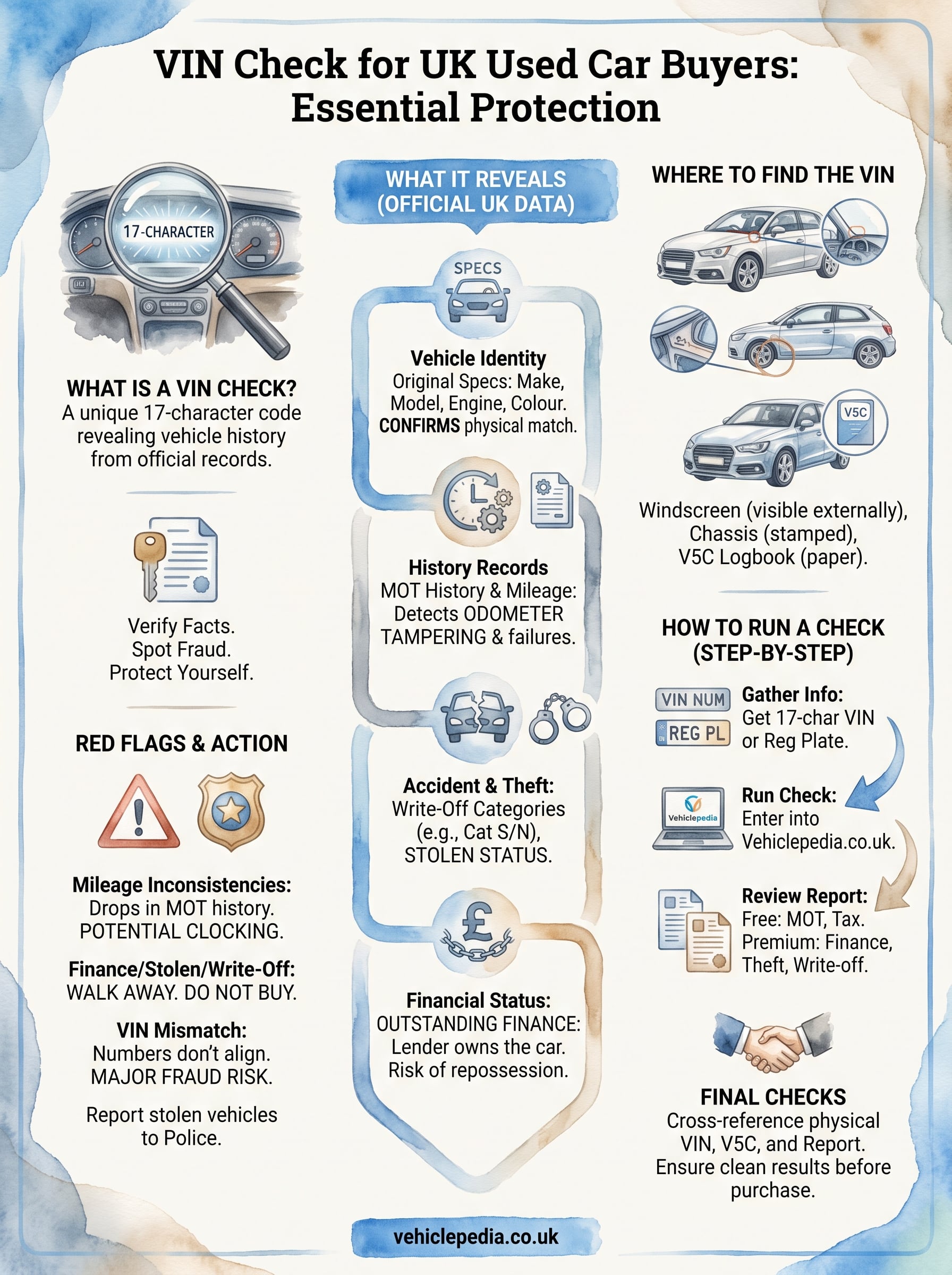
A VIN check confirms the car's original factory specifications, including make, model, engine size, fuel type, and colour at the time of manufacture. This matters because it lets you verify that the physical car in front of you matches what official records say it should look like. Discrepancies here, such as a different colour or engine variant, can indicate plate swapping or more serious fraud.
History records that protect your purchase
Beyond identity, a VIN check pulls in MOT test history, mileage readings at each test, and any recorded failures, which together reveal whether the odometer has been tampered with. It also flags write-off categories, outstanding finance, and stolen vehicle markers sourced from insurance registers and police databases. If a car was written off as a Category S or Category N vehicle, that information stays permanently attached to the VIN.
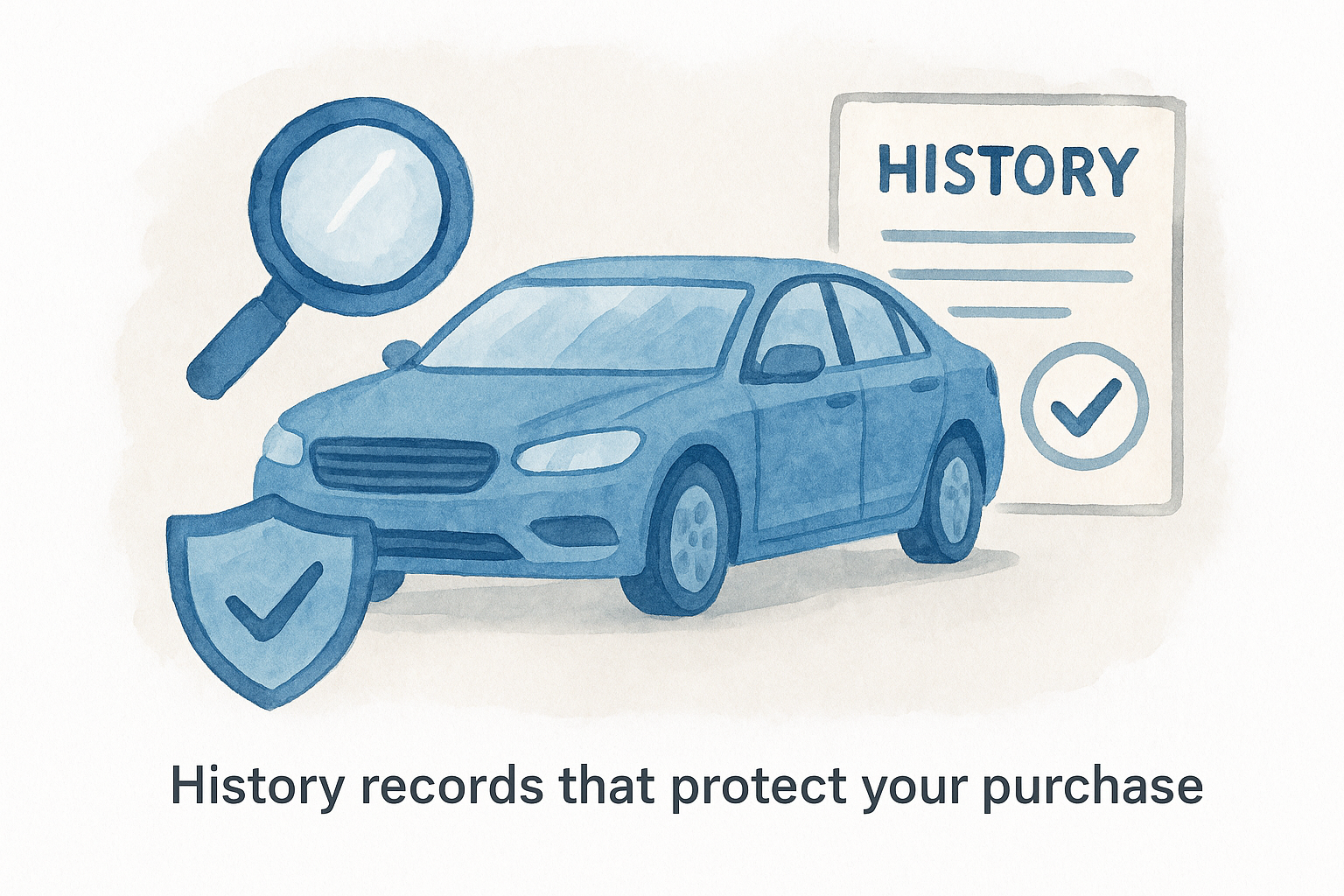
A Category S write-off means the vehicle suffered structural damage, which can affect long-term safety even after repairs are completed.
These records give you verified facts rather than a seller's word, which is exactly what protects you from costly surprises after you've already signed over your money.
Where to find a VIN on a UK vehicle
Before you run a check, you need the VIN itself. On UK vehicles, the number appears in several standard locations, and checking more than one helps confirm the figures match. If the numbers don't align across locations, that's an immediate warning sign worth investigating before you go any further.
Common VIN locations to check
The most reliable place to start is the windscreen base on the driver's side, where the VIN is usually visible as a small plate etched into the glass or mounted on the dashboard. You can read it from outside the car without opening any doors. A second copy is typically stamped directly into the chassis, often on the inner wing, door sill, or within the engine bay, depending on the manufacturer.
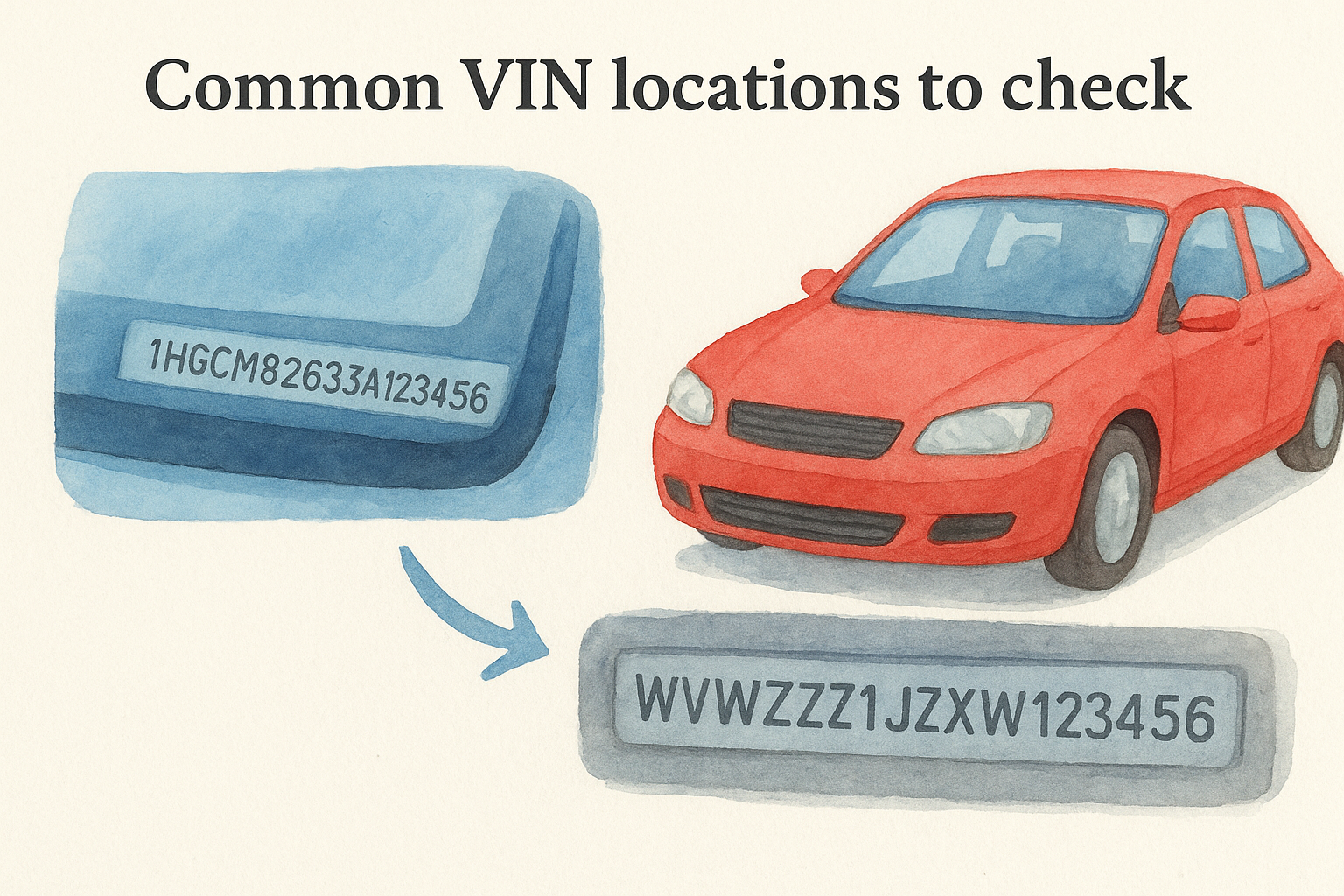
If the VIN plate looks like it has been removed, re-stuck, or scratched over, walk away from that vehicle immediately.
You'll also find the VIN printed on the V5C logbook (registration certificate), and it should match the number stamped physically on the car. UK vehicles manufactured after 1981 carry the full 17-character format, so older cars may show a shorter code. Once you have the number confirmed, running a VIN check through Vehiclepedia takes only a few seconds and gives you instant access to the official records tied to that specific vehicle.
How to run a VIN check step by step
Running a VIN check is straightforward once you have the number confirmed from the physical locations covered earlier. The whole process takes under a minute and gives you verified data pulled directly from official UK databases, including DVLA records and insurance registers. If you're still unclear on what is a VIN check or what it produces, the results page makes it immediately obvious.
What you need before you start
Before you search, gather the 17-character VIN or the vehicle's registration plate. In the UK, a registration plate lookup works as a direct alternative because Vehiclepedia links the plate to the underlying VIN automatically. Having the V5C logbook nearby lets you cross-reference what the report returns against the paper record, which is useful for spotting discrepancies before you commit to anything.
Always run the check before you view the car in person, so you arrive knowing exactly what the official records say.
Running the check
Enter the VIN or registration plate into Vehiclepedia's search field and select the report type that matches your needs. The free check returns MOT history, road tax status, and basic vehicle details instantly. Upgrading to a premium report adds stolen vehicle status, outstanding finance, and write-off category data, giving you the complete picture. Review each section carefully and note anything that conflicts with what the seller has told you before you make any decisions.
Common red flags and what to do
Once you understand what is a VIN check and what it returns, the next step is knowing how to read the results critically. Some warning signs are obvious, while others require you to compare multiple data points before the picture becomes clear. Either way, spotting these issues early saves you from serious financial and legal consequences.
Warning signs in the report results
Mileage inconsistencies across MOT records are one of the clearest indicators of odometer tampering. If the recorded mileage drops between test dates, someone has deliberately wound the reading back. Outstanding finance, write-off markers, or stolen flags are equally serious and require immediate action before you consider any purchase.
If the report shows a write-off category or stolen marker, do not hand over any money regardless of what the seller tells you.
What to do if something doesn't add up
Walk away if the report contradicts what the seller has told you about the vehicle's history. You have no legal obligation to proceed, and pressing the seller for documentation that explains a discrepancy rarely produces anything useful.
Report suspected stolen vehicles to the police directly rather than confronting the seller. If outstanding finance appears on the record, contact the finance company named in the report to clarify the situation before taking any further steps.
Final checks before you buy
A VIN check answers the question of what is a VIN check and proves its value by giving you verified, official data before you commit to a used car purchase. The records it surfaces cover identity, history, finance, and theft status, which together give you a complete picture that no seller can replicate or falsify. If the report comes back clean and the physical car matches what the records describe, you can move forward with genuine confidence.
Before signing anything, cross-reference the VIN stamped on the car against the V5C logbook and your report results one final time. Any mismatch at this stage is reason to pause and ask questions. Running a full premium report through Vehiclepedia takes only seconds and could save you thousands. View a sample report to see exactly what the results look like before you start your search.