Cat S Write Off Meaning: UK Repair, Resale Value & Insurance
Understand the Cat S write off meaning, its impact on resale value, and insurance costs. Learn how to safely buy or repair structurally damaged vehicles.
Cat S Write Off Meaning: UK Repair, Resale Value & Insurance
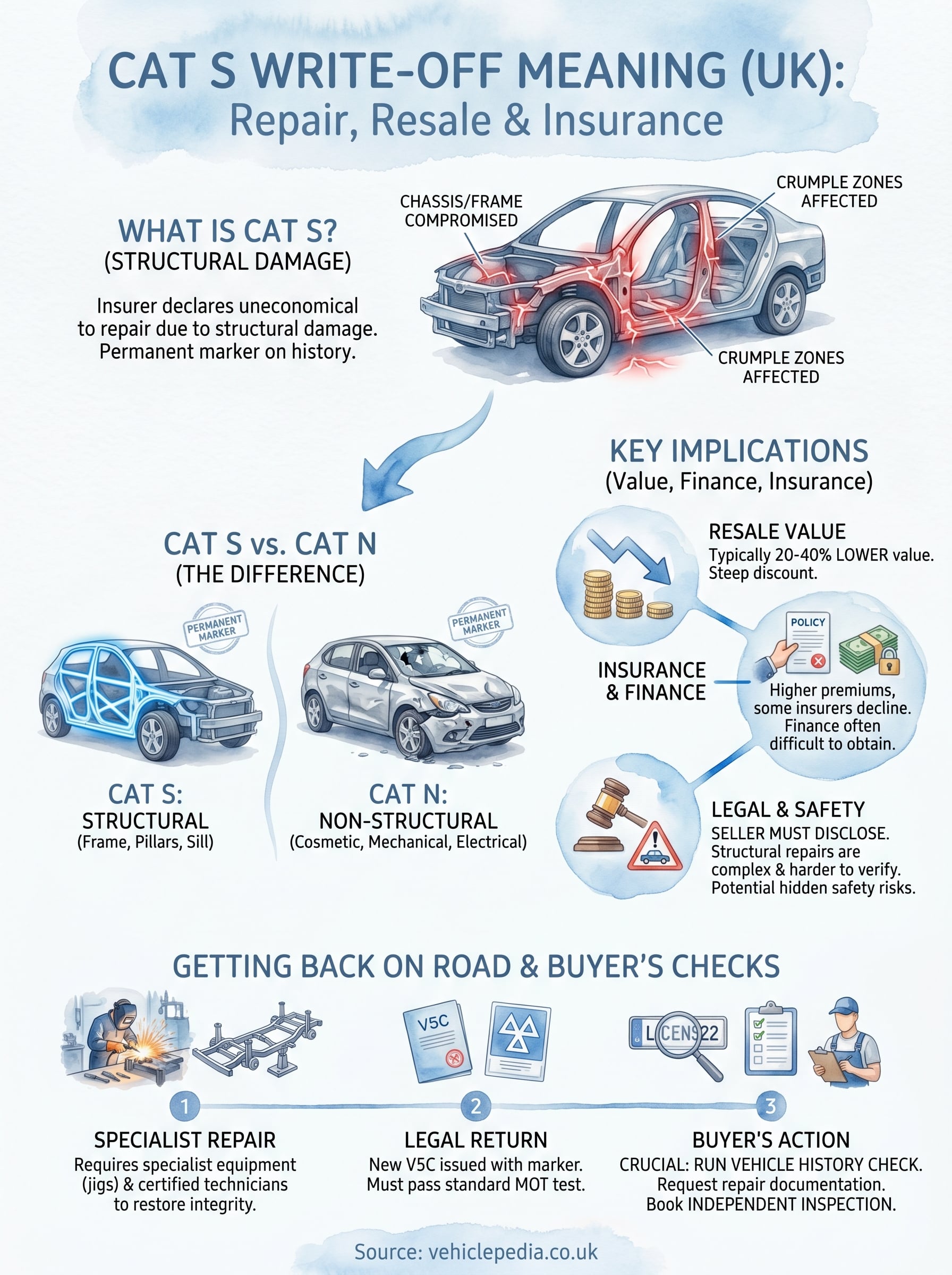
If you've spotted a used car at a tempting price only to find it labelled as a Cat S write off, you're right to pause and ask questions. Cat S, short for Category S, means the vehicle has sustained structural damage in an incident serious enough for an insurer to declare it uneconomical to repair relative to its market value. That doesn't necessarily mean the car is beyond saving, but it does mean the chassis, frame, or crumple zones were compromised.
Understanding exactly what this label involves matters before you hand over any money. A Cat S car can be legally repaired and returned to the road, but it carries permanent implications for resale value, insurance costs, and safety. It's also frequently confused with Cat N, which covers non-structural damage, a distinction that makes a real difference when you're weighing up risk.
This guide breaks down everything you need to know: what Cat S damage actually looks like, how it compares to other write-off categories, and what to watch for if you're considering buying one. We'll also cover how a vehicle history check through Vehiclepedia can flag a Cat S marker before you commit, giving you the facts pulled directly from official UK insurance and DVLA records.
What Cat S means and how it differs from Cat N
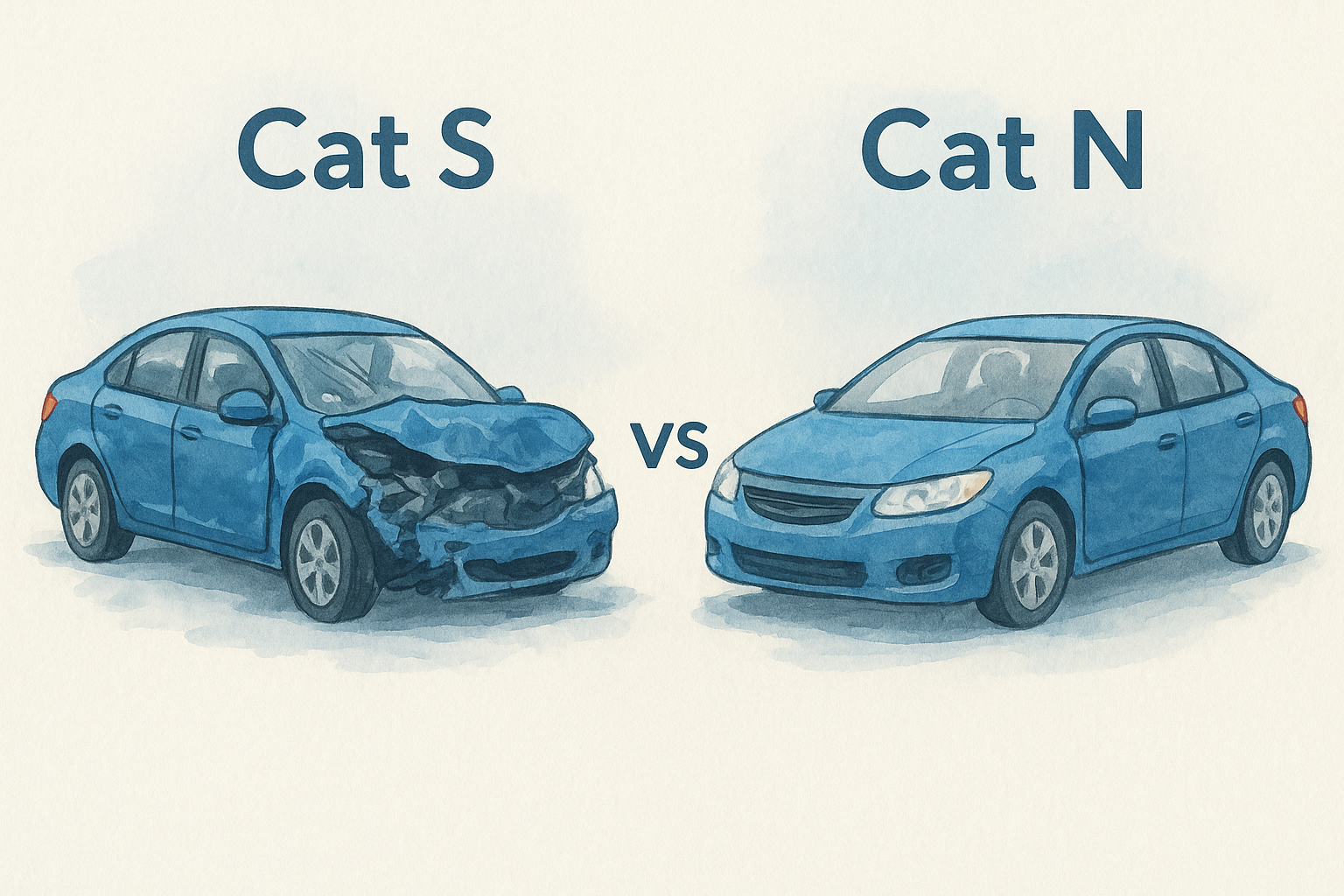
The cat s write off meaning comes down to one specific type of damage: structural. When an insurer assesses a vehicle after an accident and concludes the repair cost is too high relative to the car's market value, they declare it a write-off. If the damage has affected the structural integrity of the vehicle, including the chassis, subframe, A and B pillars, floor pan, or crumple zones, the car receives a Category S marker. The insurer takes ownership of the vehicle, but a repair garage or salvage trader can buy it, fix it to an approved standard, and return it to the road.
The structural damage that defines Cat S
Structural damage on a Cat S car is not a scratch or a dented panel. The damage sits within the load-bearing architecture of the vehicle, the parts designed to absorb and redirect crash energy to protect occupants. Repairers need specialist equipment, jigs, and trained technicians to restore these components correctly. A botched structural repair can leave a car that looks fine on the outside but behaves dangerously in a second collision, which is why the repair process carries strict requirements before the car can legally return to the road.
A Cat S vehicle must be professionally repaired and issued a new V5C logbook entry before it can be legally driven again in the UK.
Common areas of structural damage that trigger a Cat S classification include:
- Chassis rails and cross-members
- A-pillars and B-pillars
- Sill sections and floor pans
- Front and rear crumple zones
- Subframe mounting points
Cat N: when the damage stays non-structural
Category N covers write-offs where the damage does not touch structural components. The car may have serious cosmetic or mechanical issues, such as a destroyed front bumper, airbag deployment, or severe electrical faults, but the underlying frame and load-bearing structure remain intact. That distinction matters because a Cat N car, once repaired, does not require the same specialist structural sign-off that a Cat S vehicle needs.
Both categories carry a permanent marker on the vehicle's history record, meaning any future buyer who runs a proper check will see the write-off flag. Neither category requires the car to be registered with the DVLA before it goes back on the road. However, Cat S carries greater reputational and safety weight because structural repairs are harder to verify and easier to get wrong.
How the write-off categories changed in 2017
Before October 2017, insurers used Categories C and D to classify write-offs in the UK. Category C required the car to be re-registered with the DVLA before returning to the road, while Category D did not. The Association of British Insurers updated the system and replaced those with Category S and Category N to better reflect the nature of the damage rather than just the repair cost relative to value.
The old Cat C and Cat D labels still appear on history records for vehicles written off before the change. If you check a car and spot a Cat C or Cat D marker, treat Cat C as broadly equivalent to Cat S, and Cat D as broadly equivalent to Cat N. Knowing where the current categories came from helps you read older records accurately when buying a vehicle with a long history.
Why Cat S status matters to buyers and sellers
The cat s write off meaning carries real consequences for everyone involved in a transaction, not just the person sitting behind the wheel. Whether you're the one searching for a bargain or the person trying to sell a vehicle with a history, Cat S status changes the conversation around price, insurance, and legal responsibility in ways that are worth understanding clearly before any money changes hands.
What a Cat S marker means if you are buying
When you buy a Cat S car, you take on the full risk attached to its history. A properly repaired Cat S vehicle can be roadworthy, but you have no straightforward way to verify the quality of structural repairs without paying for an independent inspection from a qualified engineer. Insurers will ask about write-off history when you apply for cover, and some will refuse to insure a Cat S car outright, while others will charge significantly higher premiums to account for the increased risk.
If a seller does not disclose a Cat S marker and you later discover it through a history check, you have grounds to pursue the seller for misrepresentation under UK consumer law.
You should also factor in that Cat S cars sell at a steep discount compared to equivalent clean-history vehicles, typically between 20% and 40% less depending on the model, age, and quality of repairs. That discount can look appealing, but it needs to be weighed against higher running costs, reduced finance options, and a smaller pool of future buyers when you come to sell.
What a Cat S marker means if you are selling
Selling a Cat S car comes with a clear legal obligation: you must disclose the write-off category to any prospective buyer. Failing to do so is not just poor practice; it exposes you to claims of misrepresentation. Buyers who run a vehicle history check will find the marker regardless, so transparency upfront builds trust and protects you from disputes after the sale.
Pricing a Cat S car accurately is the most practical challenge for sellers. Setting the price too close to clean-history equivalents will deter informed buyers. Pricing it fairly, with documentation of the repairs carried out, gives you a stronger position and shortens the time the vehicle sits unsold.
How Cat S write-offs get repaired and back on road
A Cat S write-off doesn't automatically become scrap. Insurers sell many Cat S vehicles through salvage auctions, where professional repair garages and traders buy them with the intention of restoring them. Understanding the cat s write off meaning in practical terms means recognising that structural damage can be repaired, but that repair work demands far more expertise and equipment than a standard body shop fix.
What the structural repair process involves
Repairing structural damage on a Cat S car is not a job for a general mechanic. Specialist body repair centres use chassis jigs and alignment rigs to pull bent or deformed metalwork back to the manufacturer's precise tolerances. In some cases, damaged sections of the chassis or pillars are cut away and replaced entirely using approved welding techniques and manufacturer repair data.
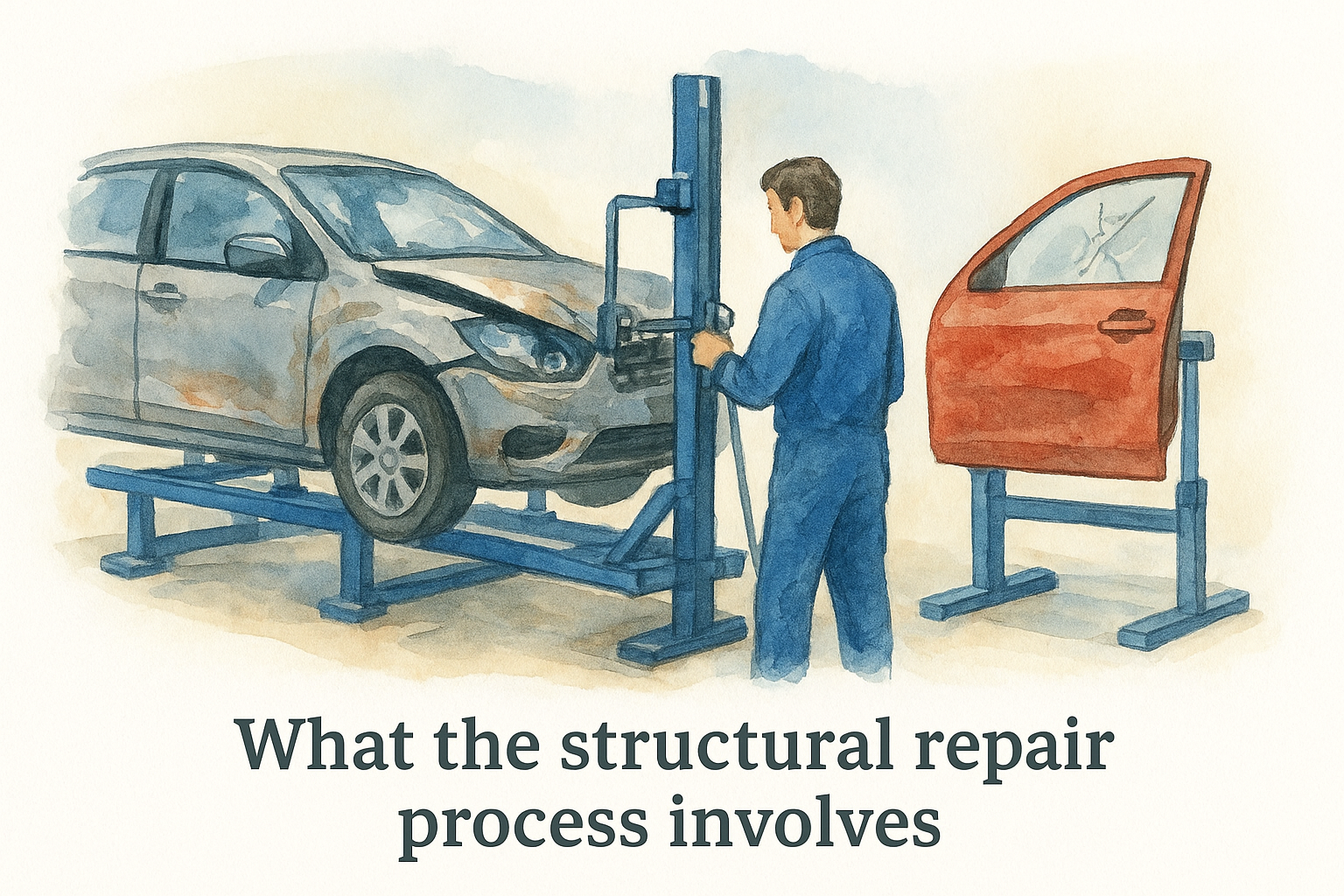
Repairs that look correct from the outside can still leave hidden weaknesses in load-bearing components, which is why independent inspection after repair is strongly recommended.
Repairers also need to address any secondary damage caused by the structural impact, including misaligned suspension geometry, damaged airbag systems, and compromised crumple zones. All of these systems interact with the structural frame, so a thorough repair covers far more than visible metalwork alone.
How a repaired Cat S car legally returns to the road
Once the repair is complete, the vehicle needs a new V5C logbook issued in the new owner's name, with the Cat S marker recorded on the document. The DVSA does not require a dedicated Cat S re-inspection, but the vehicle must still pass a standard MOT test before it can be driven legally on public roads. Some repairers put the car through an independent structural inspection as well, which provides documentation that the repairs meet a recognised standard.
You should ask for full repair documentation before buying any repaired Cat S vehicle. Receipts, photographs of the repair work, and details of the repairer's qualifications all add accountability and give you something concrete to assess. Without that paper trail, you are relying entirely on the visible condition of the car, which is rarely enough to judge structural integrity with confidence.
How Cat S affects value, finance and insurance
Understanding the full cat s write off meaning goes beyond the physical damage. Once a vehicle carries a Cat S marker, that record follows it through every future transaction, affecting what buyers will pay, whether lenders will offer finance, and what insurers will charge for cover.
How Cat S hits resale value
A Cat S car typically sells for 20% to 40% less than an equivalent vehicle with a clean history. That gap reflects the reduced confidence buyers have in structural repairs they cannot easily verify. Even when a Cat S car has been repaired to a high standard with full documentation, the stigma attached to the marker suppresses demand and gives buyers leverage to negotiate the price down.
The actual discount you accept depends on the quality of repair documentation you can provide and how transparent you are about the car's history from the start.
Sellers who present detailed repair receipts and independent inspection reports tend to achieve better prices than those who offer nothing beyond the vehicle itself. If you plan to sell a Cat S car in the future, keeping a complete paper trail from the moment of repair is one of the most practical steps you can take to protect its resale position.
Getting finance on a Cat S car
Most mainstream lenders will not offer hire purchase or personal contract purchase agreements on Cat S vehicles. The write-off marker raises the lender's risk because the car is harder to value accurately and more difficult to sell if you default. Some specialist lenders do provide finance on Cat S cars, but you should expect higher interest rates and tighter terms compared to a standard used car loan.
Paying cash removes this barrier entirely and gives you stronger negotiating power with the seller at the same time.
Insuring a Cat S vehicle
When you apply for insurance on a Cat S car, you must declare the write-off history honestly. Failing to disclose it can invalidate your policy, leaving you without cover in the event of a claim. Some insurers decline Cat S vehicles outright. Those that do offer cover frequently apply higher premiums to account for the uncertainty around structural repairs and the car's reduced market value.
Shopping around is worthwhile, but read each insurer's policy wording carefully to confirm they will cover a vehicle with a write-off category on its record.
How to check if a car is Cat S before you buy
Knowing the cat s write off meaning is only useful if you can confirm whether a specific vehicle carries that marker before you buy it. Sellers are not always forthcoming with write-off history, and a car that has been well-repaired can look identical to a clean example on a forecourt. Running a proper check before viewing or paying is the single most effective step you can take to protect yourself.
Run a vehicle history check first
A vehicle history check using the car's registration plate pulls data from official records including the DVLA, insurance registers, and the Motor Insurance Anti-Fraud and Theft Register. If the car was ever declared a Cat S write-off, that marker will appear in the report. You can do this before you travel to see the car, saving you time and money if the history turns out to be problematic.
Always run the check using the registration plate of the actual vehicle, not a plate the seller provides from a different document, and cross-reference the VIN number on the report against the plate on the car.
Vehiclepedia's free registration lookup gives you immediate access to MOT history, DVLA records, and basic vehicle details, while the premium report adds write-off category checks, stolen vehicle status via the UK Police Database, and outstanding finance information. Together, these give you a complete picture of what you are actually buying.
What to inspect in person
A history check tells you whether a Cat S marker exists, but a physical inspection tells you how well the repairs were carried out. Once you know a car has Cat S history, look for uneven panel gaps around the doors, bonnet, and boot lid, which can indicate frame misalignment. Check the sill sections and door pillars for fresh paint, filler, or weld marks that stand out against surrounding metalwork.
Ask the seller for full documentation of the repair work, including receipts, photographs, and details of the repairer. Reputable garages keep records. If the seller cannot produce anything beyond the V5C, treat that as a significant warning. Booking an independent inspection from a qualified engineer before you commit adds a final layer of confidence that no history check alone can replace.
Key takeaways and next step
The cat s write off meaning comes down to one core fact: the vehicle sustained structural damage serious enough for an insurer to write it off. A Cat S car can be legally repaired and returned to the road, but the marker stays on its history permanently, affecting resale value, insurance costs, and your ability to secure finance on the vehicle.
Running a vehicle history check before you view or buy any used car is the single most practical step you can take to protect yourself. It costs far less than discovering a hidden write-off category after the sale. Check the registration, review the report carefully, request full repair documentation in person, and book an independent inspection if anything looks uncertain.
Start your check right now at Vehiclepedia and see exactly what the official records say about any car you are considering. View a sample premium report to understand what a full history check reveals before you commit to buying.