How Many Owners Has My Car Had? Check By Reg In 2 Mins (UK)
Find out how many owners has my car had using your reg. Learn to read the V5C, spot red flags, and verify official keeper history in under 2 minutes.
How Many Owners Has My Car Had? Check By Reg In 2 Mins (UK)
Wondering how many owners has my car had? Whether you're about to buy a used car or just curious about the one sitting on your drive, the number of previous keepers tells you a lot. A car that's changed hands frequently might have underlying issues, or it might just be a popular model. Either way, it's worth checking before you spend a penny.
The good news is you don't need to dig through paperwork or ring up the DVLA. With a registration number and the right tool, you can find out in minutes. At Vehiclepedia, we pull ownership data straight from official UK sources so you get accurate, up-to-date results, no guesswork involved.
This guide walks you through every method available, from checking your V5C logbook to running a free reg lookup online. You'll also learn what the number of owners actually means for a car's value and condition, and how to spot red flags that suggest something isn't right.
What the number of owners really means
When you ask how many owners has my car had, you're really asking about registered keepers - the people or businesses officially recorded on the vehicle's logbook. This number appears on your V5C document and shows in any reputable history check. Understanding it properly helps you make a better buying decision.
Registered keepers vs. actual owners
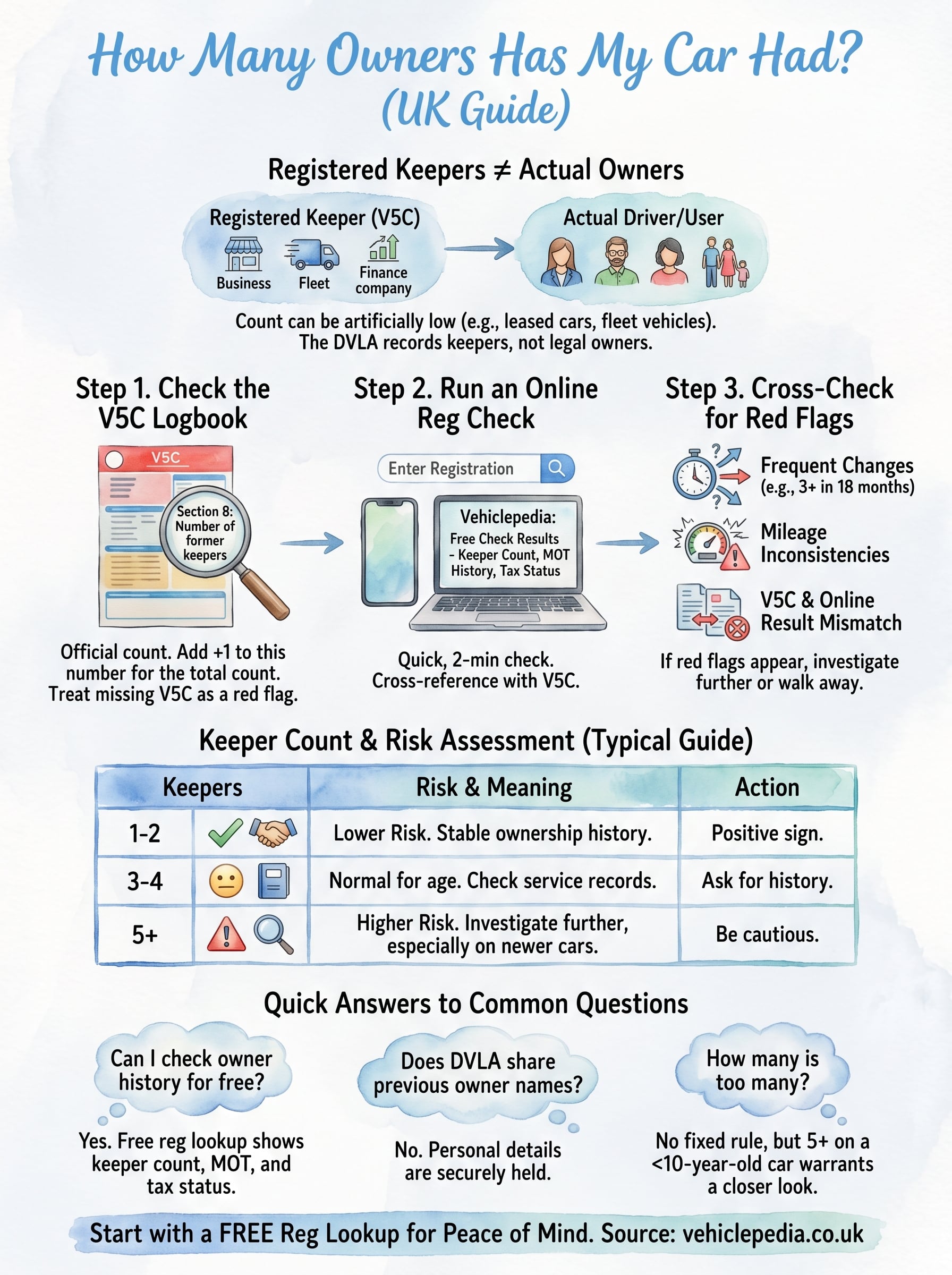
The DVLA records registered keepers, not legal owners. These two things can differ. A company car might be registered to a fleet operator while multiple employees drove it over the years. Leased or PCP vehicles follow the same pattern - the finance company stays as the registered keeper throughout, so the count stays artificially low.
A single keeper on the V5C doesn't always mean one careful private owner - it could mean a high-mileage fleet or lease vehicle.
Common situations where the keeper count can mislead you:
- Fleet and company vehicles registered to a business
- Leased or PCP financed cars where the lender holds the title
- Dealer part-exchanges that weren't re-registered before resale
What the count tells you about risk
A high keeper count over a short period is worth investigating. If a car has had four keepers in three years, ask yourself why each person moved it on so quickly. Recurring faults or poor reliability are common reasons. On the other hand, a low keeper count on an older car is generally a positive sign - it suggests stable, consistent ownership over its lifetime.
Here's a rough guide to what the numbers typically signal:
| Number of keepers | What it might suggest |
|---|---|
| 1-2 | Lower risk, stable ownership history |
| 3-4 | Normal for the age, worth checking service records |
| 5+ | Investigate further, especially on newer cars |
Step 1. Check the V5C logbook
Your V5C registration certificate is the first place to check when answering how many owners has my car had. The DVLA issues this document to the registered keeper, and it holds official ownership history that no dealer or seller can alter.
Where to find the keeper count
Open the V5C and look at section 8, labelled "Number of former keepers." This single field tells you how many people held the vehicle before the current registered keeper. Add one to that number to get the total keeper count, including the person currently holding the document.
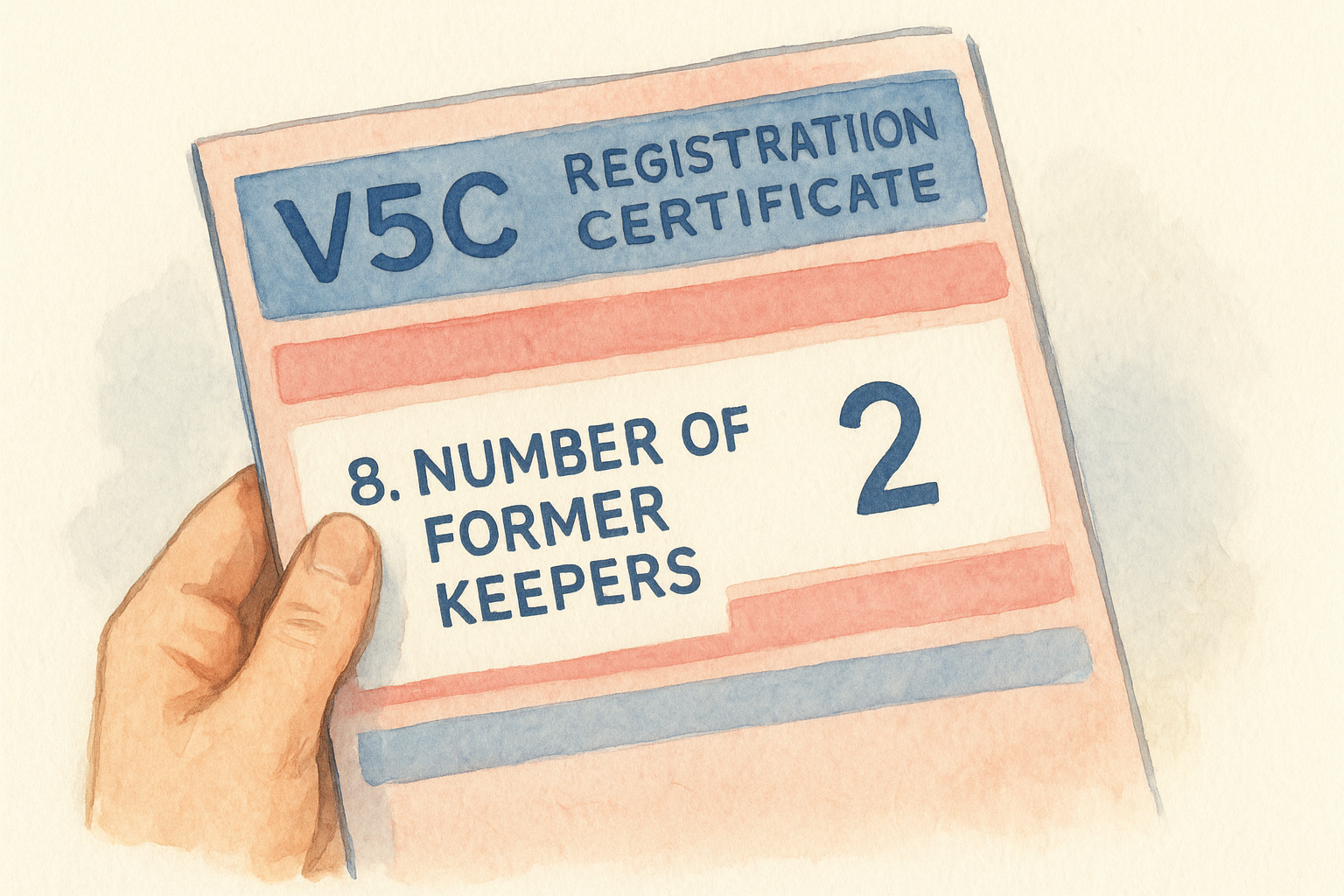
Keep in mind that the V5C only shows the number, not the names or addresses of previous keepers - those details are held securely by the DVLA.
What to do if the number looks wrong
If the V5C is missing, damaged, or the figures don't add up, treat it as a red flag. A seller who can't produce the document may be concealing something. You can apply for a replacement directly through the DVLA's official replacement service at gov.uk, but always ask the seller why the original isn't available before you hand over any money.
Step 2. Use the reg to run an online check
The V5C gives you the official count, but an online reg lookup lets you cross-reference that figure against other data points in seconds. If you're buying remotely or the seller won't show you the V5C upfront, this is how you answer how many owners has my car had before you even view the car.
How to run the check
Running the check takes under two minutes. Follow these steps:
- Visit Vehiclepedia and type the registration number into the search bar.
- Select your report type - the free check shows the keeper count alongside MOT history and tax status.
- Review the results and note the total number of registered keepers shown.
If the online result and the V5C keeper count don't match, ask the seller directly before you proceed.
What the results show
Beyond the keeper count, an online check pulls in MOT history, mileage records, and tax status from official DVLA data. You get a fuller picture in one place rather than hunting through separate documents. Pay attention to gaps in the MOT history, as these often indicate periods the car spent off the road or unaccounted for.
Step 3. Cross-check for red flags
Once you have the keeper count from both the V5C and the online check, your final step is to look for patterns that suggest a problem. Numbers alone don't tell the full story - you need to compare them against other data points to build an accurate picture.
Red flags in the ownership data
Look for the following warning signs when reviewing the results. Any one of these deserves a direct question to the seller before you commit:
- Frequent ownership changes in a short window, such as three or more keepers within 18 months
- Mileage inconsistencies across MOT records that don't follow a logical progression
- Gaps in MOT history lasting more than a year without a clear reason
- Keeper count mismatch between the V5C and your online check result
If two or more red flags appear together, walk away or seek an independent inspection before buying.
What to do if something doesn't add up
Ask the seller to explain each red flag directly - a genuine seller will have answers ready. If they can't account for a gap in the MOT history or a sudden cluster of owners, that tells you something important when asking how many owners has my car had and whether this car is worth pursuing.
Quick answers to common owner-check questions
These short answers cover the questions buyers ask most often when trying to find out how many owners has my car had before committing to a purchase.
Can I check owner history for free?
Yes. A free reg lookup on Vehiclepedia shows the registered keeper count alongside MOT history and tax status. You do not need to pay for basic ownership data.
If you want written-off status, finance checks, or stolen vehicle data, a premium report covers all of those in one go.
Does the DVLA tell you who the previous owners were?
No. The DVLA holds personal details of previous registered keepers securely and does not share names or addresses with members of the public. What you can access is the total number of keepers, which is exactly what you need to assess risk.
How many owners is too many for a used car?
There is no fixed rule, but five or more keepers on a car under ten years old warrants a closer look. Focus less on the raw number and more on how quickly those changes happened - a car with four keepers spread over 15 years is far less concerning than one with four keepers in two years.
Next steps
Now you have everything you need to answer how many owners has my car had with confidence. Start with a free reg lookup to get the keeper count alongside MOT history and tax status in under two minutes. Then cross-reference that figure against the V5C if you have access to it, and use both results together to spot any inconsistencies.
If anything in the results raises a question - a high keeper count, a mileage gap, or a figure that doesn't match the V5C - go deeper before you commit. A premium report from Vehiclepedia adds written-off status, a finance check, and a stolen vehicle check against the UK Police Database, giving you the full picture for one straightforward fee. You can even preview what a full report looks like before you buy.
Ready to get started? Run a full vehicle history check and find out exactly what you're buying before you hand over any money.