How To Check MOT History Free Online By Reg Plate In The UK
Learn how to check mot history free online with a UK reg plate. Access test results, failure reasons, and mileage to spot hidden issues before you buy.
How To Check MOT History Free Online By Reg Plate In The UK
Every MOT test a vehicle has ever taken leaves a trail, pass or fail results, mileage readings, advisory notices, and specific failure reasons. If you're buying a used car, that trail tells you more about the vehicle's real condition than any seller's description ever could. The good news is you can check MOT history free using nothing more than a registration number, and it takes less than a minute.
Whether you want to spot a suspiciously low mileage, uncover recurring mechanical problems, or simply confirm that a car has a valid MOT certificate, free MOT history checks are one of the most useful tools available to UK car buyers. At Vehiclepedia, we pull data from official sources including the DVLA to give you a comprehensive vehicle history check, starting with a free registration plate lookup.
This guide walks you through exactly how to check a vehicle's full MOT history online, what each result means, and how to use that information to avoid buying a problem car.
What you can check for free
The UK government stores every MOT test result in a publicly accessible database, and you can query it for free using just a registration plate. When you look up a vehicle, you get a full record of every test that car has taken, going back to 2005 for most vehicles. That gives you years of documented data to work with before you commit to buying anything.
What the free MOT history includes
Each MOT entry shows you the test date and outcome (pass or fail), the recorded mileage at the time of testing, and the precise reason for any failure. Advisories are listed too; these are faults the tester flagged as worth watching but not serious enough to fail the car outright. You can see a full picture of how the car has been maintained, or neglected, across its entire life. Here is a summary of what each free record contains:
- Test date and result (pass or fail)
- Mileage reading at each test
- Failure reasons with specific descriptions
- Advisory notices from each test
- Current MOT expiry date
If the same advisory appears across two or three consecutive tests, the owner has been ignoring a known fault rather than fixing it.
What the free check doesn't cover
The free MOT history tells you a great deal, but it has clear limits. It won't reveal outstanding finance on the vehicle, whether the car has been written off by an insurer, or whether it appears on the police stolen vehicle register. Knowing how to check mot history free is a strong starting point for any used car purchase, but you'll need a full vehicle history report alongside it to protect yourself from the most serious risks and make a genuinely informed decision.
Step 1. Use the official GOV.UK checker
The official MOT history checker is hosted by the UK government and is completely free to use. You don't need to create an account or provide any personal details, just the vehicle registration number you want to look up. The data comes directly from the DVSA, the same agency that oversees every MOT test in England, Scotland, and Wales, so you're working with the authoritative record every time.
Always use the official government checker as your first step, because it holds the complete, unaltered test history for the vehicle.
How to run the search
Knowing how to check MOT history free takes under a minute once you know where to look. Go to the DVSA MOT history service on GOV.UK and type the registration plate exactly as it appears, without spaces. The results load instantly and show every test on record.
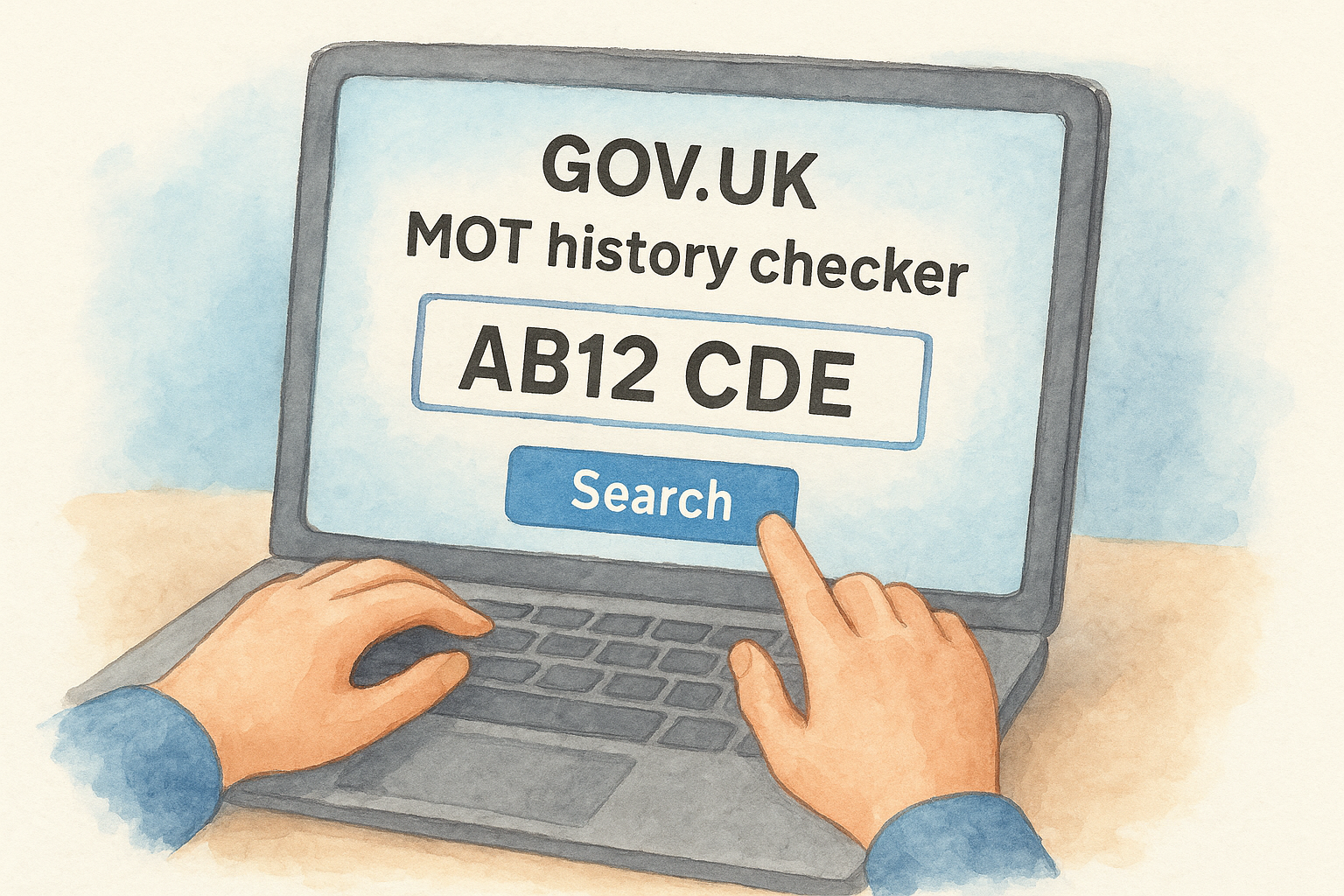
Follow these steps:
- Visit https://www.gov.uk/check-mot-history
- Enter the full registration number in the search field
- Click "Search"
- Review the list of tests, dates, mileage readings, and pass or fail outcomes
Each entry expands to show specific failure reasons and advisory notices written in plain language, so you don't need a mechanical background to understand what you're looking at.
Step 2. Read the MOT history like a mechanic
Once you've pulled up the results, the next step is knowing what to look for. Raw MOT data is only useful if you can interpret it correctly, and most buyers skim past the details that matter most.
What failure categories tell you
Each failed test lists the exact component that caused the failure, grouped by category: brakes, steering, lights, tyres, and so on. A car that failed repeatedly for the same component is showing you a pattern, not a one-off problem.
A recurring brake failure across multiple tests suggests ongoing neglect, not bad luck.
Look at whether failures were minor, major, or dangerous. Minor items are low risk, but major and dangerous failures indicate the car was being driven in a condition that put people at risk.
How to interpret advisories
Advisories sit one level below failures, but they deserve just as much attention. When you check MOT history free, each advisory includes plain-language wording that describes exactly what the tester observed, for example: "Tyre worn close to the legal limit."
Your job is to count how many times a specific advisory repeats. If "corrosion to chassis" appears three tests in a row, the owner has been ignoring structural deterioration, and that car could be a serious money pit.
Step 3. Spot mileage issues and red flags
The mileage recorded at each MOT test is one of the most telling pieces of information in a vehicle's history. Because testers record the odometer reading at every test, you can track whether the mileage has consistently increased over time. A figure that drops, or one that barely moves across several years, should stop you immediately.
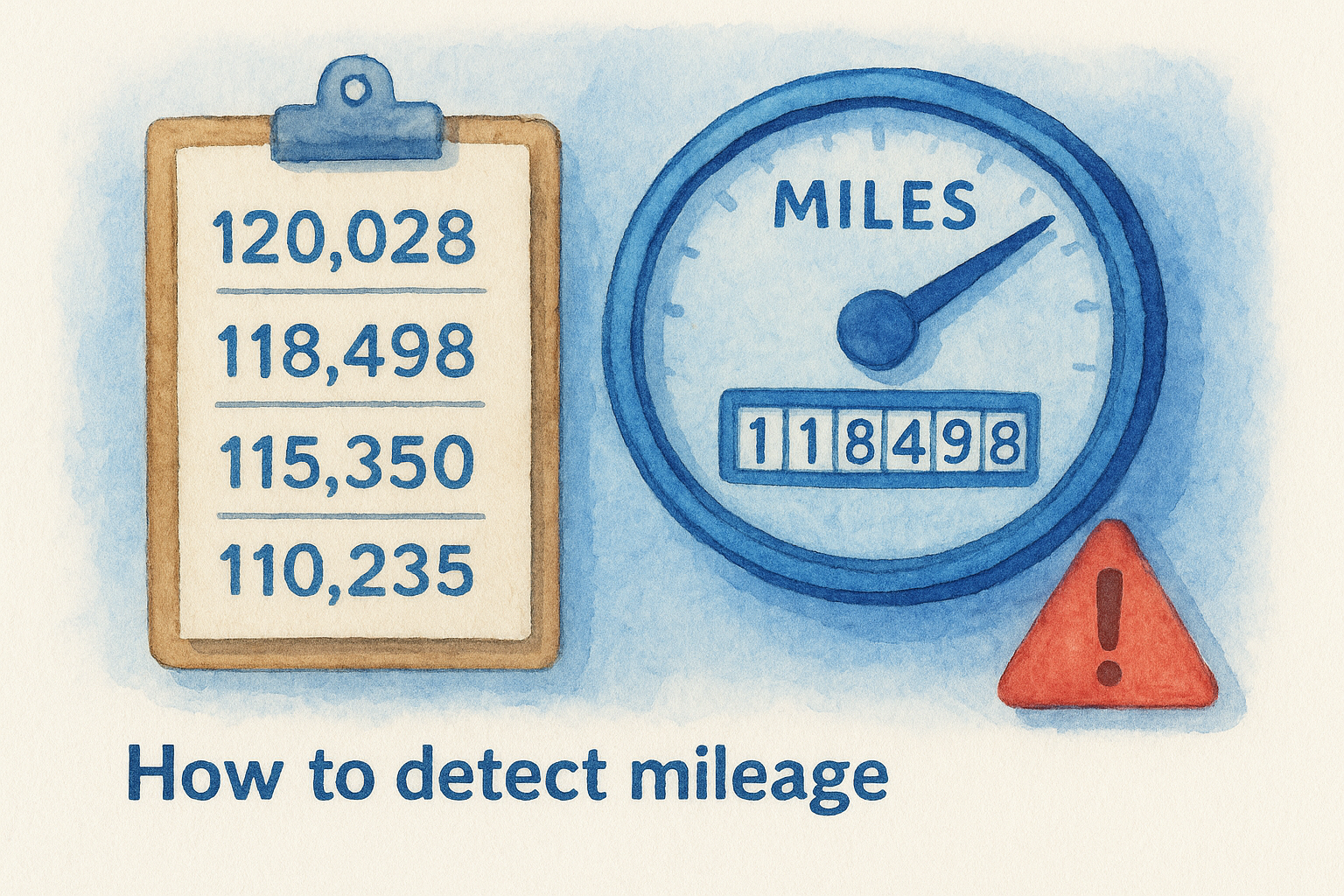
How to detect mileage discrepancies
When you check MOT history free, line up the mileage figures chronologically and confirm that each one is higher than the last. If any figure is lower, the odometer has almost certainly been tampered with, a practice known as clocking. Here is a quick reference for what the numbers should look like on a normally used private car:
| Usage type | Expected annual mileage |
|---|---|
| Average | 8,000 to 12,000 miles |
| Low usage | 3,000 to 7,000 miles |
| High usage | 13,000+ miles |
A mileage drop between any two tests is a near-certain sign of odometer fraud.
Other red flags in the history
Large gaps in the MOT record can mean the car sat unregistered, or was driven without a valid certificate. Both situations raise questions you need answered before handing over any money.
Also watch for a car that switches between very high and very low annual mileage with no clear explanation. That pattern can indicate multiple keepers with very different usage habits, or it could point to something more serious.
Step 4. Combine MOT with other free checks
The MOT history gives you a strong foundation, but it only covers test results. To build a complete picture of a vehicle, you need to layer in additional data points that the DVSA record simply does not hold. Running a free registration plate lookup on Vehiclepedia alongside your MOT check takes seconds and significantly reduces the risk of buying a problem car.
What a free Vehiclepedia check adds
Knowing how to check mot history free through GOV.UK is a solid start, but pairing that data with a free vehicle history check on Vehiclepedia gives you details the official MOT record does not include. Your free check pulls data from the DVLA and other official sources to surface:
- Road tax status and current expiry date
- Vehicle registration details including make, model, colour, and age
- Recorded keeper count to flag frequent ownership changes
- Import and export records that could affect insurance or parts availability
- Performance and fuel efficiency data for the specific make and model
Running both checks together takes under two minutes and gives you far more to work with than either source alone.
Each layer of data you add makes your final buying decision more informed and far harder for a dishonest seller to manipulate with a polished description or a freshly valeted car.

Next steps
You now have everything you need to run a thorough MOT check before buying any used car. Knowing how to check MOT history free through the official GOV.UK service takes under a minute, and the data it returns gives you a genuine, unfiltered view of how a vehicle has been maintained. From reading failure categories to spotting mileage discrepancies, you can assess a car's condition long before you see it in person.
The MOT record is a powerful starting point, but it doesn't cover finance, insurance write-offs, or stolen vehicle status. Pairing your free MOT check with a full vehicle history check protects you against the risks that the DVSA data simply doesn't touch. Before you commit to any purchase, take two minutes to run a free registration plate lookup on Vehiclepedia and see everything that matters. View a sample premium report to understand exactly what a full check reveals.