How to Do a Salvage Car VIN Check
Learn how to run a salvage car VIN check, spot write-off categories, and verify vehicle history with Vehiclepedia before buying a used car.
How to Do a Salvage Car VIN Check
Buying a used car without knowing its full history is a gamble you can't afford to take. If a vehicle has been declared a write-off after an accident, theft, or flood damage, that history doesn't disappear just because it's been repaired and put back on the road. Running a salvage car vin check before you hand over any money is the single best way to spot these hidden risks, whether you're buying privately or from a dealer.
In the UK, we don't use VIN-only lookups the way the US does. Instead, you check a vehicle registration plate against official DVLA and insurance industry records to reveal write-off categories, previous keeper history, and any theft markers. Many buyers search for a car salvage check with pictures, hoping to see visual proof of prior damage, and while photo evidence isn't always available through free tools, a detailed report will still flag the category and date of any write-off.
This guide walks you through exactly how to check car salvage title free using your registration number, what the different write-off categories mean, and when it's worth upgrading to a premium report for full peace of mind.
What a salvage VIN check tells you
Running a salvage car vin check pulls together data that most private sellers won't volunteer. It tells you whether an insurer has ever declared the car a total loss, what category of damage was recorded, and whether it's been repaired to a roadworthy standard or should never have returned to the road at all. This single check can save you from buying a car that looks fine but hides bent chassis rails, flood corrosion, or airbags that were never replaced properly.
Write-off categories explained
Understanding the four UK write-off category codes is essential, because they tell you exactly how serious the damage was and whether the vehicle should be on the road at all.
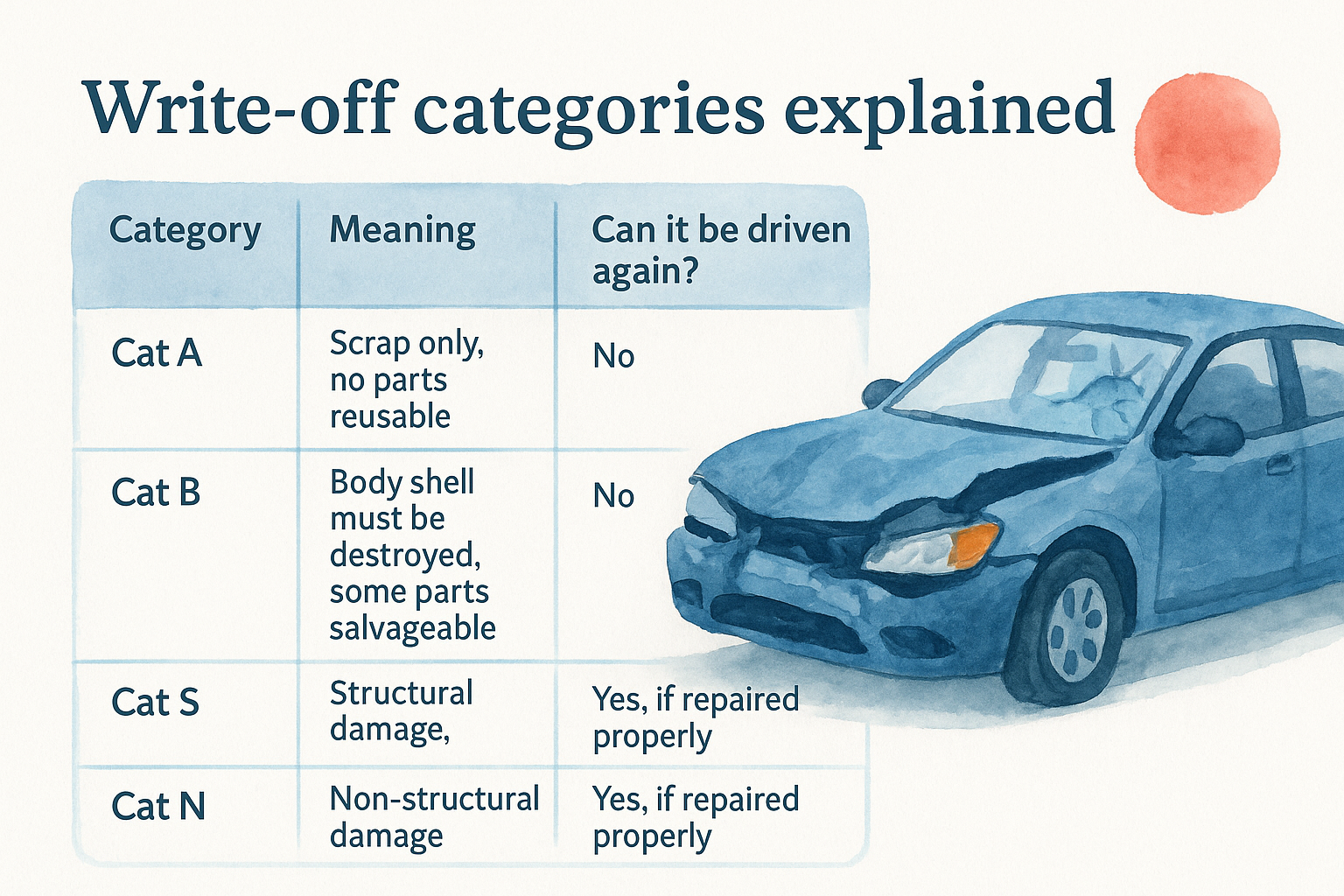
| Category | Meaning | Can it be driven again? |
|---|---|---|
| Cat A | Scrap only, no parts reusable | No |
| Cat B | Body shell must be destroyed, some parts salvageable | No |
| Cat S | Structural damage, repaired and reassessed | Yes, if repaired properly |
| Cat N | Non-structural damage, repaired | Yes, if repaired properly |
A car marked Cat A or Cat B should never be back on UK roads, so finding one for sale is a serious red flag.
What else the report reveals
Beyond the category itself, a proper check shows the date the write-off was recorded, which insurer logged it, and sometimes a brief description of the damage type, whether that's flood, fire, accident, or theft recovery. Some services also flag mileage discrepancies alongside the write-off record, which matters because odometer tampering often accompanies a poor repair job someone's trying to hide. Vehicles marketed with a car salvage check with pictures in mind won't always have photos attached through free lookups, but the category and date alone are usually enough to warn you off or prompt further questions to the seller before you commit to viewing the car in person.
Step 1. Find the VIN or registration number
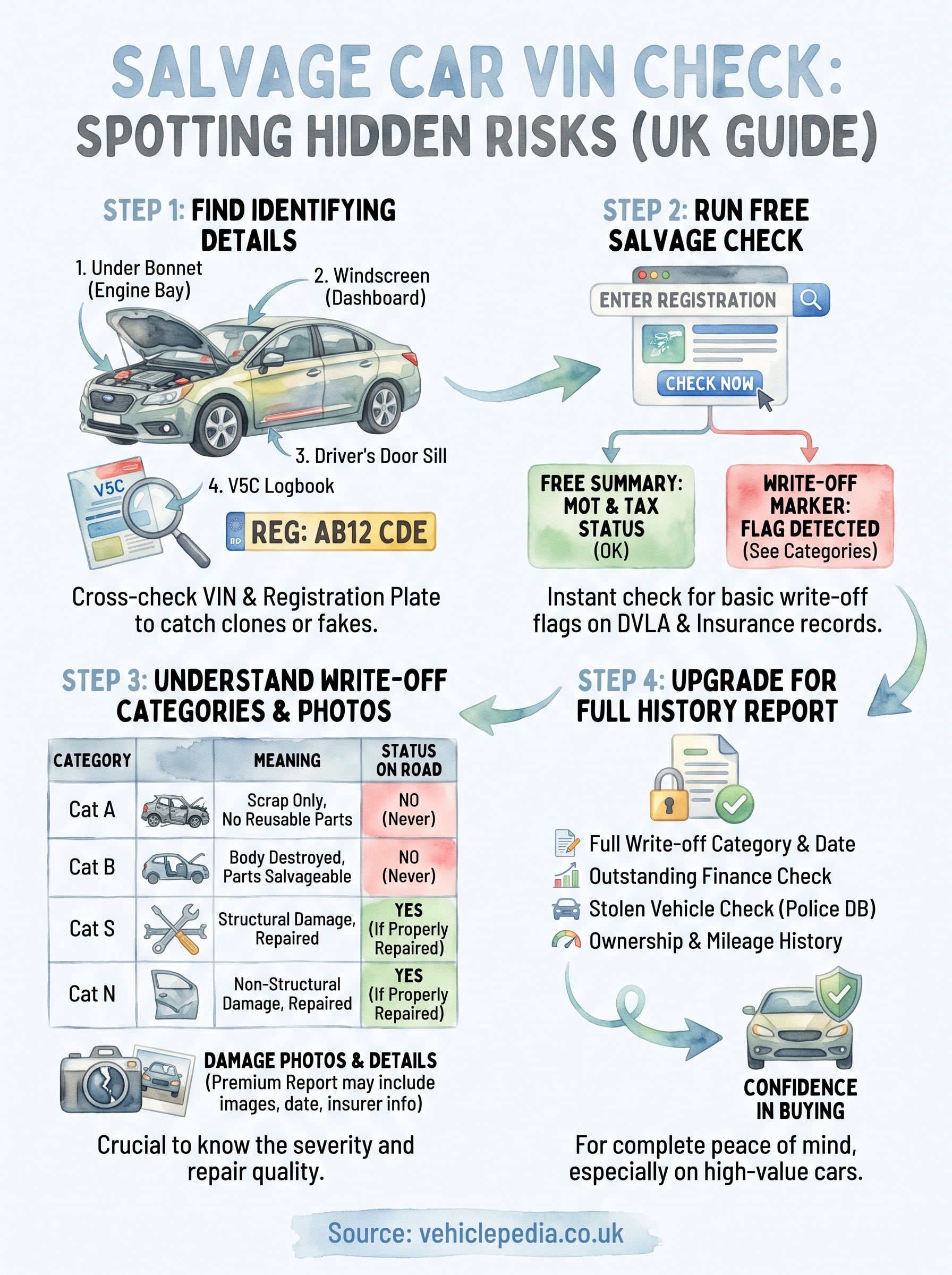
Before you can run any check, you need the car's identifying details in hand. In the UK, your registration number (the number plate) is usually enough to pull a full history, though the VIN gives you a second reference point that's harder for a seller to fake or swap.
Where to spot the VIN
Most VINs sit in a handful of predictable spots, so check these before you rely on paperwork alone, and it helps to know how to decode all 17 characters once you've found it:
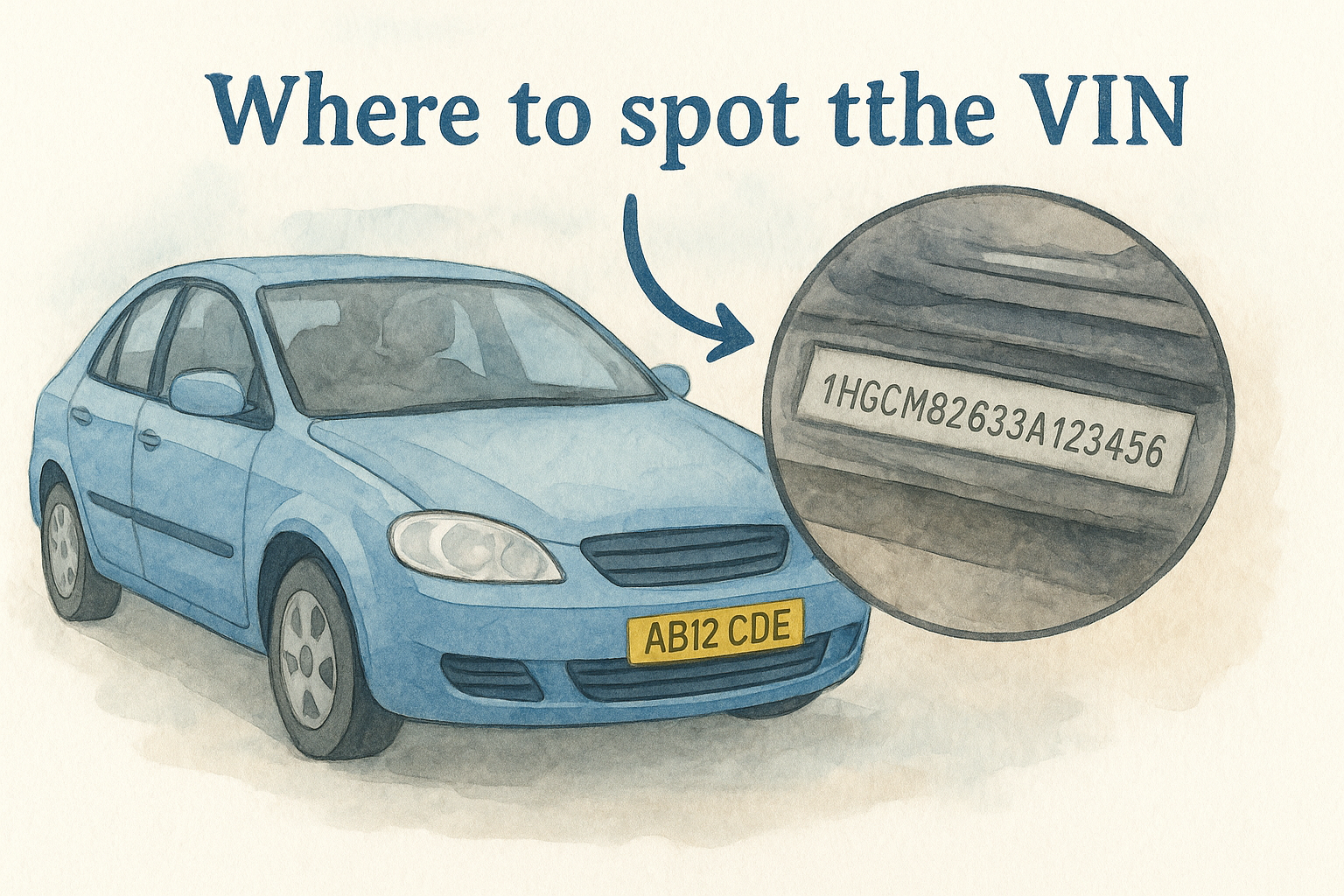
- Stamped on a metal plate under the bonnet, near the front of the engine bay
- Visible through the windscreen on the driver's side dashboard
- Printed on the V5C logbook, in the vehicle identification number field
- Etched onto the driver's door frame or sill on many models
Always match the VIN on the car itself against the one printed on the logbook, because a mismatch is one of the clearest signs of a cloned car, and it's worth learning how to check if a car is stolen by VIN at the same time.
Cross-check before you commit
Double-checking the registration plate against the physical VIN plate takes two minutes and costs you nothing, yet it catches problems a quick glance at paperwork never will. Sellers hoping to hide a salvage car vin check result sometimes swap plates or present mismatched documents, so treat this step as non-negotiable rather than optional before you move on to running the actual history search.
Step 2. Run a free salvage title check
Once you've got the registration number confirmed, head straight to a free vehicle history check rather than paying upfront for a report you might not need. Vehiclepedia's free car salvage check pulls directly from DVLA and insurance industry records, so you get an instant read on write-off status without entering any payment details first.
What to enter and expect
Type the registration plate into the search box exactly as it appears on the number plate, including any spaces. Within seconds you should see:
- Current MOT and tax status
- Basic registration details and vehicle age
- Whether a write-off marker exists on the record
- A prompt to unlock the full salvage category and history via a premium report
Never skip the free check just because it feels too quick, because a single write-off flag here can save you thousands before you even book a viewing.
Reading the initial result
If the free summary shows no write-off marker at all, that's a genuinely good sign, though it's not a complete guarantee since some records take time to update after an insurer logs a claim. If it does flag a marker, don't panic yet. That's your signal to dig deeper into the category and damage details covered next, rather than walking away or paying blind at this stage.
Step 3. Look for damage photos and write-off details
Once a write-off marker shows up, you'll want more than just a category code before deciding whether to walk away. A genuine car salvage check with pictures helps you see the extent of the damage rather than guessing from a single letter on a screen, and knowing how to check a car's salvage history in full matters because free tools rarely include photos and you'll usually need a premium report to unlock them.
What to look for in the details
Check the report for these specifics before you write off the car entirely or move ahead with a viewing:
- The write-off date and how long ago the claim was logged
- The insurer's description of damage type (accident, flood, fire, theft recovery)
- Whether repair work was inspected and reassessed by an engineer
- Any linked images showing the damage location on the vehicle
Photos don't lie the way a seller's story might, so always ask for them if the report doesn't include any.
Comparing the record against the car
Go back to the seller with specific questions once you've reviewed the damage details. Ask for repair invoices, engineer reports, or before-and-after photos they might hold themselves. Reasonable sellers with a properly repaired Cat S or Cat N vehicle will usually have this paperwork ready, and it's worth reading up on the risks of buying a Cat N vehicle first, because hesitation here should be treated as a warning sign rather than bad luck.
Step 4. Upgrade to a full history report if needed
Sometimes the free check and a category code just aren't enough to settle your nerves, especially on a car you're seriously considering. That's when a premium history report earns its keep, pulling together finance data, stolen vehicle checks against the police database, and a fuller written-off vehicle record than any free lookup can offer.
What a premium report adds
Vehiclepedia's premium vehicle check goes well beyond the basic write-off marker you saw in Step 2. You'll get:
- Full salvage category confirmation with date and insurer details
- Outstanding finance check to confirm the car isn't still owed on
- Stolen vehicle status verified against the UK Police Database
- Ownership history and any import or export records
- A £30,000 data guarantee for non-trade buyers
Paying a small fee for a premium report is far cheaper than discovering a hidden finance agreement after you've already bought the car.
When it's worth the spend
Upgrading makes sense whenever the free check flags anything unusual, whether that's a write-off marker, a mileage discrepancy, or a seller who seems reluctant to answer questions. Trade buyers and anyone spending several thousand pounds on a used car should treat the premium report as standard practice rather than an optional extra. Sample reports are available to preview first, so you'll know exactly what you're paying for before committing.
Buying with confidence
Spotting a write-off before you buy takes minutes, not hours, and it costs you nothing to start. A proper salvage car vin check turns a guessing game into a straightforward decision, whether that means walking away from a Cat A wreck or negotiating a fair price on a well-repaired Cat N motor. Trust the paperwork alongside the data, cross-check the VIN plate yourself, and never let a seller rush you past a flagged marker.
Getting this right protects both your wallet and your safety on the road. Free checks give you the first warning signs, and a premium report fills in the finance, theft, and ownership details that really matter once money's on the table. Before you commit to anything, see what each report includes and what it costs so you know exactly what level of protection suits the car you're chasing.