How To Check Car Ownership History In The UK (Free)
Discover how to check car ownership history for free using official UK data. Verify previous keepers and the V5C logbook to spot red flags before you buy.
How To Check Car Ownership History In The UK (Free)
Knowing how to check car ownership history is one of the smartest steps you can take before buying a used car. A vehicle that's had six keepers in three years tells a very different story to one with two owners over a decade. Multiple short ownership periods can flag mechanical problems, outstanding finance, or worse.
The good news is you don't need to pay a penny to get started. Between the V5C logbook, DVLA records, and free online tools, there's plenty you can uncover about a car's past keepers without spending anything. At Vehiclepedia, we pull data directly from official UK sources so you can check a vehicle's registered keeper history in seconds, for free.
This guide walks you through every method available, from reading the V5C document to running a free registration plate lookup, so you can spot red flags early and buy with confidence.
What car ownership history means in the UK
In the UK, car ownership history is officially recorded as a list of registered keepers, not owners. That distinction matters. A registered keeper is the person or organisation responsible for taxing and insuring the vehicle, which isn't always the person who bought or paid for it. When you learn how to check car ownership history, you're really checking who held registered responsibility for the car at any given point.
The difference between a keeper and an owner
A finance company can own a vehicle outright while you drive it as the registered keeper. Similarly, a business fleet can list a company as the keeper even though dozens of employees used the car. This is why two vehicles with the same number of previous keepers can represent very different histories. One might have been driven by a single family, the other rotated through a company fleet with heavy mileage and minimal personal care.
Keeper count alone doesn't tell the full story, but a high number of short keeper periods is one of the clearest red flags in any used car check.
What the DVLA records and what it doesn't
The DVLA holds records of every registered keeper going back to when the vehicle was first registered in the UK. However, it does not disclose personal details about previous keepers to members of the public. What you can access is the total number of previous keepers, the date the current keeper took on the vehicle, and whether it has been imported or exported. Details like names and addresses stay protected under data protection law. This is why cross-referencing the V5C logbook with an online check gives you the most complete picture available.
Before you start: what you need to check
Before you dive into how to check car ownership history, gather a few key details. The most important is the vehicle registration plate and, if you can get it, the Vehicle Identification Number (VIN). Having both ready means you can cross-reference results across multiple checks and spot inconsistencies quickly.
What to gather before you search
You don't need much to start, but the registration plate is essential for every online lookup and the V5C logbook is worth requesting from the seller before you meet. Pull together the following before you begin:
- Vehicle registration plate (required for all online checks)
- VIN/chassis number (17 characters, found on the dashboard or inside the driver's door frame)
- V5C logbook, if the seller has already shared it
- The asking price, so you can weigh any issues against the cost
What to watch for early
Some red flags appear before you even run a check. If the seller cannot provide the registration plate or stays vague about the car's background, treat that as a warning sign straight away.
A legitimate seller will always give you the full registration number without hesitation.
Check the plate format as well. Mismatched fonts or uneven spacing can point to a cloned or altered vehicle.
Step 1. Check the V5C and supporting paperwork
The V5C logbook is the most reliable physical document for checking car ownership history. Ask the seller to show it before you meet in person, or at least photograph the relevant sections. The V5C is issued by the DVLA and records key keeper details for the current registration period.
What the V5C tells you about previous keepers
The section marked "number of previous keepers" sits on the front page of the V5C and gives you a straightforward count. Compare this number with the date the current keeper took possession. If the car is four years old and shows five previous keepers, that pattern warrants further investigation.
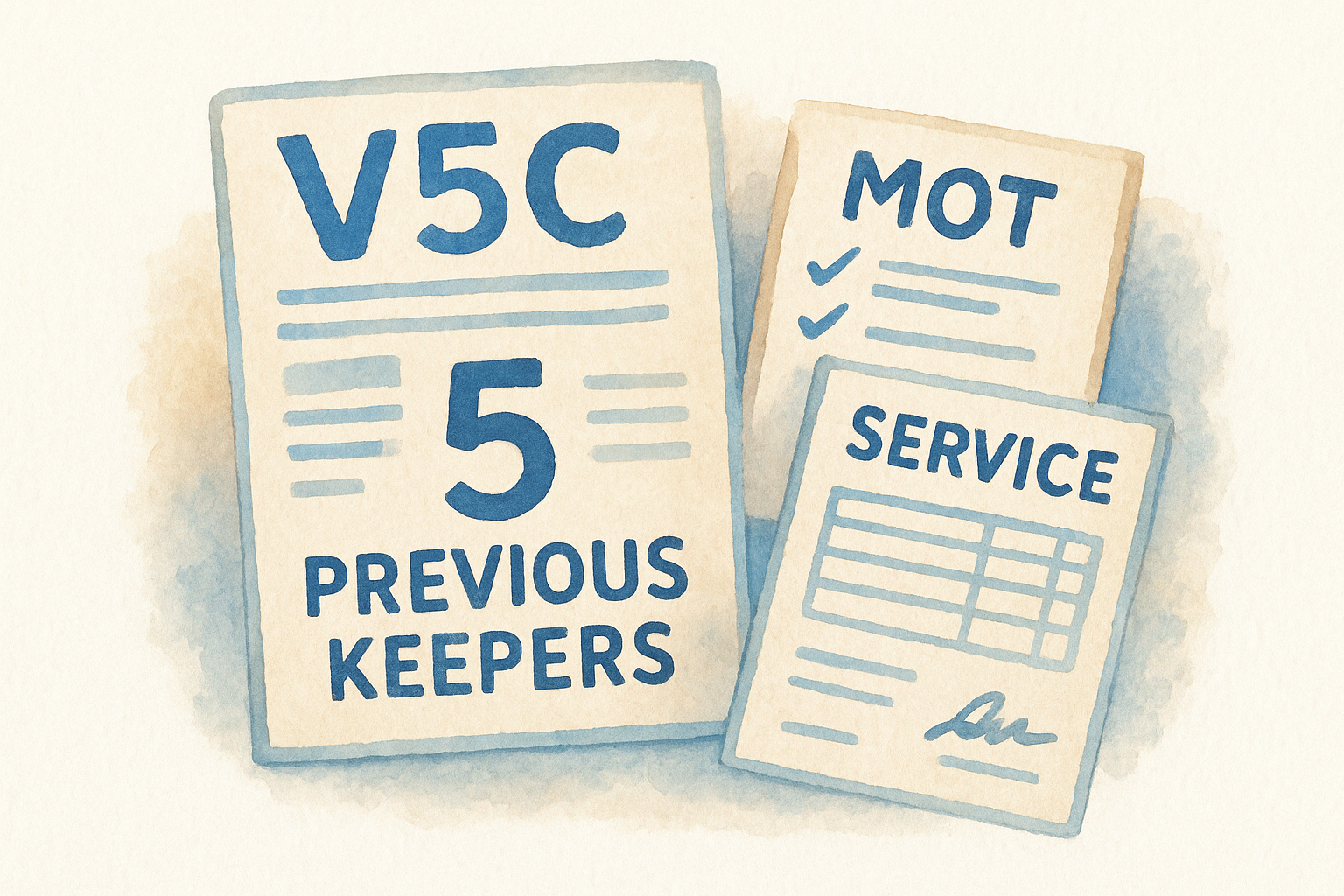
A high keeper count combined with short ownership periods is one of the strongest early warning signs in any used car check.
What to check in the supporting paperwork
Supporting documents can fill important gaps that the V5C won't cover on its own. Cross-reference these alongside the V5C logbook when learning how to check car ownership history:
- MOT certificates showing consistent registered keeper names over the years
- Service history stamps with dates, mileage, and garage signatures
- Insurance renewal letters that match the keeper details in the V5C
Step 2. Do free online checks for keeper history
Once you have the registration plate, you can run a free online check in under a minute. Free lookups pull data from official sources like the DVLA and return key details including the number of previous keepers, the date of first registration, and current MOT and tax status.
How to run a free registration plate lookup
Learning how to check car ownership history online takes only a few steps. Head to Vehiclepedia and enter the registration plate into the search bar. The free report returns instantly and shows you the core keeper data without asking for payment.
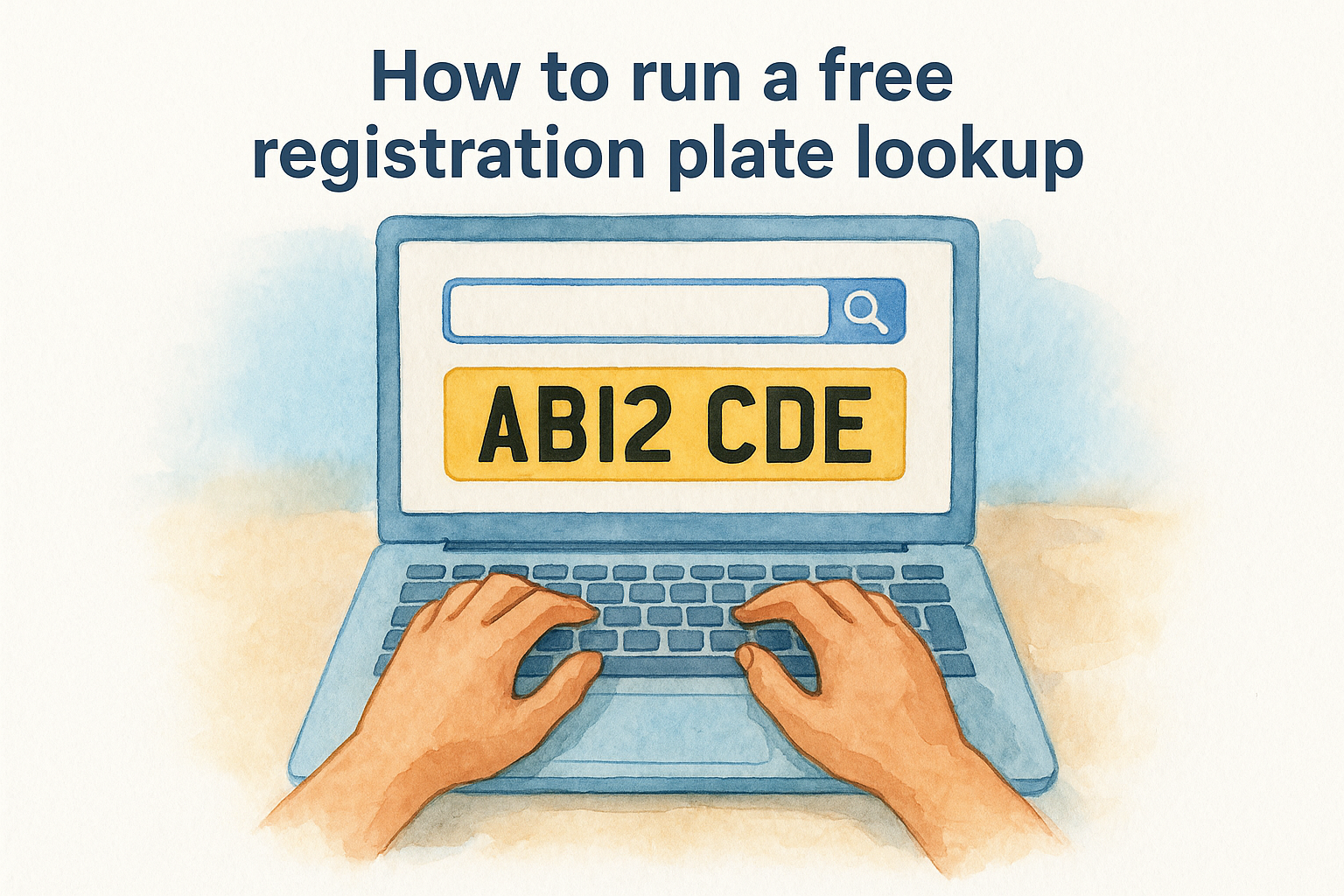
Follow these steps to complete your free check:
- Enter the full registration plate in the search field
- Review the keeper count and the date the current keeper took on the vehicle
- Note the MOT history and check for any gaps in testing
- Cross-reference the mileage readings across MOT entries to spot inconsistencies
What the free results show you
The free check surfaces the most critical keeper details you need at the early research stage. You will see the total number of previous keepers, the vehicle's age, tax and MOT status, and basic registration data.
If the keeper count in the online report does not match what the seller told you, treat that gap as a serious warning sign.
Step 3. Confirm the story with DVLA and the seller
Once you have the free check results, use them to verify what the seller tells you. If the keeper count, registration date, or MOT history does not line up with their account, push back with specific questions. Knowing how to check car ownership history is only useful if you act on what the data shows.
How to contact the DVLA directly
The DVLA offers a written keeper enquiry service that lets you verify basic registration details by post. Write to the DVLA at Swansea, SA99 1BA, including the full registration number and your reason for the enquiry. This is slower than an online check, but it gives you an official written confirmation you can keep as a record.
Questions to ask the seller
Armed with your check results, ask the seller direct questions and watch how they respond. A straightforward seller will answer without hesitation. If their answers conflict with the report data, treat that as a firm warning sign.
Vague or inconsistent answers about previous keepers are a stronger red flag than the keeper count itself.
Ask these questions directly:
- "How many previous owners did the car have when you bought it?"
- "Why did the keeper change so quickly between owners?"
- "Can you show me the full service history to match those dates?"
Next steps before you buy
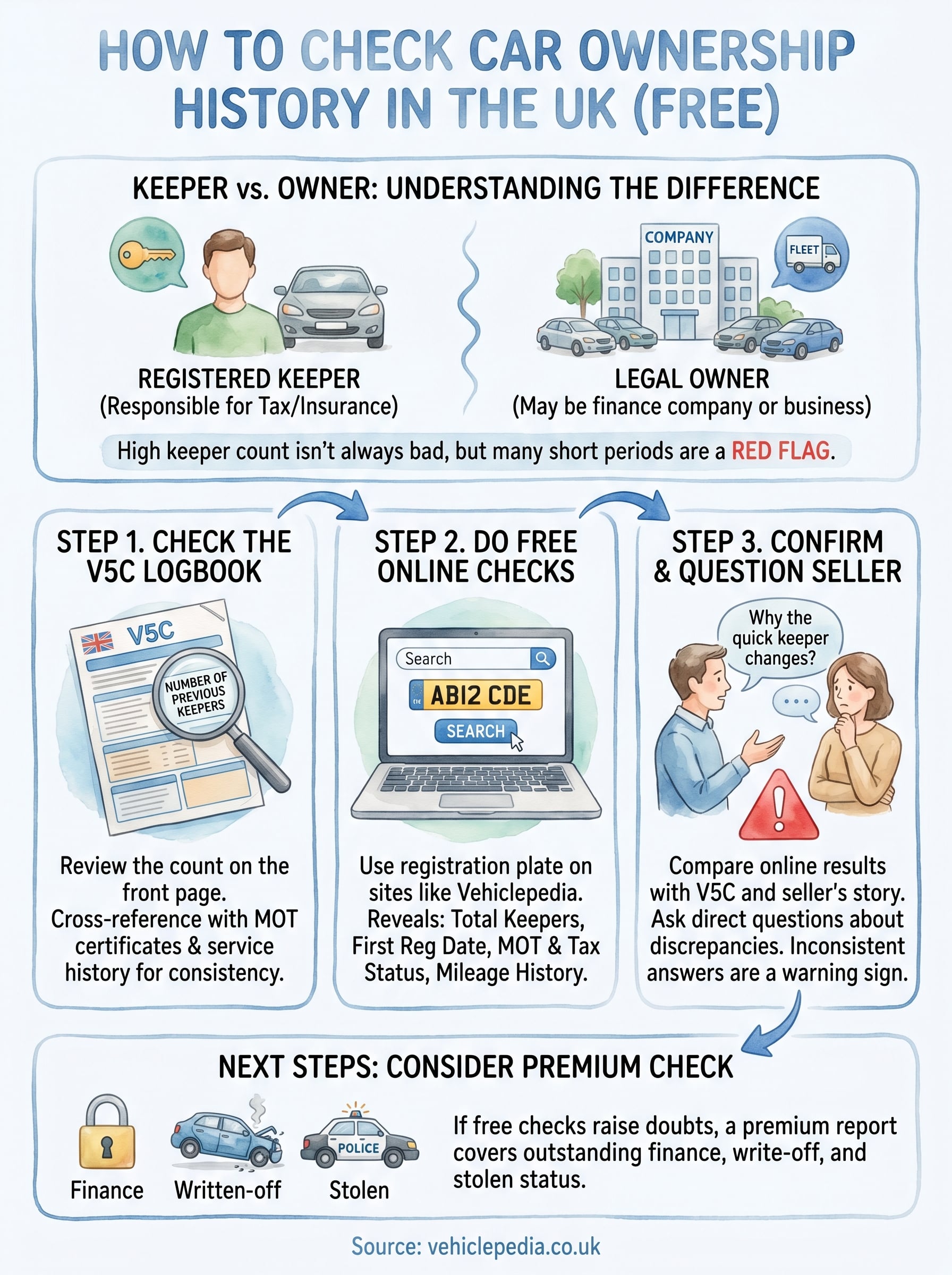
You now have a clear process for how to check car ownership history in the UK. Start with the V5C logbook, run a free online plate lookup, and confirm what the data shows against what the seller tells you. If the keeper count, mileage, or MOT history does not match the seller's account, push back with specific questions or walk away.
Before you hand over any money, consider whether a premium check makes sense for the car you are buying. A free check covers keeper count and MOT history, but a premium report also includes written-off status, stolen vehicle checks, and outstanding finance data. These three checks catch the issues that cost buyers the most when they go undetected.
Take a look at our sample premium report to see exactly what a full Vehiclepedia check covers before you commit to any purchase.