Car Colour Checker by Reg: How to Find Your Paint Code
Use a car colour checker by reg to spot DVLA record errors, then find your true paint code on the vehicle plate for a perfect touch-up match.
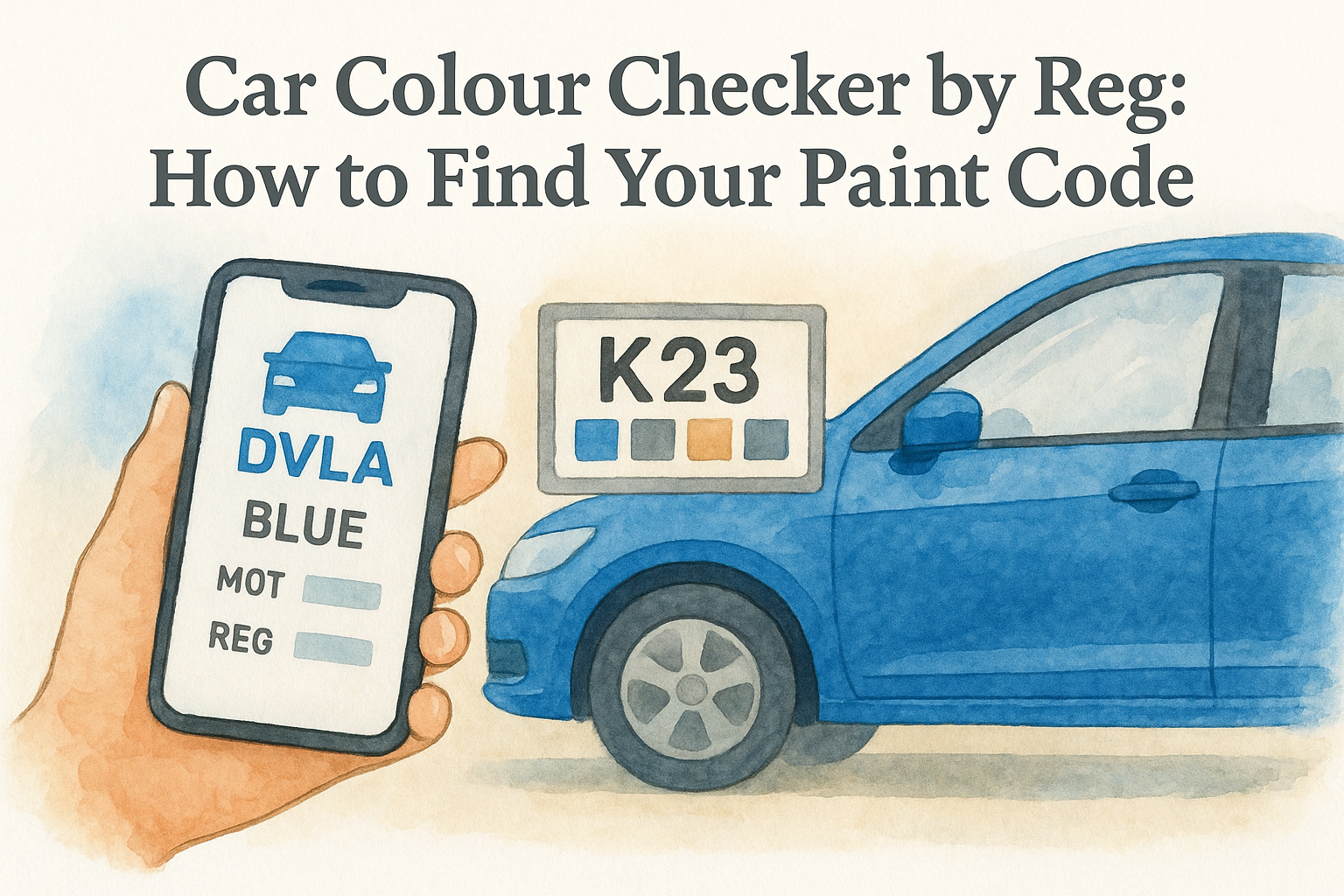
Car Colour Checker by Reg: How to Find Your Paint Code
You've got a scratch to touch up, a bumper to respray, or you're just trying to confirm the exact shade of your car before you list it for sale. Whatever the reason, guessing between "Midnight Blue" and "Storm Blue" from memory never ends well. That's where a car colour checker by reg comes in handy, giving you a quick way to pull official colour data straight from your number plate.
Using a check car colour by registration UK search, you can find your vehicle's current recorded colour on DVLA records within seconds, no logbook or paint tin required. But your reg alone won't hand you the exact factory paint code, which is the string manufacturers use to match paint precisely. For that, you'll need to look in a specific spot on your car, and we'll show you exactly where.
In this guide, you'll learn how to check your car's colour by registration, understand what that result actually tells you, and track down the genuine paint code so any repair or respray matches perfectly, first time.
What a paint colour code is and why you need one
A paint colour code is a short alphanumeric string, usually three to eight characters, that a manufacturer assigns to one specific shade of paint used on a specific model range. Ford's "Frozen White" might carry the code YZ, while Vauxhall's own white could be a completely different mix under a different reference. The code isn't decorative. It tells a bodyshop or paint supplier the exact pigment ratio, base coat, and sometimes the lacquer type used when your car left the factory. Without it, you're relying on a colour name that manufacturers reuse, tweak, and rebrand across different years and trims.
Colour name vs paint code: what's the difference
DVLA records and most car colour checker by reg tools only store a broad colour category, things like "Blue", "Silver", or "Grey". That's fine for identifying a vehicle in a car park or matching a logbook description, but it's nowhere near precise enough for bodywork. Manufacturers might sell a dozen different blues in a single model year, all logged as "Blue" on official records. Here's how the two compare:
| DVLA colour record | Manufacturer paint code | |
|---|---|---|
| Precision | Broad category (e.g. "Blue") | Exact shade and formula |
| Source | Registration and MOT data | Paint code plate on the vehicle |
| Useful for | Identifying a car, checking history | Ordering paint, respraying, touch-ups |
| Changes over time | Updated if you resprayed and declared it | Fixed from the factory, never changes |
A DVLA colour tells you what the car looks like; a paint code tells a bodyshop exactly what to mix.
Why generic colour names let you down
Imagine your Ford Focus is officially "Blue" on its V5C, but Ford sold that Focus generation in Performance Blue, Deep Impact Blue, and Chill Blue, all of which would round down to the same generic category. Order a touch-up pen based on the word "blue" alone and you'll end up with a patch that's noticeably off, especially in direct sunlight where mismatches are hardest to hide. This is the single biggest reason drivers get frustrated after a DIY touch-up job: they matched the name, not the code.
When you actually need the code
You'll want your genuine paint code in a handful of situations, and it's worth having it noted down before you need it urgently:
- Touching up stone chips or scratches with a paint pen or aerosol
- Booking a full respray or panel repair after an accident, where it also pays to know whether the damage was logged as a write-off
- Ordering replacement bumpers or panels pre-primed to match
- Insurance claims where the assessor needs the exact shade for a like-for-like repair
- Selling privately, where an accurate colour description builds buyer trust and helps you work out what your car is worth by reg
Each of these depends on accuracy, not a rough guess. A registration lookup gets you started by confirming the general colour and ruling out obvious errors (say, if your car's recorded as silver but you know it's grey, that flags a DVLA record issue worth sorting first). But the genuine paint code always comes from the vehicle itself, stamped or printed on a plate the manufacturer fits during production. The next step walks you through using your reg to check the recorded colour, then finding that plate so you can pull the real code straight from the source.
Step 1. Check your car's colour using its registration number
Start with the quickest check available: your number plate. Head to Vehiclepedia's free vehicle colour and details check and enter your registration into the lookup box. Within seconds you'll get back a DVLA-recorded colour, along with useful extras like MOT status, tax band, registration date and other vehicle specs you can look up from a plate, all pulled from official government sources rather than guesswork.
Running this check first matters for two reasons. It confirms the broad colour category on record, which is handy for spotting errors (a car showing as "grey" when you know it's black usually means a past owner never updated the V5C after a respray, so it's worth learning how to verify a logbook against DVLA records online). It also rules out the most common mistake buyers and sellers make: assuming the DVLA record is precise enough to order paint against. It isn't, and knowing that early saves you a wasted trip to a paint supplier.
Your reg gets you the colour category in seconds; it won't get you the paint code.
What you'll see in the results
A typical car colour checker by reg result includes:
- The current recorded colour (e.g. "Blue", "Silver", "Black")
- Date of first registration
- Make and model
- Engine size and fuel type
- MOT and tax status
Notice what's missing: any mention of a specific paint code, trim level colour name, or manufacturer reference. That's normal. DVLA simply doesn't hold that level of detail, because it isn't required for taxing or MOT purposes.
Cross-checking against what you see
Before moving on, glance at your car and compare it to the recorded colour. If there's a clear mismatch, that's worth flagging separately (via GOV.UK's vehicle colour change guidance) rather than trusting the paint code hunt to fix it. Assuming the record is accurate, you're ready for the real work: physically locating the plate that carries your genuine paint code.
Once you've confirmed the general colour matches what's parked on your drive, you've done everything a registration lookup can offer. The next step takes you inside the car itself, because no online check car colour by registration UK tool, however good, can access the number stamped onto your vehicle at the factory.
Step 2. Find the paint code plate on your vehicle
Every car built for UK roads carries a small paint code plate somewhere on the body, usually fixed by the factory during assembly and never removed. Manufacturers don't standardise where they put it, which is why so many drivers end up searching the boot, the door frame, and the bonnet before finding the right spot. Locating this plate is the only reliable way to get a genuine factory paint code, since no registration lookup or DVLA record holds this level of detail.
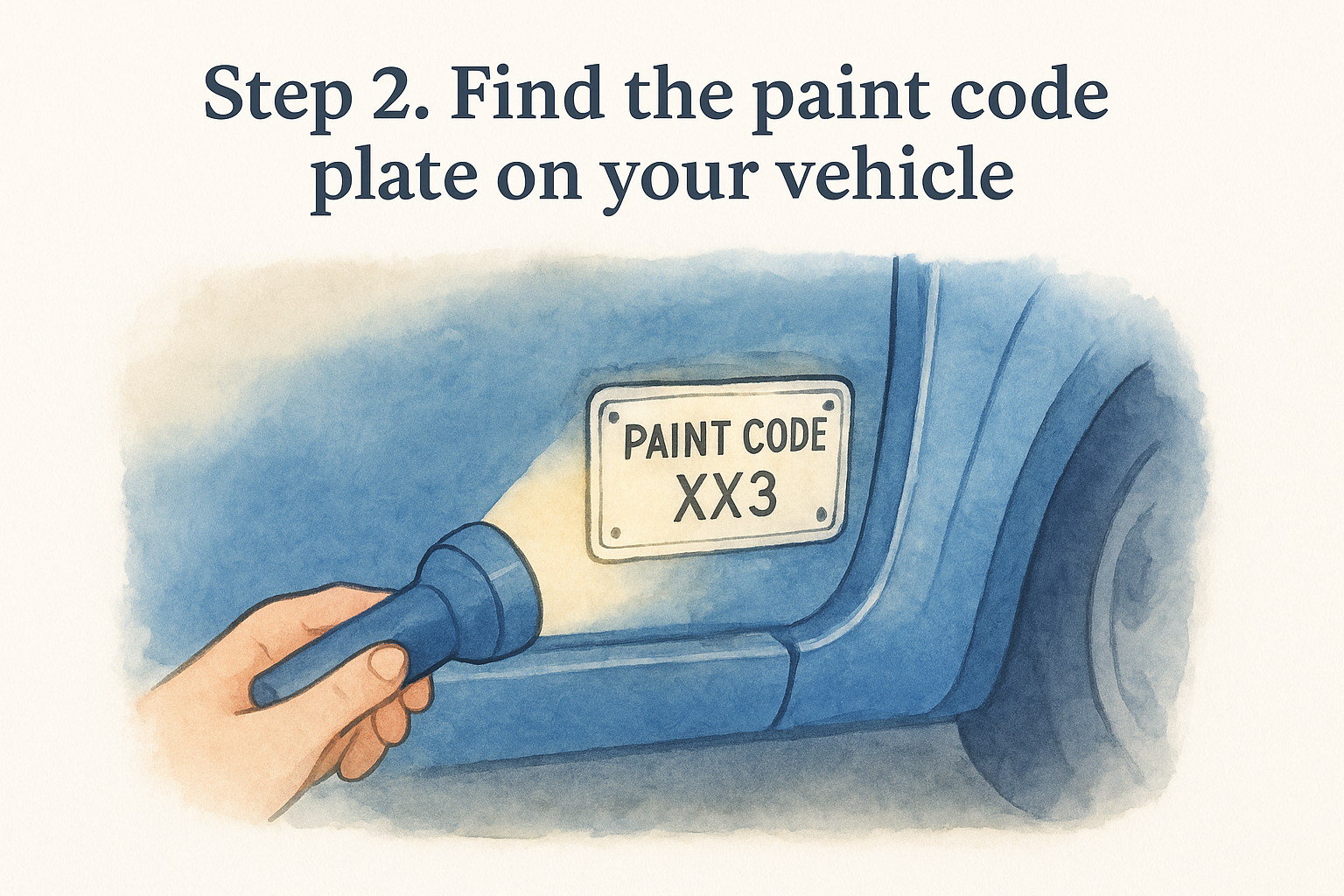
The paint code plate is the one label on your car that never lies about its colour.
Common locations to check first
Start with the areas manufacturers use most often, working through them in order:
- Driver's door shut pillar (the frame you see when the door is open, not the door itself)
- Bonnet underside, near the front edge or hinges
- Boot lid or boot floor, sometimes under the carpet or spare wheel cover
- Front bulkhead, in the engine bay near the windscreen
- Glovebox, on the rear wall or underside of the lid
Most cars keep the plate on or near the VIN plate and its 17 characters, so if you already know where that's stamped, check nearby first.
Tools that make the search easier
Bring a torch and a clean cloth before you start, because plates are often small, faded, or tucked behind grime and factory sealant. A magnifying glass or your phone's camera zoom helps with codes printed in tiny font, particularly on older vehicles where the ink has dulled with age. If you're checking under the bonnet or in the boot, wear gloves; some plates sit near sharp edges or hot components.
What the plate actually shows
Once you've found it, you're looking for a short code, usually labelled "Colour", "Paint Code", or a manufacturer-specific abbreviation like "Farbcode" on German cars. It sits alongside other production details like the VIN, engine code, and trim level, so don't assume the first string of numbers you see is the paint reference. Photograph the whole plate before you note anything down, since some codes stretch across two lines and it's easy to miss a character when copying by hand.
Step 3. Decode your paint code and identify the finish type
Once you've copied the code from the plate, the next job is working out what it actually tells you. Manufacturers don't follow one universal format, so a code that looks like "202" on a Vauxhall means something completely different from a three-digit code on a Ford. Some codes combine letters and numbers to show both the colour reference and the finish type, and getting the finish right matters just as much as getting the shade right.
Reading the code format
Most codes fall into one of a handful of patterns, and knowing which one you're looking at saves confusion at the paint counter.
| Format example | Typical brand | What it usually means |
|---|---|---|
| WA306 | Ford | Colour reference plus trim variant |
| 41L | Vauxhall | Numeric colour reference |
| 2Q2Q | Volkswagen | Standard VW alphanumeric code |
| 040 | BMW | Three-digit colour code |
Check your format against your specific brand before assuming a match, because a code that looks plausible for one manufacturer can be meaningless, or worse, wrong, for another.
Understanding finish types
Colour is only half the story. The paint finish determines how light reflects off the surface, and getting this wrong is one of the most common reasons a touch-up looks patchy even when the shade itself is spot on.
- Solid: flat, single-layer colour with no metallic flake
- Metallic: contains aluminium flake that shifts appearance under different light
- Pearlescent: uses mica particles for a deeper, shifting shine
- Matte: specialist finish requiring a matching matte lacquer, not gloss
Matching the colour but missing the finish is why so many touch-ups look worse than the scratch they were meant to fix.
Cross-checking with the manufacturer
If your code doesn't obviously match any of the formats above, run it through your manufacturer's official parts or paint lookup tool, many of which let you search by VIN for extra confidence. Paint suppliers working through a dealer network can also confirm the exact finish type before you order, which avoids the costly mistake of buying solid paint for a metallic panel.
Step 4. Confirm the match before you buy paint
Before you commit to a full tin or aerosol, treat your paint code as a strong lead rather than a guarantee. Manufacturers occasionally tweak formulas between production runs, and suppliers sometimes mix slightly different batches even from the same code. Testing first, on a small hidden panel or a spare piece of plastic, saves you from discovering a mismatch only after you've sprayed a visible section of bodywork.
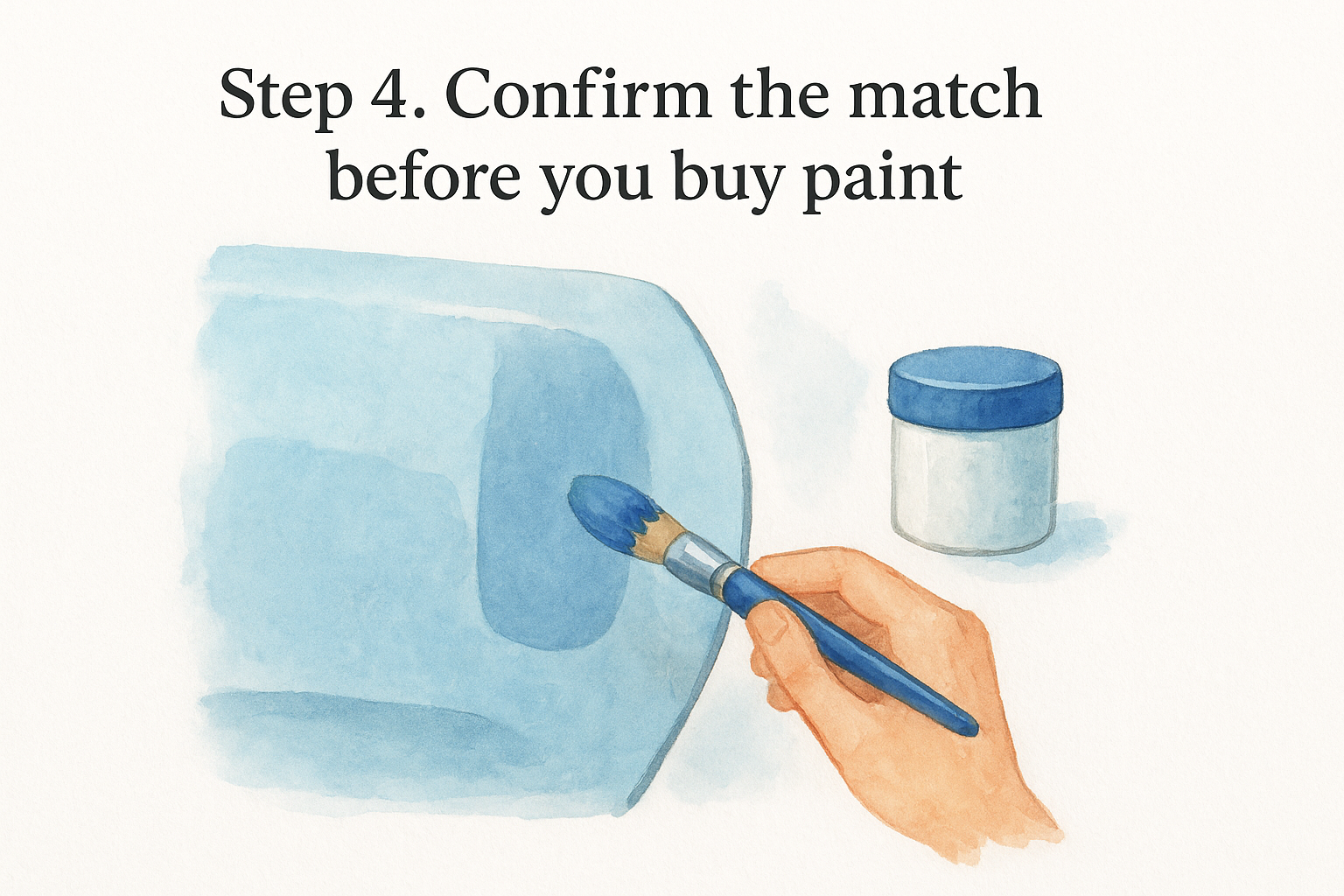
Order a sample before the full amount
Most reputable paint suppliers, including those that work from official manufacturer codes, offer small testers or sample pots for a few pounds. Buy one of these before ordering a full can, and apply it to an inconspicuous spot like inside the fuel filler flap or a lower door edge. This single step catches the vast majority of mismatches, and it costs a fraction of what you'd spend redoing a botched respray.
A five-pound tester pot is cheaper than resparying a panel you got wrong the first time.
Check the match in different light
Paint that looks perfect under a garage strip light can shift noticeably in direct sunlight, especially with metallic or pearlescent finishes. Walk the tested panel outside and check it at different times of day, ideally morning and late afternoon when the angle of light changes most. Compare it against an unaffected panel nearby, since your eye picks up subtle differences far better side by side than from memory.
Get a second opinion where it counts
Finally, if the repair is highly visible, a bonnet, a door, or anything at eye level, it's worth asking a bodyshop or paint specialist to confirm the match before you proceed. Bodyshops mix paint daily and spot inconsistencies most drivers would miss, particularly with older cars where the original colour has faded slightly from years of UV exposure. Getting this confirmation costs little if you're already booking the work, and it turns a code you found on a plate into a match you can trust on the car.
With the match confirmed, you're ready to buy with confidence rather than hope. The final piece of the puzzle, if you haven't found your plate yet, is knowing exactly where your specific manufacturer tends to hide it.
Paint code plate locations by car brand
Different manufacturers stick to their own habits, and knowing your brand's usual spot saves you crawling around the whole car. Volkswagen Group brands (VW, Audi, Seat, Skoda) almost always fit the plate to the driver's door shut pillar, while Ford tends to favour the bonnet underside or the slam panel at the front. Vauxhall and BMW often hide theirs in the boot area, sometimes under the spare wheel cover, so don't give up after one glance under the bonnet.
Quick reference table
| Brand | Most common location | Backup location |
|---|---|---|
| Ford | Bonnet underside / slam panel | Driver's door shut pillar |
| Vauxhall | Boot floor, under carpet | Glovebox |
| Volkswagen | Driver's door shut pillar | Front bulkhead |
| Audi | Driver's door shut pillar | Boot lid |
| BMW | Boot lid or spare wheel well | Front bulkhead |
| Mercedes-Benz | Driver's door shut pillar | Bonnet underside |
| Toyota | Driver's door shut pillar | Bonnet underside |
| Nissan | Bonnet underside | Driver's door shut pillar |
| Peugeot/Citroen | Bonnet underside | Boot floor |
If your car isn't listed, start at the driver's door shut pillar; it's the closest thing to a universal default.
When the plate isn't where it should be
Sometimes a previous respray, a replaced panel, or a bit of factory inconsistency means the plate simply isn't where the table suggests, which is also why paintwork checks matter when buying a used car. Older vehicles, particularly anything pre-2000, are more likely to have a faded or missing plate altogether, since paint code plates weren't always standard practice decades ago. In that case, your owner's handbook often lists the paint code in the specification section, and it's worth checking there before assuming the plate's gone for good.
Regardless of brand, remember that a check car colour by registration UK search only ever gets you the starting point, the broad DVLA category. Pairing that with the correct plate location for your specific make is what actually gets you to a code you can hand to a paint supplier with confidence.
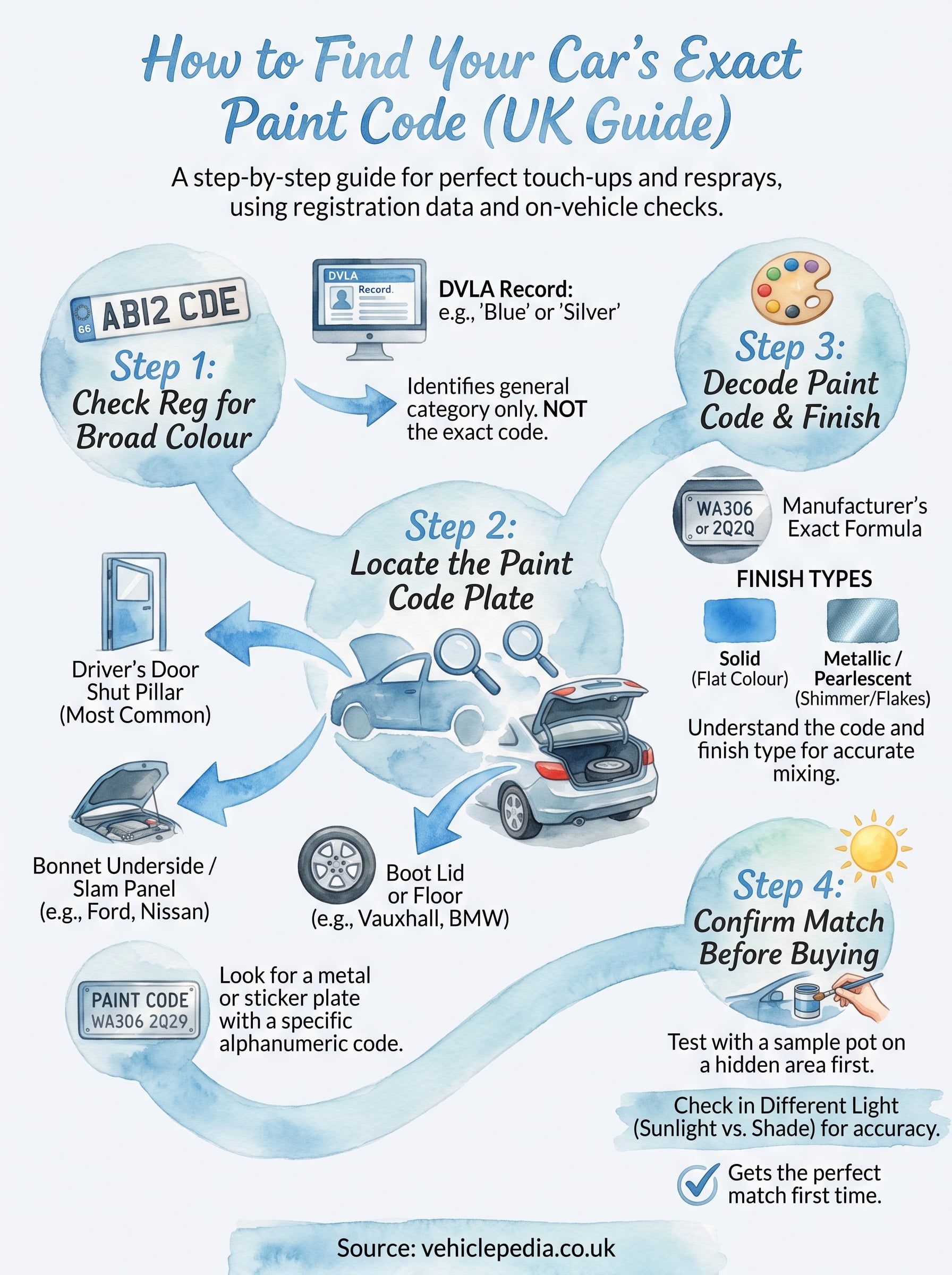
Getting your paint match right first time
Getting an exact colour match comes down to combining two things: a quick registration lookup for the broad category, and the genuine paint code stamped somewhere on your car's body. Skip either step and you risk a touch-up that looks close under garage light but glaring in the sun. Running a car colour checker by reg takes seconds and flags any obvious DVLA record errors before you go hunting for the plate, while the code itself, once decoded and tested with a sample pot, gives you the confidence to book a respray or order parts without second-guessing the shade.
Before you commit to any paint order, it's worth seeing exactly what detail a full vehicle check can surface beyond colour, from ownership history to written-off status. Have a look at what a full Vehiclepedia report actually reveals, then run your own reg to get the full picture before you spend a penny on paint or a purchase.