Car Reg Value Checker: How to Check Your Car's Worth
Use a car reg value checker to get an instant valuation range, then learn how mileage, condition and live listings sharpen accuracy before you sell or buy.

Car Reg Value Checker: How to Check Your Car's Worth
You want a straight answer on how much your car is worth in the UK, not a sales pitch from a dealer trying to lowball you. Whether you're selling privately, part-exchanging, or just curious after a friend mentioned their motor's gone up in value, a car reg value checker gives you a quick estimate based on your number plate rather than guesswork or a tape measure of scratches.
Here's the direct answer: enter your registration into a car valuation by registration plate tool, and it pulls together your car's make, model, age, mileage estimate, and market data to spit out a realistic price range in seconds. No forms about trim levels or service history needed, the plate does the heavy lifting.
In this article, we'll walk through how these tools actually work, what data feeds into your valuation, and where a car reg price checker can fall short, especially if you're checking a private number plate rather than the vehicle itself. We'll also cover how to get the most accurate figure and what to do once you've got it.
Why checking your car's value matters
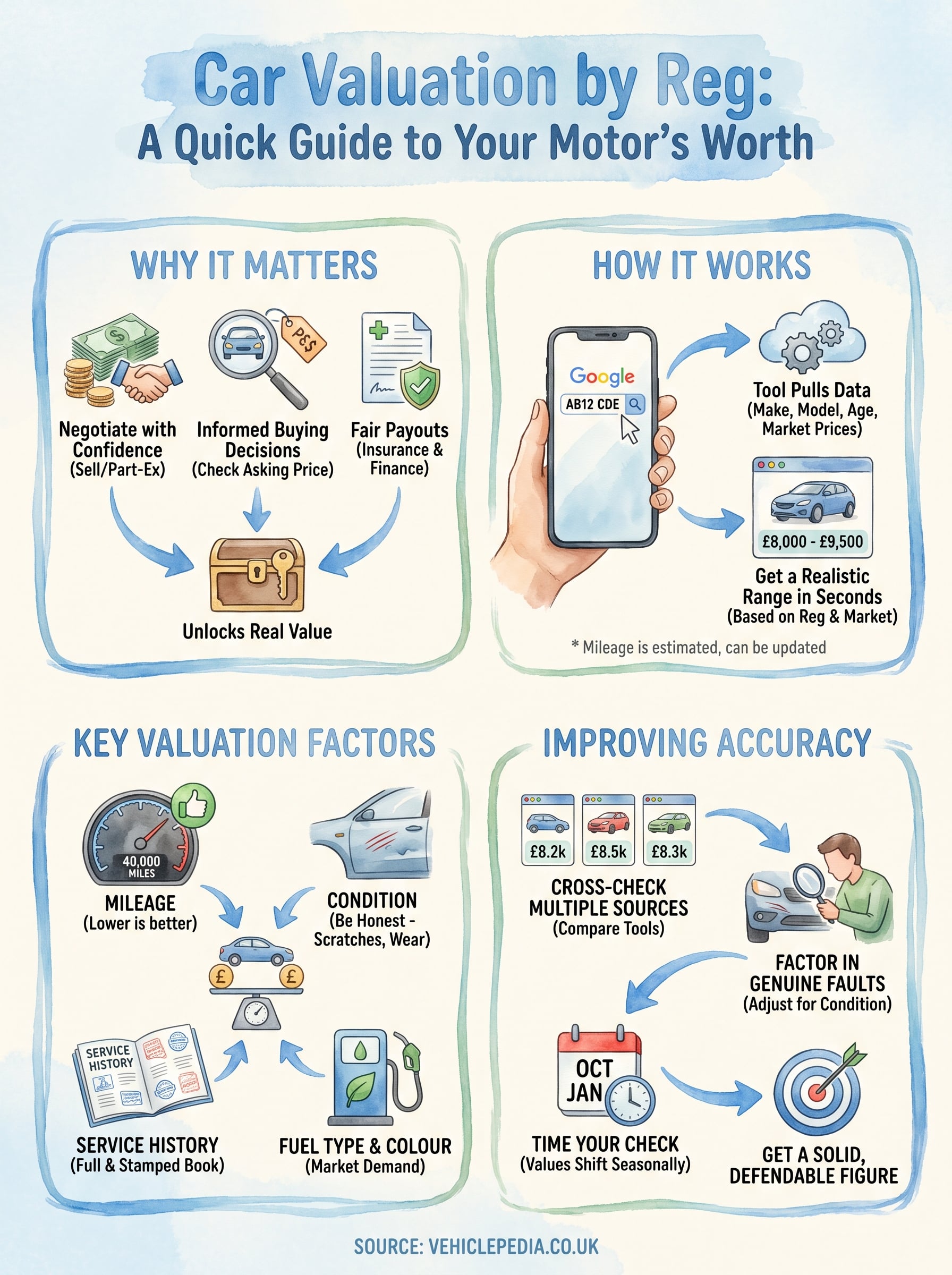
Getting a handle on your car's worth isn't just idle curiosity, it shapes real decisions about money in your pocket. Sell too low and you've left cash on the table. Price too high and your car sits unsold for months while you keep paying insurance and tax on a vehicle you thought was already gone. A car reg value checker gives you a benchmark before you commit to anything, so you're negotiating from a position of knowledge rather than hope.
Selling or part-exchanging with confidence
Dealers know that most private sellers haven't checked the market rate, and part-exchange offers reflect that. When you walk in armed with a realistic valuation range pulled from your registration, you can spot a lowball offer immediately and push back with actual figures rather than a gut feeling. This matters most when the difference between a fair offer and a poor one can run into hundreds or even thousands of pounds, particularly on newer or low-mileage cars.
A quick reg check turns a guessing game into a negotiation you can actually win.
Buying decisions and budget planning
If you're the one buying, a valuation check tells you whether the asking price lines up with what similar cars are actually selling for. This is separate from what a vehicle history check actually shows, which digs into MOT records, finance, and write-off status, but the two work well together. You want to know both what it's worth and what's wrong with it, if anything, before you hand over money.
Insurance, finance, and inheritance situations
Valuations aren't only for buying and selling. Insurers sometimes ask for evidence of value after a claim, and getting an independent figure protects you from being short-changed on a payout. If you're settling an estate, splitting assets after a separation, or working out how much equity you have in a financed car, an accurate figure from your reg matters just as much as it does in a private sale. Knowing the number upfront saves arguments later, whether that's with an insurer, a solicitor, or a family member.
How to check your car's value by registration
Start with the basics: you only need your number plate and a couple of minutes. Head to a reputable car valuation check tool, type in your registration, and the system cross-references DVLA records with market pricing data to build your valuation. No need to dig out the logbook or measure tyre tread first, the plate alone unlocks the make, model, year, and engine size needed for a solid estimate.
Here's what a typical check involves:
- Enter your registration plate into the checker's search bar.
- Confirm the vehicle details that come back (make, model, fuel type, year).
- Review the valuation range, usually shown as a low, average, and high estimate.
- Cross-check against live listings for the same make and model to sanity-check the figure.
Some tools ask for mileage manually, since the DVLA doesn't store this centrally, so pop in your actual mileage if prompted rather than relying on the age-based estimate. Skipping this step is the single biggest reason people get a valuation that doesn't quite match reality.
Your registration gets you 90% of the way to an accurate valuation, mileage gets you the rest.
Free checks like the one on Vehiclepedia also flag basic details like MOT status and tax band alongside the valuation, and our guide to valuing your car by reg instantly shows how that context helps when you're comparing your car against similar ones for sale nearby.
What affects your car's valuation
Several factors combine to shape the number your car reg value checker spits out, and understanding them helps you judge whether a valuation feels right. Mileage sits near the top of the list: two identical cars from the same year can differ by thousands of pounds if one has covered 40,000 miles and the other 90,000. Condition matters too, though a reg-based check can't see scratches or a dented bumper, so it assumes average wear unless you tell it otherwise.
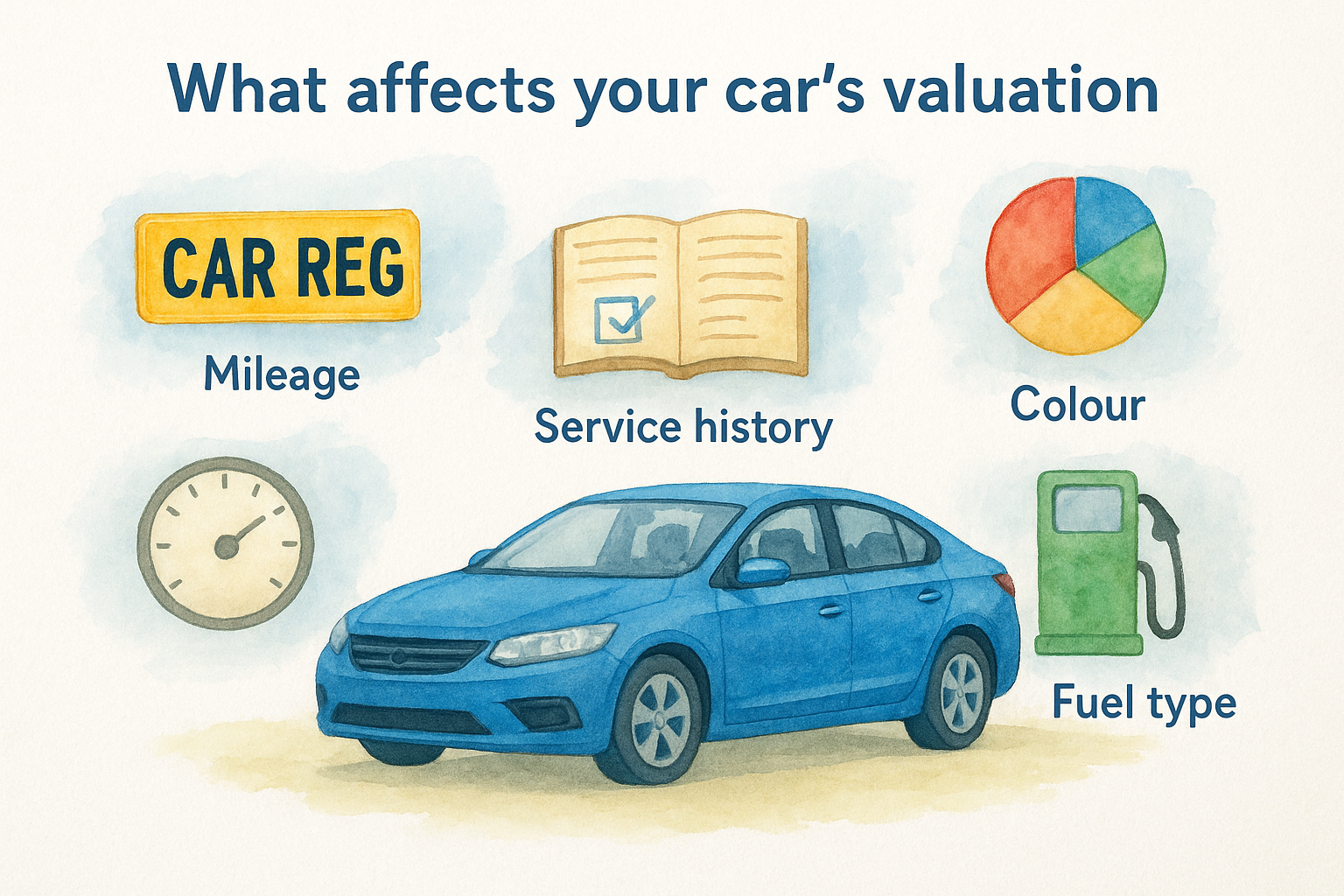
Colour, trim level, and optional extras also nudge the price, sometimes more than people expect. A popular colour like white or grey tends to hold value better than an unusual shade that limits your buyer pool. Service history plays a role as well, since a fully stamped book reassures buyers that the engine hasn't been neglected.
The plate tells the valuation tool what your car is, but only you can tell it what condition that car's actually in.
Market demand shifts things further. Fuel type has become a bigger factor recently, with diesel values softening in many segments while hybrid and electric models hold steadier, depending on local demand. Below is a quick summary of what typically pulls value up or down.
| Factor | Pushes value up | Pushes value down |
|---|---|---|
| Mileage | Low for age | High for age |
| Service history | Full, stamped | Patchy or missing |
| Colour | Popular, neutral | Unusual, niche |
| Fuel type | Strong current demand | Falling demand |
| Previous owners | Fewer | Many |
Getting the most accurate valuation
A car reg value checker gives you a starting figure, but a few extra steps sharpen that number into something you can actually rely on when you're negotiating a sale or purchase. Getting this right matters more the higher the car's value, since a rough estimate on a £3,000 runabout barely dents your wallet, but the same margin of error on a £25,000 SUV can cost you real money.
Cross-check multiple sources
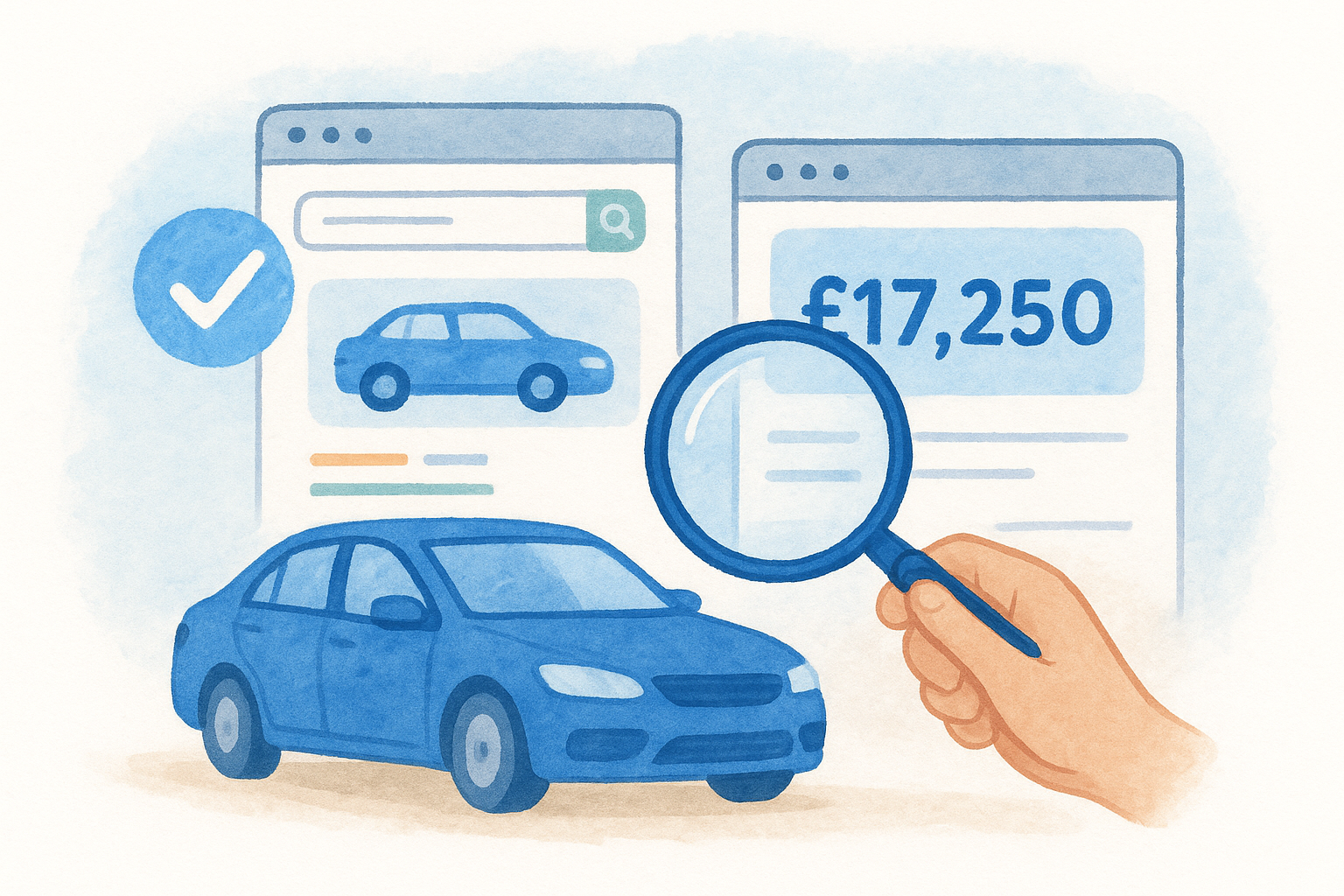
Don't stop at one tool. Run your plate through two or three of the most accurate valuation sites in the UK and compare the ranges they return, since each pulls from slightly different market data and pricing models. Look at live listings for your exact make, model, and year too, filtering by similar mileage where you can. If your registration check and the live market broadly agree, you've got a solid figure to work with.
One valuation is a guess, three that agree is a fact you can act on.
Factor in condition honestly
Be honest about scratches, worn interior, or a cracked windscreen, since a car reg price checker can't see any of that and assumes average condition by default. Knock a percentage off your estimate for genuine faults, and add a bit back for extras like a recent full service or new tyres.
Time your check
Valuations shift with the seasons, with fuel prices, and with how much value a car loses each year, so a check done today might read differently in three months. If you're not selling immediately, run a fresh check closer to the actual transaction date rather than relying on an old figure.
Making sense of your car's value
A car reg value checker won't replace a proper inspection or a haggling session, but it gives you a number grounded in real data rather than a guess pulled from thin air. Run your plate through a checker, cross-reference it against live listings, factor in honest condition notes, and you've got a figure you can actually defend at the negotiating table. Selling, buying, sorting insurance, or splitting an estate all get easier once you know what the car's genuinely worth rather than what someone hopes it's worth.
Remember that a valuation only tells you part of the story. Pair it with a full history check to catch finance, write-offs, or mileage discrepancies before you commit any money. Curious what a complete report actually looks like? See what a full Vehiclepedia report reveals and know exactly what you'd get before you buy.