Private Reg Checker: How to Check a Private Number Plate
Use a private reg checker to verify plate status, spot red flags, and confirm paperwork before buying a private number plate safely.
Private Reg Checker: How to Check a Private Number Plate
Buying or selling a private plate isn't like a normal car purchase, and it helps to know what a private number plate actually is and how to buy one before you start. You're paying for a combination of letters and numbers, and if you don't check it properly, you could end up with a plate that's already assigned elsewhere, carries a hidden retention certificate, or simply doesn't exist on the DVLA database at all. A private reg checker takes the guesswork out of that process before any money changes hands.
So how do you actually check a private number plate? You look up the registration through an official DVLA-backed source, which confirms whether the plate is currently on a vehicle, held on retention, or available to purchase, along with details like assignment history and format legitimacy. This is exactly the kind of UK vehicle registration lookup that separates a straightforward transfer from a costly mistake.
In this guide, we'll walk through exactly how to run a private plate check, what the results actually mean, and the red flags that suggest a seller isn't being upfront. We'll also cover where official DVLA data fits in, and when it pays to dig deeper with what a vehicle history report includes before you commit to buying.
Why check a private number plate before buying or selling
Private plates aren't cheap, and that's exactly why sellers sometimes cut corners on paperwork. A cherished registration can sell for anywhere from a few hundred pounds to tens of thousands, so skipping a private reg checker to save five minutes is a poor trade against losing the entire purchase price to a plate that was never properly assigned.
A plate is only worth what you can legally prove you own.
The financial risk of an invalid transfer
Sellers occasionally advertise plates that are still tied up in an unfinished DVLA transfer, held on an expired retention document, or attached to a vehicle you'd want to check for finance still owed before buying. If you hand over cash before confirming the plate's legal status, you have no guarantee the DVLA will ever let you assign it to your own car. Running a check first protects your money and gives you a paper trail if anything goes wrong later.
The legal risk of buying something that isn't there
Occasionally a plate combination gets listed for sale that doesn't actually exist in valid DVLA format, or it's already assigned to another vehicle entirely. Buying blind here can mean paying for something you can never register. A quick DVLA number plate check confirms the plate is genuine before you go any further.
What a check protects you from
- Paying for a plate still tied to an unfinished retention certificate
- Buying a registration that's already assigned to someone else's car
- Discovering the plate format isn't valid or recognised by the DVLA
- Getting stuck mid-transfer with no legal claim to the plate
Selling carries its own version of this risk too. Buyers increasingly expect proof upfront, and turning up with a verified check speeds up negotiations and builds trust before you've even met in person.
Step 1. Run your registration through a private reg checker
Start by getting the exact registration format from the seller, or from the retention document if you're selling. A private reg checker needs the plate entered precisely as it appears, spaces and all, because a single wrong character pulls back the wrong result or nothing at all. Head to a service like Vehiclepedia's car check, type in the registration, and follow the steps for verifying a UK plate before you agree on price or arrange a meet-up.
Never negotiate on a plate you haven't checked yet.
What you'll need on hand
Having the right details ready speeds this up considerably:
- The full registration number, formatted exactly as issued
- The retention certificate number, if the plate isn't currently on a vehicle
- The seller's name, to cross-check against any paperwork later
- A note of whether the plate is on retention or currently assigned
Reading the first result
Once you submit the vehicle registration lookup, you'll get an immediate status: assigned to a vehicle, held on retention, or not recognised by the DVLA at all. That first result tells you whether you're dealing with a live transfer, a retained plate ready to move, or a registration that simply doesn't check out. Treat any mismatch between what the seller told you and what the check shows as a reason to pause, not proceed.
Step 2. Understand what the results are telling you
Every private reg checker result falls into one of three categories, and knowing how to read them is the whole point of learning how to check a private number plate properly. Get this wrong and you could still walk into a bad deal even after running the check.
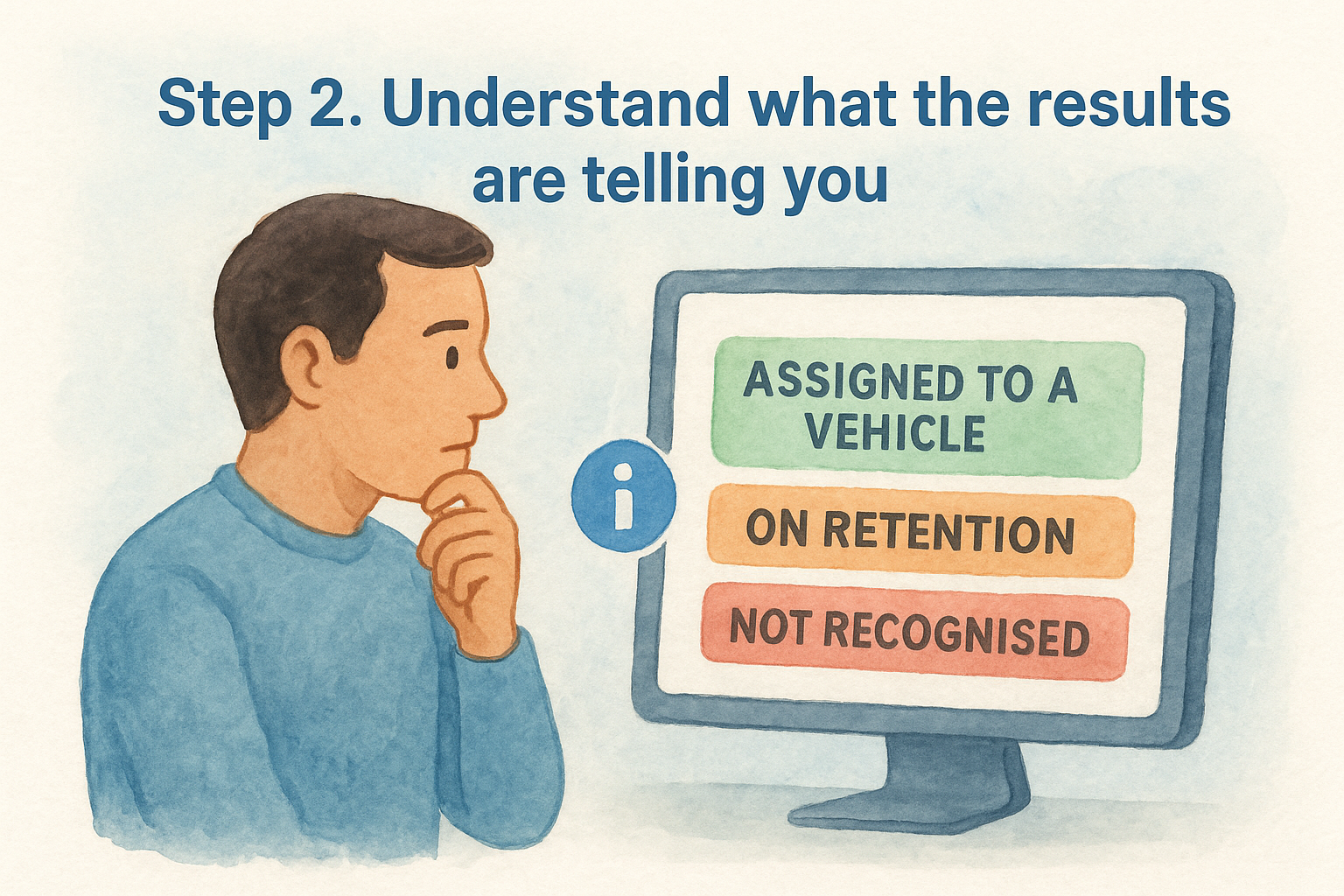
The result only protects you if you understand what it means.
Assigned, on retention, or unrecognised
| Result | What it means | What to do next |
|---|---|---|
| Assigned to a vehicle | Plate is currently on a car, transfer needed | Confirm the vehicle's own history too |
| On retention | Held by DVLA, ready to assign | Ask for the retention certificate number |
| Not recognised | Format invalid or doesn't exist | Walk away, it can't be registered |
Spotting which row you're in tells you exactly what documents you should ask for next.
Cross-checking the assignment history
History matters here too. If the plate assignment history shows multiple recent transfers in a short period, ask why. Legitimate cherished plates sometimes change hands quickly, but a rapid churn can also signal a plate offloaded after a failed sale or a dispute nobody's mentioned to you.
Step 3. Check the ownership and legal paperwork
Once the private reg checker confirms the plate's status, the next job is matching that result against the actual paperwork in the seller's hands. Numbers on a screen mean little if the documents don't back them up, so ask to see originals rather than photos or scans before you agree to anything.
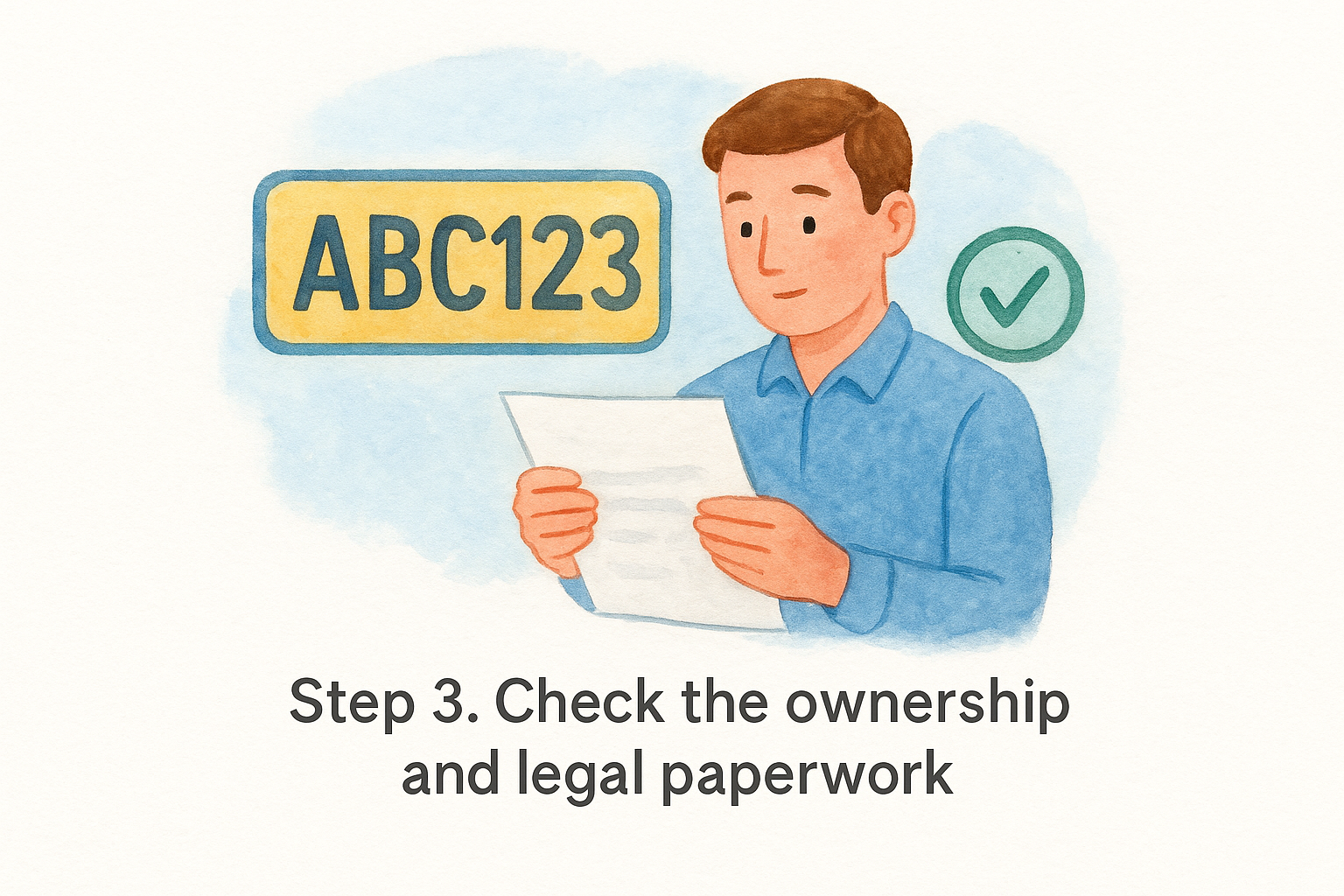
A check confirms the plate exists, paperwork confirms who owns it.
Documents to ask for
Request these before you hand over any money:
- The V750 retention certificate, if the plate isn't currently on a vehicle
- The V778 registration certificate, if it is
- Photo ID matching the name on the certificate
- A recent utility bill or bank statement confirming the seller's address
If any of these are missing, delayed, or don't match the name that came up in your DVLA lookup, treat that as a reason to slow down rather than push forward.
Confirming the seller has the right to sell
Ownership on paper isn't always straightforward. Executors selling on behalf of an estate, company directors selling fleet plates, or joint owners all need extra proof of authority. Ask directly how the seller acquired the plate, work through the questions worth putting to a private seller, and request supporting documents such as probate paperwork or a company letterhead confirming their position, so the sale can't be challenged later.
Step 4. Decide your next move
Armed with the checker result and the paperwork in hand, you're now in a position to make a proper decision rather than a rushed one. If everything lines up, the plate is genuine, the seller's documents match, and the assignment history looks clean, you can proceed with confidence. If something's off, even a small inconsistency, it's worth pausing the deal until you get a clear answer.
Walk away from a plate before you walk away from your money.
Red flags that mean you should walk away
- The seller can't produce the V750 or V778 when asked
- Names on the paperwork don't match the ID shown
- The DVLA lookup shows the plate assigned somewhere the seller can't explain
- Pressure to pay quickly before you've finished checking
Completing the transfer properly
When you're satisfied, complete the transfer through the DVLA's official process, either online or using a V317 form, and keep copies of everything for your own records. This final step is what actually gives you legal ownership, so don't treat the private reg checker result as the finish line. It's the green light to proceed, not the transfer itself.
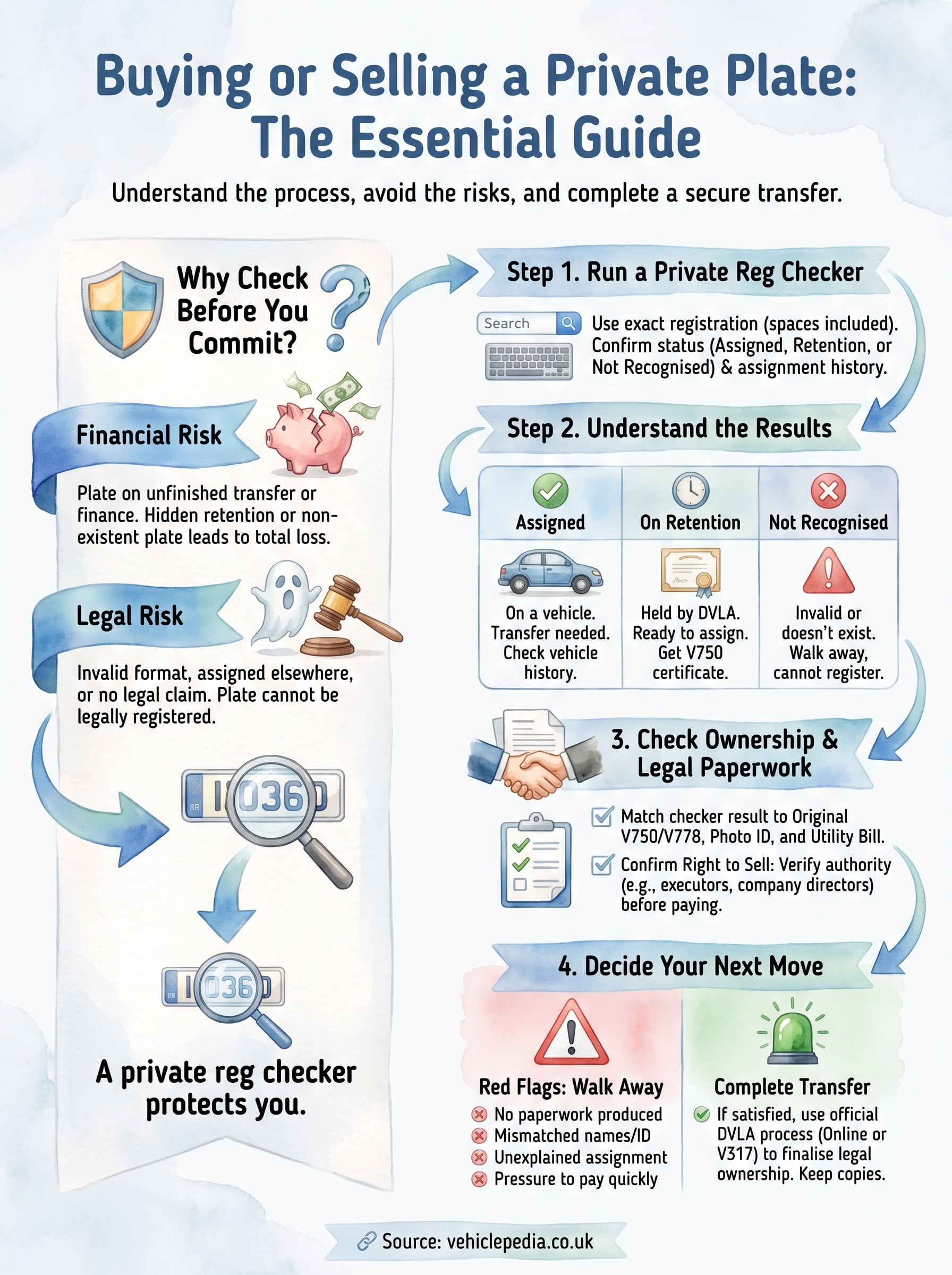
Getting it right before you commit
Buying or selling a private plate comes down to two things: confirming the registration is genuine, and matching that result against real paperwork. Skip either step and you're trusting a stranger's word on something worth potentially thousands of pounds. A private reg checker takes minutes to run, but it's the difference between a clean transfer and a plate you can never legally register.
Rushing the process is where most bad deals happen. Take the time to run the check, request the V750 or V778, and verify the seller's identity before any money moves. Once everything lines up, the DVLA transfer itself is straightforward.
If you're still unsure what a full report covers or what it costs, see exactly what a Vehiclepedia report shows before you commit to buying one. It shows exactly what you're paying for, so there are no surprises later.