Free Car Ownership Check UK: How To Check Owners & Status
Use a free car ownership check uk to see previous keepers and MOT status. Learn how to verify V5C logs and when to use premium checks for total peace of mind.

Free Car Ownership Check UK: How To Check Owners & Status
Before handing over money for a used car, you need to know what you're actually buying. A free car ownership check UK service lets you verify a vehicle's history, including how many previous owners it's had, whether it's taxed, and if the registration details match what the seller claims. Skipping this step is one of the most common mistakes buyers make, and it can lead to expensive problems down the line.
The good news is you don't have to pay to get started. Using official data from sources like the DVLA, you can pull up key details about any UK-registered vehicle in seconds. At Vehiclepedia, we offer one of the most comprehensive free car checks available, giving you instant access to MOT history, tax status, registration details, and more, just by entering a number plate.
This guide walks you through exactly how to check a car's ownership and status for free, what each piece of information actually tells you, and when it's worth upgrading to a premium report for deeper checks like outstanding finance, write-off history, and stolen vehicle alerts.
What a free ownership check can and can't show
A free car ownership check UK gives you a solid starting point, but it has clear limits. Knowing what you're getting before you search saves you from being caught off guard when something important doesn't appear in your results. The data you receive for free comes from official sources like the DVLA, so it's accurate and regularly updated, but some categories of information require a paid check to access.
What free checks reveal
Free checks pull data directly from government databases and return the most critical registration and status details without costing you anything. At Vehiclepedia, entering a number plate instantly shows:
- MOT history including pass and fail dates, mileage readings at each test, and the reasons for any failures
- Current tax status and the date it expires
- Number of previous registered keepers (not their names or addresses)
- Vehicle specifications such as make, model, engine size, and fuel type
- Date of first registration and overall vehicle age
- Colour change history along with any import or export records
The MOT mileage history is one of the most reliable free tools for spotting clocking, where a seller reduces the odometer reading to make a car appear lower mileage than it actually is.
Taken together, these details confirm whether the car matches what the seller is telling you and flag obvious inconsistencies before you even book a viewing.
What free checks won't show
Free data has a ceiling, and some of the most serious financial and legal risks fall outside it. A free check won't tell you whether the car has outstanding finance registered against it, which means you could unknowingly buy a vehicle that someone else still legally owns. It also won't confirm whether the car has been written off by an insurer, or whether it appears on the UK Police stolen vehicle database.
These gaps carry real consequences. If you buy a car with outstanding finance, the finance company can legally reclaim it regardless of what you paid. Buying a written-off vehicle without knowing its category means you could be driving something structurally compromised, or face significant problems when you try to insure or resell it later.
Accessing this deeper data requires a premium vehicle history report, which combines the free DVLA data with records from insurance registers, finance databases, and police systems. Think of the free check as a filter that removes obvious red flags quickly, and the premium report as the final confirmation you need before committing to a purchase and handing over your money.
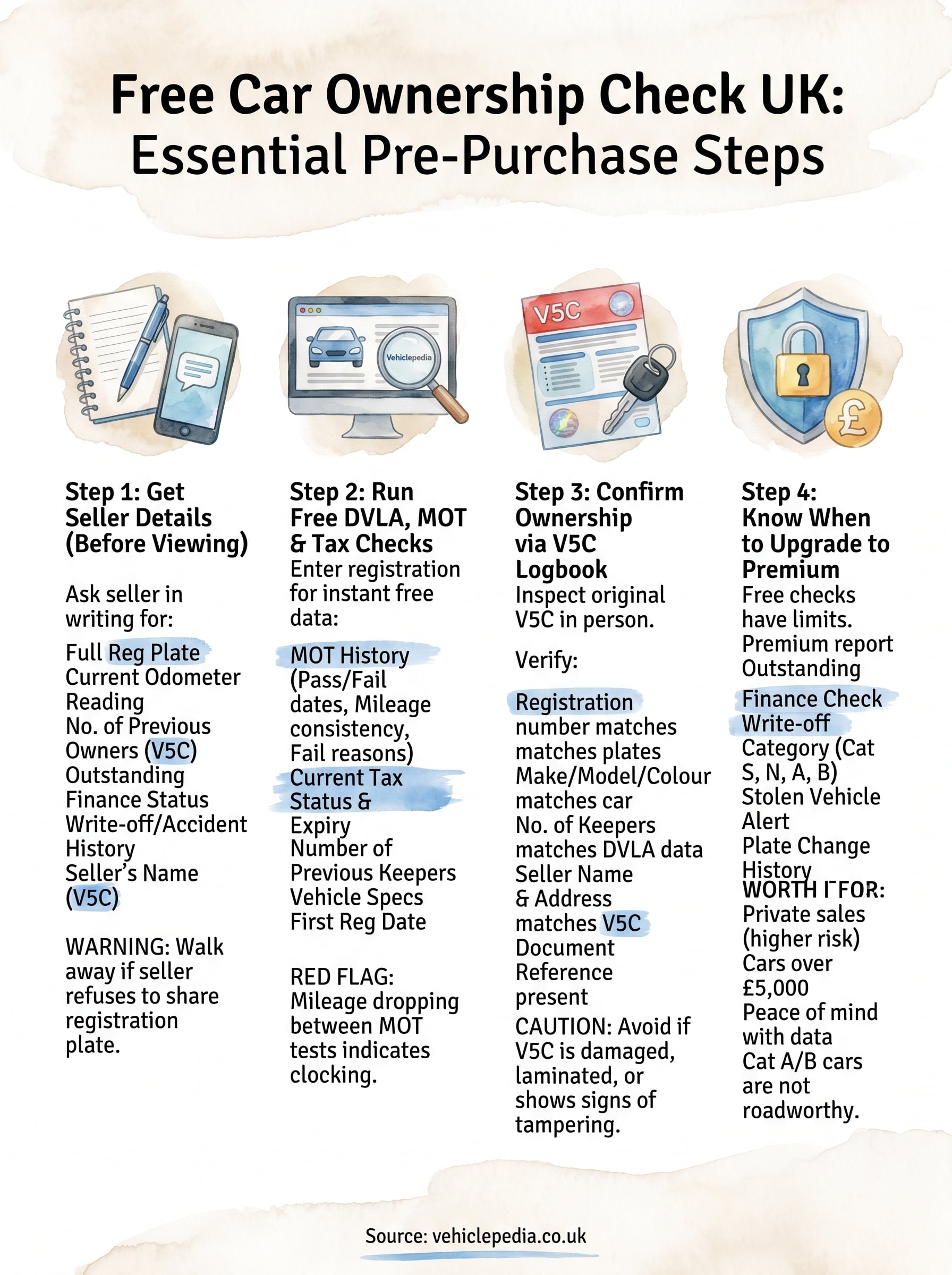
Step 1. Get the details you need from the seller
Before you run a free car ownership check UK, you need the vehicle registration plate ready. That's the number plate displayed on the front and rear of the car, and it unlocks all official records instantly. Everything else you gather from the seller before viewing gives you something concrete to compare against what the check returns.
What to ask the seller
Contact the seller before you arrange a viewing and ask for the details below. Getting this information in writing means you have a clear record if anything doesn't match what the official data shows. Here's a message template you can copy and send directly:
Hi,

Before I come to view the car, could you confirm the following:

- Full registration plate number
- Current mileage shown on the odometer
- Number of previous owners as shown in the V5C logbook
- Whether there is any outstanding finance on the vehicle
- Whether the car has been written off or involved in a serious accident
- Your name as it appears on the V5C logbook

Thanks
If a seller refuses to share the registration plate before you visit, walk away. Any legitimate private seller will provide it without hesitation.
Check the details add up
Once you receive the seller's answers, write them down before running any check. This stops you from unconsciously adjusting your memory to match the results you see. Then compare each point: if the seller claims two previous owners but the DVLA records show four registered keepers, that's a discrepancy you need to question directly.
Pay particular attention to mileage figures. If the seller's quoted mileage sits below the reading recorded at the car's last MOT test, someone has interfered with the odometer, and that's a reason to stop the process immediately.
Step 2. Run free DVLA, MOT, and tax checks
With the seller's details in hand, you're ready to run the official checks. Start at Vehiclepedia by entering the registration plate into the free search tool. The results pull from DVLA records and return instantly, so you don't need to create an account or pay anything to see the core data. As a free car ownership check UK resource, this gives you an accurate, up-to-date snapshot of the vehicle's legal and mechanical history within seconds.
Check MOT history and mileage
The MOT history section shows every test the vehicle has taken, including the date, the recorded mileage, and the outcome. Work through the mileage figures from oldest to newest and confirm they rise consistently. A mileage figure that drops between tests is a clear sign of clocking and a reason to stop the process immediately.
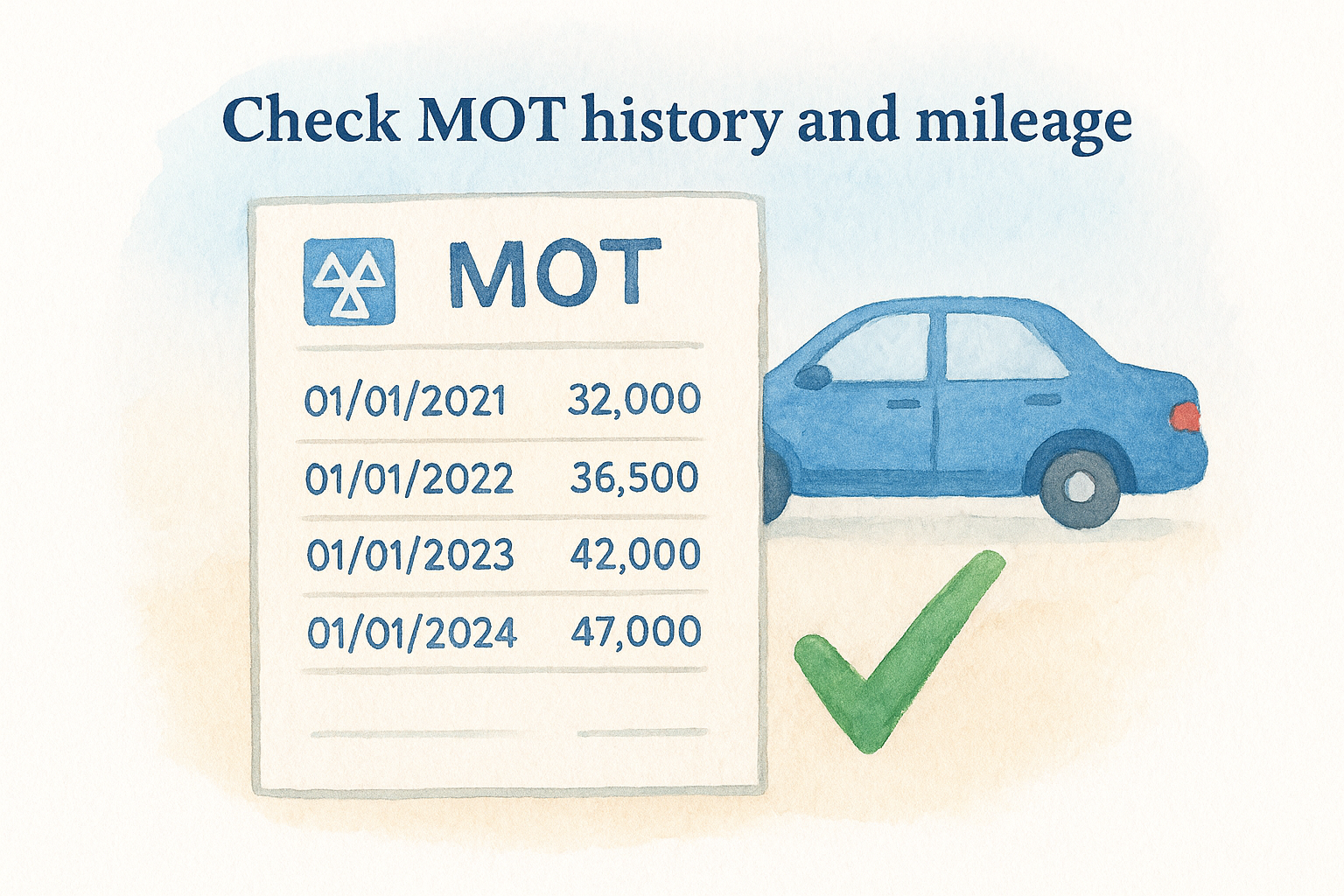
Also read through the failure and advisory notes from each test. Repeated advisories about the same component, such as corroded brake lines or a worn suspension component, suggest the issue was never properly fixed. A car with a long string of recurring advisories will likely cost you more to maintain than its price suggests.
A vehicle that has no MOT history at all could be newly registered, or it could mean the records are tied to a different registration, which is worth investigating further.
Check tax status
The tax status check confirms whether the vehicle is currently taxed for road use and when that tax expires. If the tax has lapsed, you cannot legally drive the car home from the seller's location without arranging cover first. Check this detail before you book a viewing so you're not caught out on collection day. The DVLA updates tax status in real time, so the result you see reflects the current position accurately.
Step 3. Confirm ownership using the V5C logbook
The V5C logbook is the official registration document issued by the DVLA, and physically inspecting it at the point of viewing is one of the most important steps in the process. A free car ownership check UK service tells you what the DVLA has on record, but the V5C in front of you needs to match that data exactly. Never buy a car without seeing the original document in person.
What to check on the V5C
Ask the seller to hand you the V5C before you look at the car. Check every detail carefully and compare it against the results you already retrieved online. The key fields to verify are:
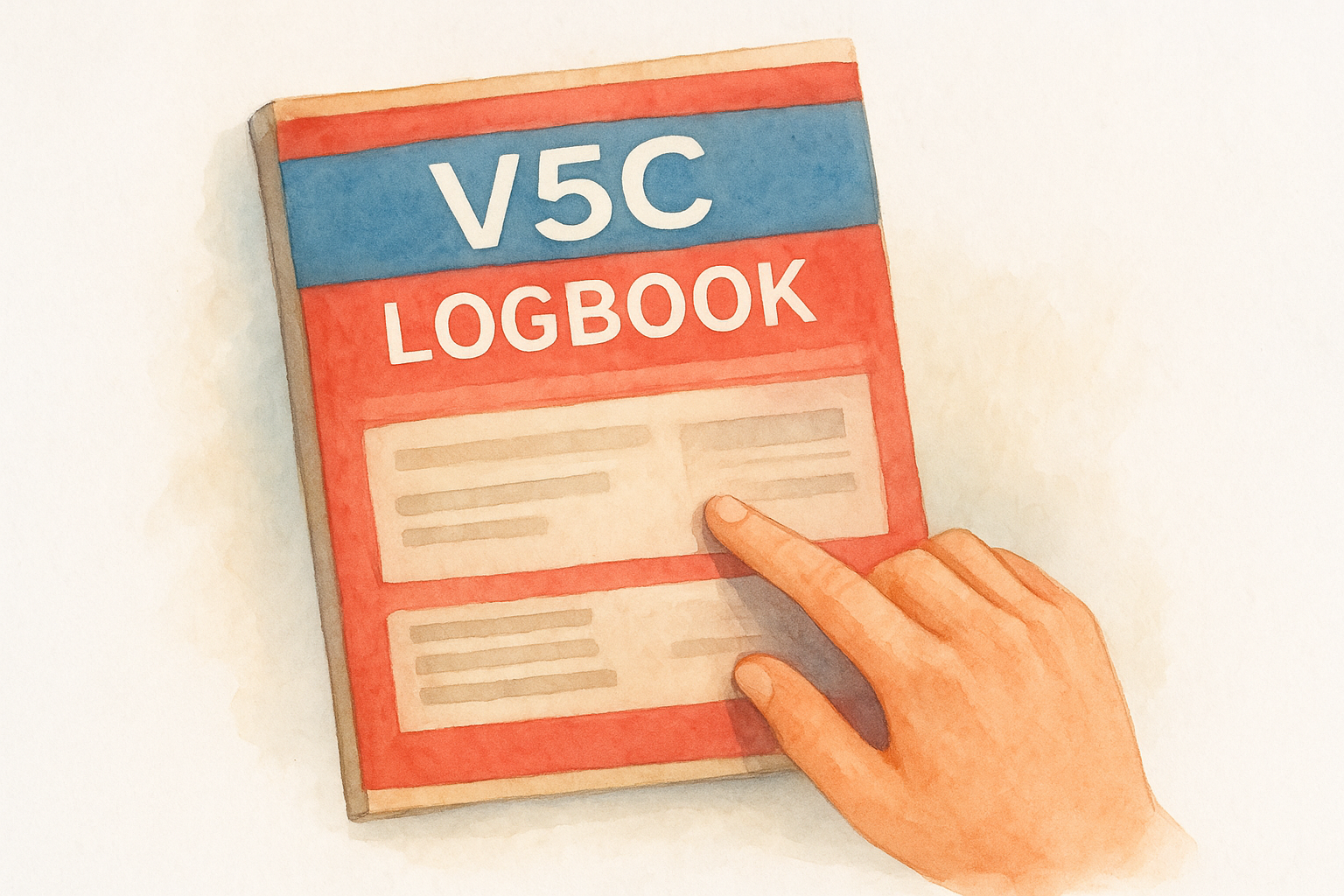
- Registration number must match the plates on the vehicle exactly
- Make, model, and colour must match the car you're standing in front of
- Number of previous keepers must match what the DVLA record shows
- Seller's name and address must match the details they gave you before the viewing
- Document reference number should be present and unaltered
If the number of keepers shown on the V5C is lower than what the DVLA record shows, the document may have been replaced or altered, which is a serious warning sign.
Red flags that suggest a problem
Check the physical condition of the document as carefully as you check its content. A genuine V5C is printed on watermarked paper with a holographic strip. If the document looks laminated, printed on plain paper, or shows signs of tampering around any field, do not proceed with the purchase.
Also confirm the seller's address matches the location where the car is being sold. Selling a car at an address that doesn't appear anywhere on the V5C is a common tactic used in fraudulent private sales, and it's a pattern worth knowing before you travel to a viewing.
Step 4. Know when to pay for deeper checks
A free car ownership check UK removes the most obvious risks quickly, but it doesn't access every database that matters. Once you've confirmed the registration, MOT history, and V5C details all line up, you're in a position to decide whether the purchase warrants a premium report. In most cases, if you're spending more than a few hundred pounds, it does.
What a premium report adds
Premium reports combine the same free DVLA data with records from sources that aren't publicly available. At Vehiclepedia, a full premium check adds the following on top of the free results:
- Finance check confirming whether any outstanding car loan is registered against the vehicle
- Write-off status including the insurance category (Cat S, Cat N, Cat A, or Cat B)
- Stolen vehicle check against the UK Police database
- Plate change history showing whether the registration has been altered at any point
If the car has a Category A or B write-off marker, it is not legally roadworthy and should never be purchased, regardless of the asking price.
The situations that make it worth the cost
Certain circumstances make a premium check non-negotiable rather than optional. If the seller is a private individual rather than a dealer, you have far less legal recourse if a problem surfaces after you buy, so verifying the car's status thoroughly before you hand over money is essential. Private sales account for the majority of cases where buyers unknowingly purchase a car with outstanding finance, because dealers are legally required to settle finance before resale.
Your decision should also factor in the vehicle's age and price. A car priced at £5,000 or more carries enough financial risk that a premium report costing a fraction of that represents straightforward value. The £30,000 data guarantee on Vehiclepedia's premium reports adds an additional layer of protection for non-trade buyers.
Final checks before you buy
By this point, you've run a free car ownership check UK, verified the V5C in person, compared mileage figures across MOT records, and confirmed the seller's details match official data. That process eliminates the most common risks before money changes hands. Before you commit, run through one final list: confirm the registration plates physically match the V5C document, verify the seller's name appears on the logbook exactly as they gave it to you, and check that the car's colour matches the recorded details.
If everything lines up and you've already run a premium report to clear the finance, write-off, and stolen vehicle checks, you're in a strong position to buy with confidence. If you haven't run that deeper check yet, do it before you sign anything. You can preview a sample premium report at Vehiclepedia to see exactly what's included before you decide.