How To Check Previous Owners Of A Car By Reg In The UK
Learn how to check previous owners of a car in the UK. Verify keeper history via the V5C, spot red flags, and find out what data you can legally access.

How To Check Previous Owners Of A Car By Reg In The UK
Knowing how to check previous owners of a car can tell you a lot before you hand over your money. A vehicle that's had six keepers in four years raises very different questions to one that's been with a single owner for a decade. Ownership history helps you spot red flags, verify what a seller is telling you, and build a clearer picture of how a car has been used.
The good news is that checking this information in the UK is straightforward, you just need to know where to look. The DVLA holds registered keeper records, and services like Vehiclepedia let you pull up key vehicle details instantly using nothing more than a registration plate.
This guide walks you through the different ways to check a car's previous owners, what information you can actually access, and what to watch out for along the way.
What you can and can't learn from owner checks
Before you start looking into how to check previous owners of a car, it helps to understand what data is actually available to you. UK privacy law limits what individuals can access about previous registered keepers, so knowing the boundaries upfront saves time and sets realistic expectations.
What you can find out
Several useful data points are available through either a vehicle check service or official channels. A registered keeper count tells you how many people have held the vehicle on record, and when combined with MOT history, it gives you a sense of how the car moved between owners and how consistently it was maintained.
You can typically access:
- Number of previous keepers (not their names or addresses)
- Date the current keeper acquired the vehicle
- MOT test history including recorded mileage at each test
- Whether the car has been written off, stolen, or has outstanding finance (via a premium check)
The number of keepers is not the same as the number of owners. A keeper is the person registered with the DVLA, which may differ from whoever legally owned the vehicle at the time.
What you cannot find out
Private individuals cannot obtain the names or contact details of previous keepers directly. The DVLA holds this information but only releases it to people with a reasonable cause, such as someone involved in an accident who needs to trace another party. You cannot simply request a list of people who have owned a specific car.
Your standard check also will not tell you why each keeper sold the vehicle. Getting that kind of detail requires asking the seller directly, reviewing service records, and reading the MOT history carefully for patterns such as recurring faults or large mileage gaps between tests.
Step 1. Check the V5C logbook and seller details
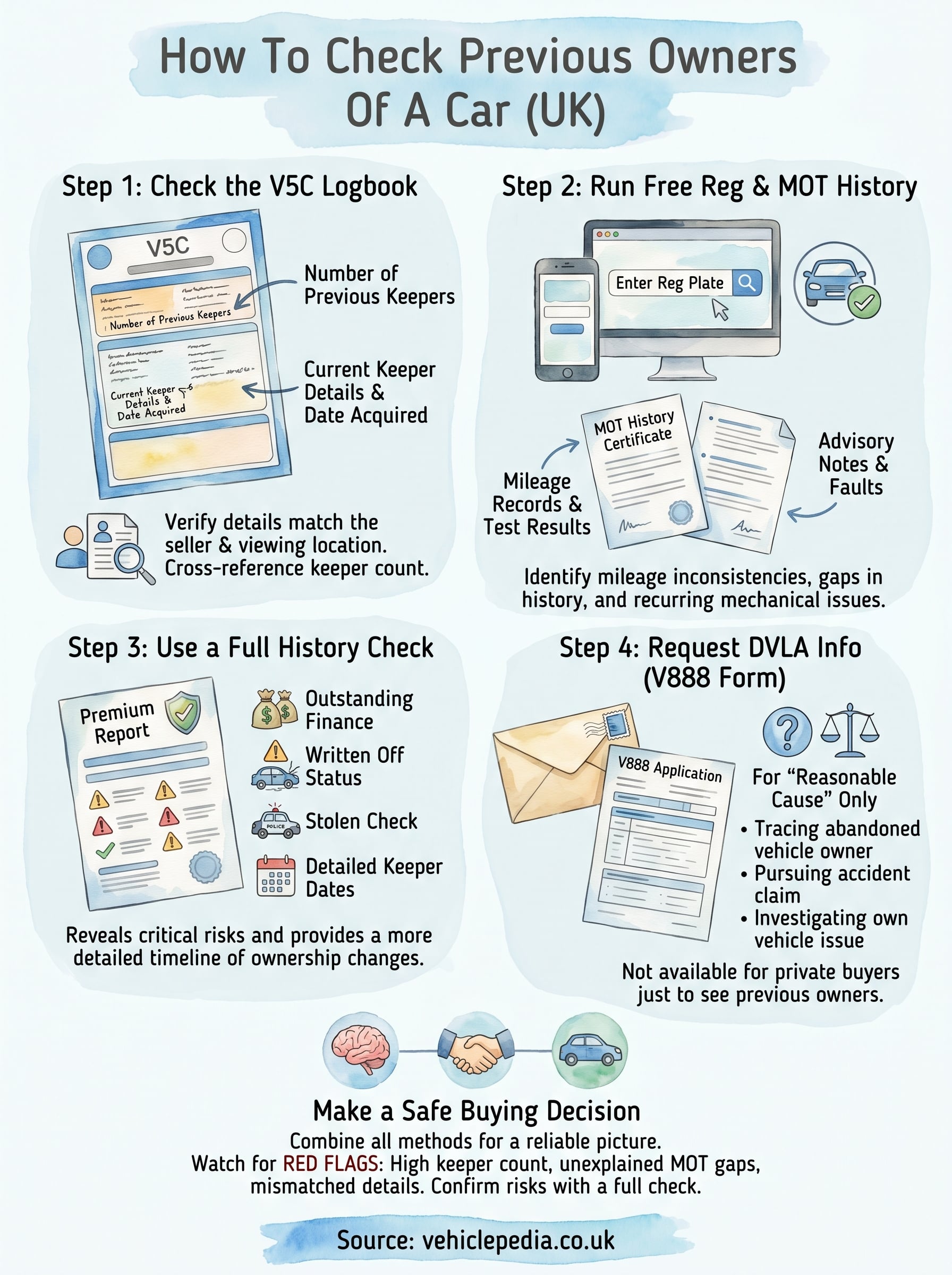
The V5C registration certificate is your first port of call when learning how to check previous owners of a car. It contains the number of previous keepers and the date the current keeper registered the vehicle with the DVLA. Always ask to see the physical document in person before you agree to anything.
What to check on the V5C
The document lists the current registered keeper and includes a section showing how many keepers the vehicle has had in total. Cross-reference the keeper count against what the seller tells you verbally. If a seller claims they have owned the car for five years but the V5C shows a keeper change 18 months ago, that discrepancy is worth questioning directly.
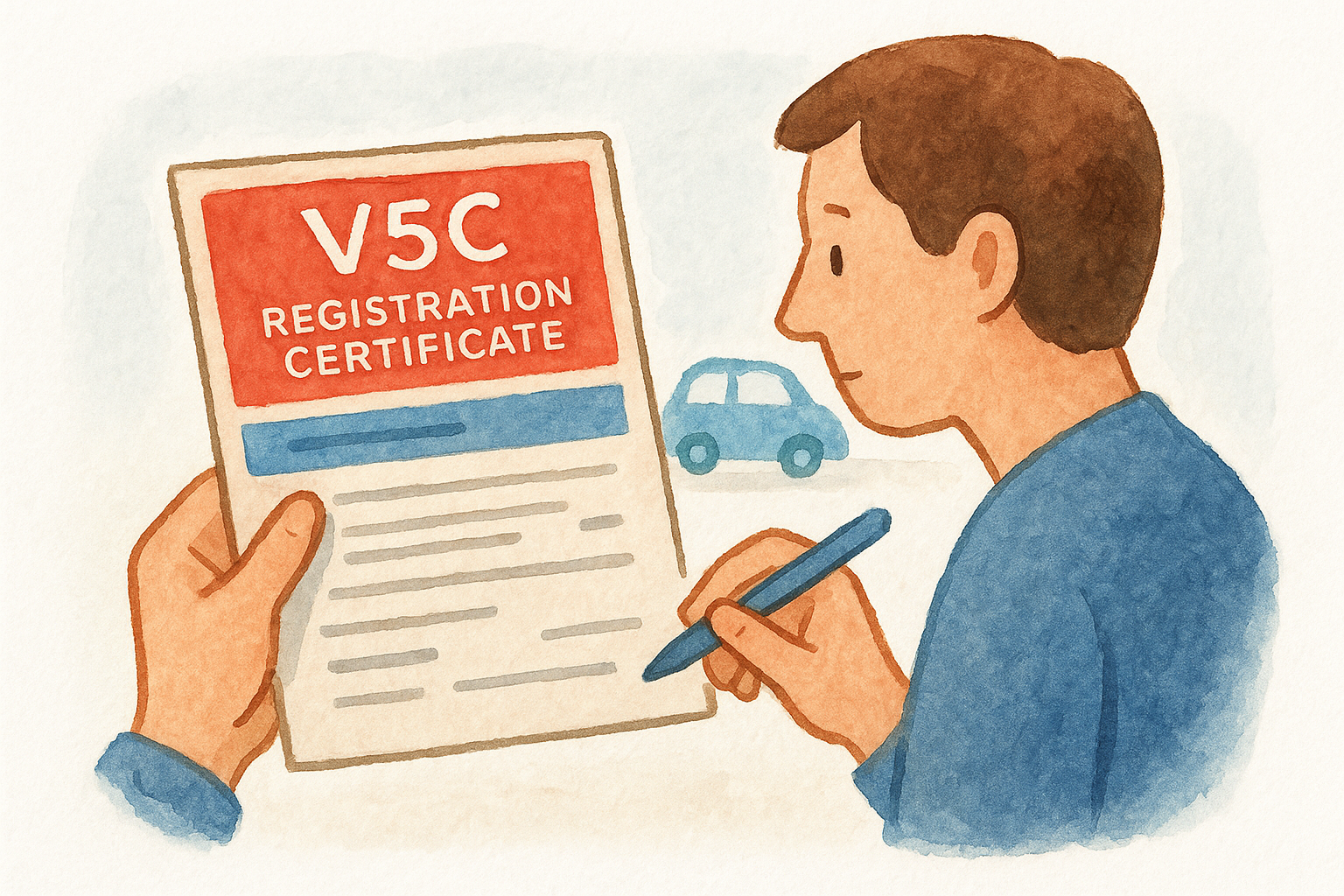
Also verify that the name and address on the V5C match the person selling the car and the location where you are viewing it. Buying from someone whose details do not match the document is a significant warning sign, as it can suggest the vehicle is stolen or being sold without the registered keeper's knowledge.
Never buy a car without seeing the V5C in person. A seller who cannot produce the document should be treated with serious caution.
Step 2. Run a free reg check and MOT history
Running a free registration check is one of the quickest ways to gather data when figuring out how to check previous owners of a car. Enter the vehicle's registration plate into a service like Vehiclepedia and you get instant access to core details including the make, model, engine size, colour, and current MOT status. This takes under a minute and costs nothing.
What the MOT history tells you
The MOT history is particularly useful because it records mileage at each test date, giving you a clear timeline of how the car has been used across different keepers. Gaps in the MOT record can indicate a period when the vehicle was off the road, potentially stored, or driven without a valid certificate, none of which are reassuring signs.
Large or unexplained mileage drops between tests are a strong indicator that the odometer has been tampered with.
Check the recorded advisory notes from each test as well. Recurring issues flagged across multiple tests suggest chronic mechanical problems that previous keepers may not have resolved. A pattern of consistent mileage progression and clean test results points to a well-maintained vehicle and gives you far greater confidence heading into a purchase.
Step 3. Use a full history check for keeper count and risks
A free reg check gives you the basics, but it will not show you everything you need when working out how to check previous owners of a car. A full vehicle history check, such as the premium report available through Vehiclepedia, pulls together the registered keeper count alongside risk data that can change a buying decision entirely.
A car with outstanding finance is still legally owned by the lender, meaning you could lose the vehicle even after paying the seller in full.
What a full history check reveals
A premium report surfaces information that does not appear in a standard lookup. This includes whether the car has been written off by an insurer, flagged as stolen on the UK Police Database, or has outstanding finance attached to it. Each of these issues carries serious legal and financial consequences for a buyer.
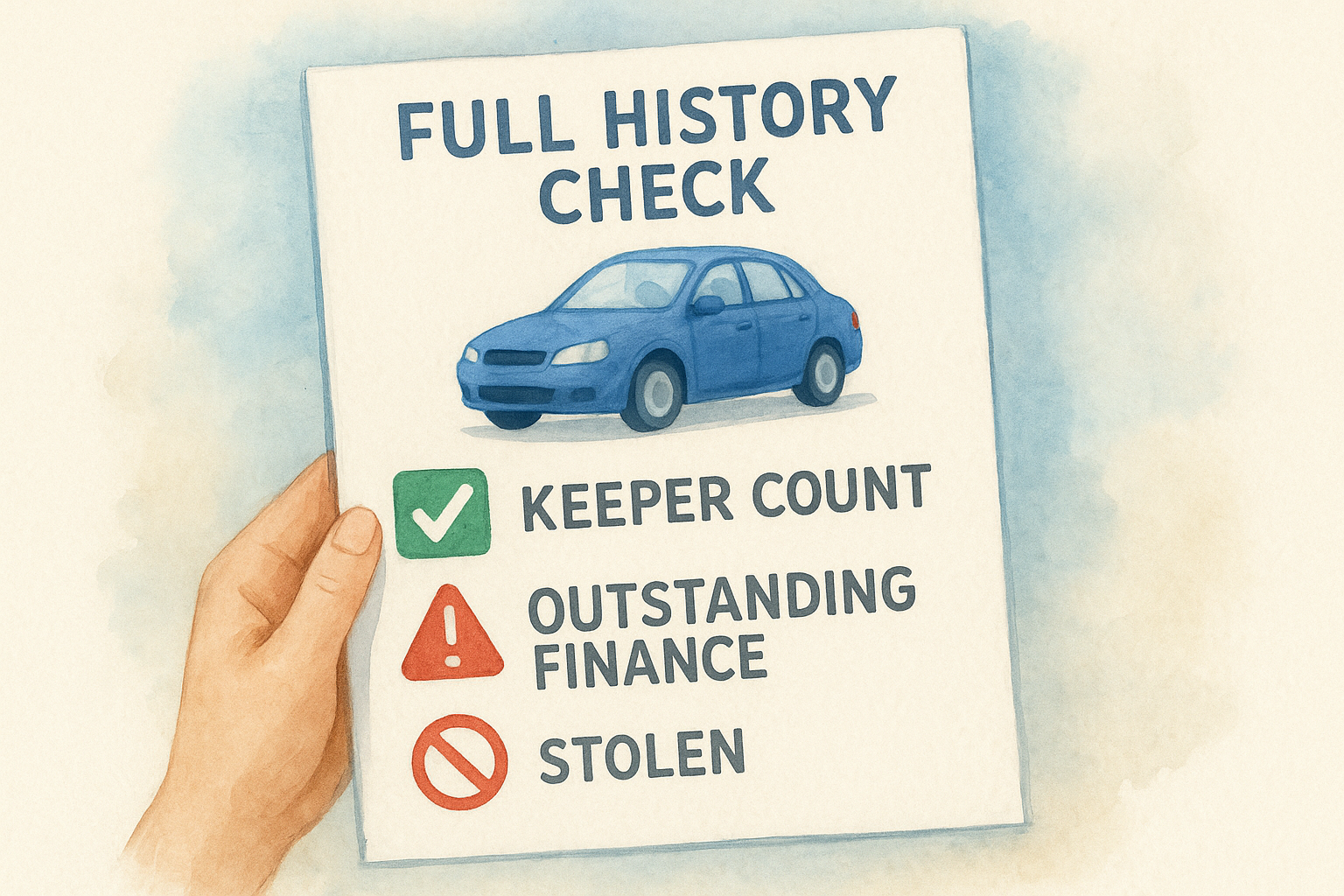
The keeper count in a full check is also more detailed, often showing the dates each keeper held the vehicle, which lets you line up ownership changes against the MOT history. If a keeper sold the car shortly after a major advisory, that timing is worth noting before you proceed.
Step 4. Request keeper info from DVLA when needed
There are limited situations where going directly to the DVLA makes sense when figuring out how to check previous owners of a car. As a private buyer, you cannot simply request a list of previous keepers, but you can submit a V888 form if you have a recognised reasonable cause.
When the DVLA will share keeper details
The DVLA accepts V888 applications from individuals who can demonstrate a legitimate reason, such as tracing an abandoned vehicle's owner or pursuing an insurance claim after a road accident. Purchasing a used car does not qualify on its own, so most buyers will not use this route.
Accepted reasons typically include:
- Tracing the owner of an abandoned or obstructing vehicle
- Pursuing a civil claim following an accident or damage
- Investigating a matter involving a vehicle you already own
If you are a private buyer, a premium vehicle history check is the practical alternative to a formal DVLA request.
How to submit a V888 request
You complete the V888 form, available on GOV.UK, and post it to the DVLA along with the relevant fee and supporting documentation that explains your reason. Processing times vary, and the DVLA will only release information if your stated reason meets their published criteria.
Make a safe buying decision
Knowing how to check previous owners of a car puts you in a much stronger position when buying used. Start with the V5C logbook, run a free reg check to review MOT history, and use a full history report to confirm the keeper count and screen for serious risks like outstanding finance, theft, or write-off status. Each step builds on the last, and together they give you a reliable picture of any vehicle you are considering.
No single source tells you everything, but combining these methods closes most of the gaps a dishonest seller might try to exploit. If the keeper count seems high relative to the car's age, the MOT history shows unexplained gaps, or the V5C details do not match the person selling, those are clear signals to push back or walk away entirely.
View a sample premium report to see exactly what a full Vehiclepedia check reveals before you commit to a purchase.