Free Number Plate Check UK: Find MOT, Tax & Mileage Fast
Get instant MOT, tax, and mileage data with a free number plate check uk. Learn how to spot red flags and verify a car's history before you buy.
Free Number Plate Check UK: Find MOT, Tax & Mileage Fast
Before you hand over thousands of pounds for a used car, a free number plate check UK lookup can reveal details the seller might not mention. Within seconds of entering a registration number, you can pull up a vehicle's MOT history, tax status, mileage records, and basic specifications, all from official sources like the DVLA.
At Vehiclepedia, we built our platform around exactly this: giving UK car buyers fast, reliable access to vehicle data without charging for the basics. Whether you're browsing AutoTrader, visiting a dealer, or eyeing a car on your neighbour's drive, a quick reg check helps you spot red flags early and avoid costly mistakes.
This guide walks you through how to run a free number plate check, what information you'll actually get, and how to use that data to make a smarter buying decision. We'll also cover when it's worth going beyond the free results with premium checks for things like outstanding finance, theft records, and write-off history.
What you can check for free with a reg
A free number plate check UK lookup gives you access to a solid set of official vehicle data pulled directly from DVLA records. You don't need to create an account or pay anything to access these basics, and the results appear within seconds of entering a registration number.
The free data alone is often enough to confirm whether a car is worth inspecting in person before you commit to a viewing.
MOT history and status
MOT history is one of the most useful pieces of free data available. Every MOT test result since 2005 is recorded and publicly accessible, showing you the test date, mileage at each test, pass or fail outcome, and any advisory notes or failure reasons. If a seller claims a car has low mileage but the MOT records show significantly higher figures from a few years back, that discrepancy is an immediate red flag worth raising directly.
Checking the current MOT expiry date tells you whether the car is legally roadworthy right now. A vehicle with an expired MOT cannot be driven on public roads except to a pre-booked test, so a lapsed certificate should prompt a clear conversation with the seller.
Tax status and basic vehicle details
Road tax status is also available for free via a reg check. You can see whether the vehicle is currently taxed, when the tax expires, or whether a SORN (Statutory Off Road Notification) is in place. Since road tax is registered to the keeper, a lapsed or missing tax status is worth questioning before you proceed.
Alongside tax data, a free reg lookup returns core technical specifications: make, model, engine size, fuel type, year of manufacture, and the colour on record with the DVLA. Cross-referencing these details against what you see in person confirms the car matches its paperwork.
What's not included in a free check
Free results do not cover everything you need to buy safely. Outstanding finance, stolen vehicle status, and write-off history are not part of a basic reg lookup. These checks require a premium report, and skipping them on a private sale carries real financial risk.
Step 1. Get the details you need
Before you run a free number plate check UK lookup, you need to confirm the exact registration number of the vehicle. Getting this wrong wastes time and, more importantly, means you might be checking the wrong car entirely.
Find the registration number
The registration plate is displayed on both the front and rear of the vehicle. When checking a car remotely, such as from an online listing, copy the plate exactly as it appears, including any spaces. If the listing only shows a partial plate or the seller is reluctant to share it, treat that as a warning sign before you proceed.
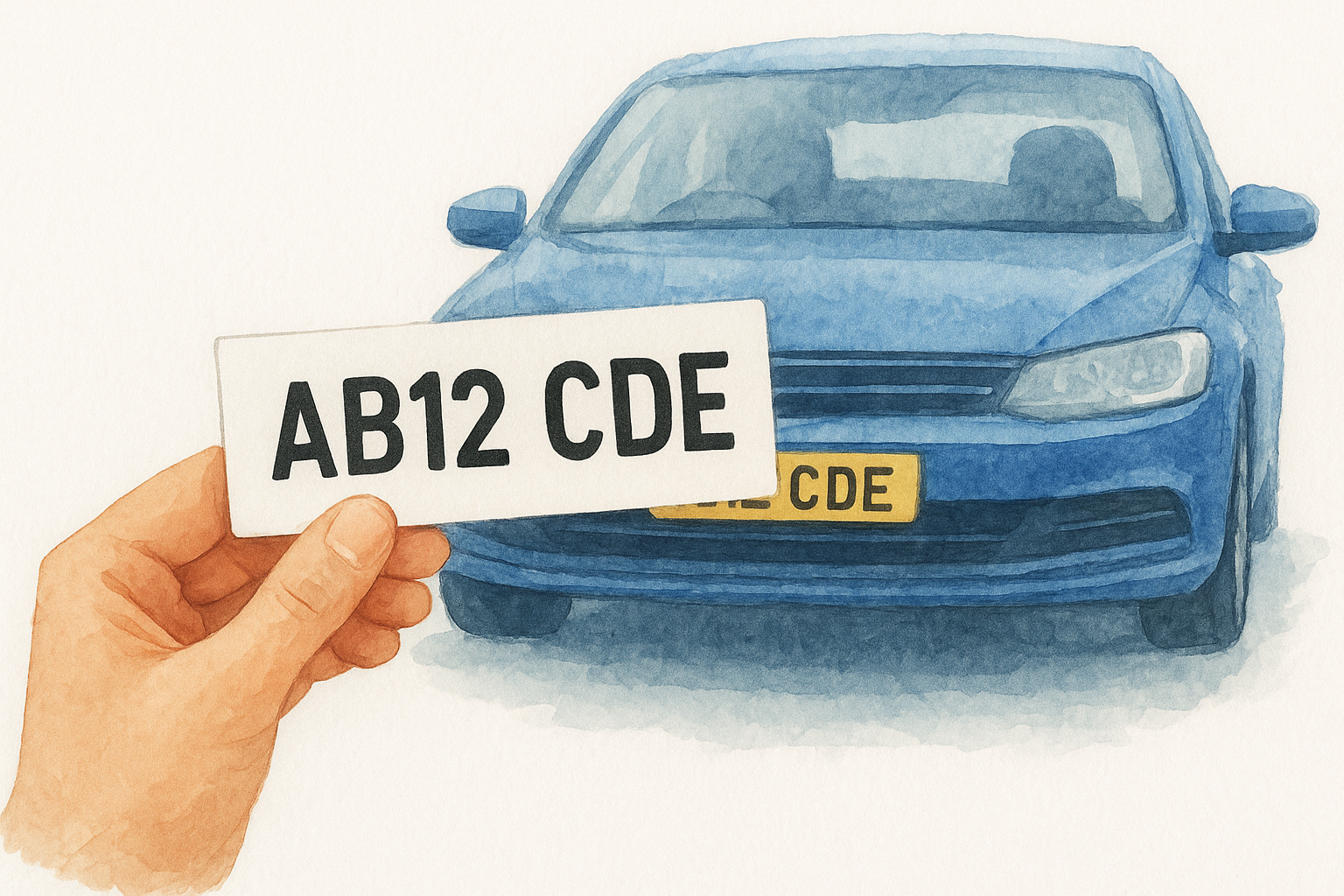
UK plates follow a predictable format depending on when the car was registered:
- Post-2001 plates: two letters, two numbers, a space, then three letters (AB12 CDE)
- Prefix plates (1983-2001): one letter, up to three numbers, then three letters (A123 BCD)
- Suffix plates (1963-1983): three letters, up to three numbers, then one letter (ABC 123D)
If the registration number a seller gives you does not match the plate physically on the car, walk away.
Cross-check it against the listing or V5C
Once you have the plate, write it down or copy it clearly to avoid any typos when you run your search. If you have access to the V5C logbook (the car's registration document), confirm the plate matches what is recorded there before anything else.
On an online listing, check the plate appears in the photos and matches the text the seller has included. A mismatch between the physical plate and the V5C is a serious issue that needs resolving before any money changes hands.
Step 2. Run a free number plate check
With the registration confirmed, running a free number plate check UK lookup takes under a minute. Head to Vehiclepedia, locate the search bar on the homepage, and type in the registration exactly as it appears on the vehicle. No account or payment is needed to access the core results.
Enter the registration correctly
Spacing matters when entering a UK plate. Most lookup tools strip spaces automatically, but always double-check the plate before you submit. If the system returns no results, verify the registration against the listing or the V5C logbook and try again with the corrected version.
Here is the correct format for the most common post-2001 plate style:
AB12 CDE
Two letters, two numbers, a space, then three letters. Older plate formats follow a different pattern, but the same principle applies: enter it exactly as it reads on the car.
Review the initial results page
Once you submit the search, results appear within seconds and display the core vehicle data pulled from official sources. The page shows MOT status, tax expiry, mileage records at each test, and basic technical specifications in a clear layout that is straightforward to scan.
Take a screenshot of the results before your viewing so you have a direct reference point when you inspect the vehicle in person.
At this stage, you have your free data in front of you. The next step is knowing how to read it.
Step 3. Read the results and spot red flags
Once your free number plate check UK results load, do not just skim the headline figures. Read the data carefully and compare it against what the seller has told you, looking for any inconsistencies that suggest the car has a more complicated history than advertised.
What the mileage records tell you
MOT mileage entries build a timeline across every test the vehicle has had. You are looking for a consistent upward trend. If the recorded mileage drops between two tests, or if a large unexplained gap appears where no MOT was recorded for several years, these are clear signs that something does not add up.
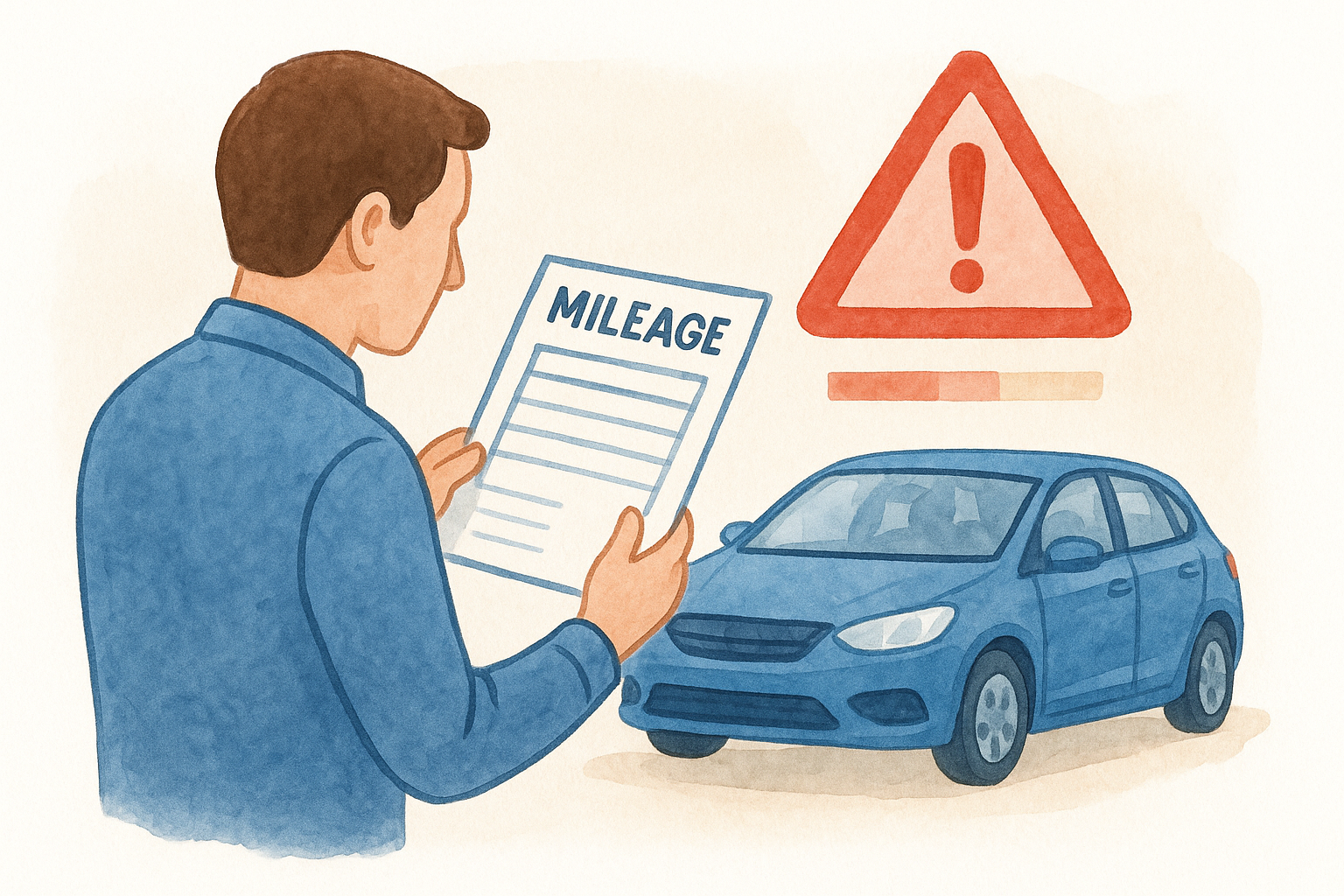
Watch for these specific red flags in the mileage data:
- Mileage at any test lower than the previous test
- A gap of two or more years with no MOT recorded
- Mileage jumps that seem unusually low for the time period between tests
- Recorded mileage significantly higher than what the seller quotes
Cross-check the vehicle details
The results display the make, model, colour, and fuel type registered against the plate with the DVLA. Compare each of these against the physical vehicle and the listing. A colour recorded as blue on the DVLA record but painted white in front of you suggests a respray that has not been declared.
If the DVLA data and the car in front of you do not match on any basic point, ask the seller for a written explanation before you go any further.
Step 4. Confirm details with official databases
After reviewing your free number plate check UK results, cross-reference the key data points against official government databases. This adds a second layer of verification and takes only a few minutes, giving you confidence that the information is current before you commit to a viewing.
Check MOT history on the DVSA database
The Driver and Vehicle Standards Agency (DVSA) publishes full MOT records through the official checker at gov.uk/check-mot-history. Enter the registration to retrieve mileage at every test, pass and fail outcomes, and any advisory notes. The results should match what your initial lookup returned.
If the DVSA records contradict anything the seller has told you verbally, ask for a written explanation before arranging a viewing.
Use the DVSA data specifically to confirm mileage consistency across the full MOT timeline, since this is the most reliably tamper-evident piece of free data available to you.
Verify tax status via the DVLA
Your road tax and SORN status can be confirmed directly with the Driver and Vehicle Licensing Agency at gov.uk/check-vehicle-tax. Enter the registration and you get an instant result showing whether the vehicle is currently taxed and when the tax expires.
An untaxed car cannot legally be driven on public roads, so an expired tax date is a practical issue to resolve before collection. Confirming this through the DVLA directly means you are working from the same official record that insurers and enforcement agencies use.
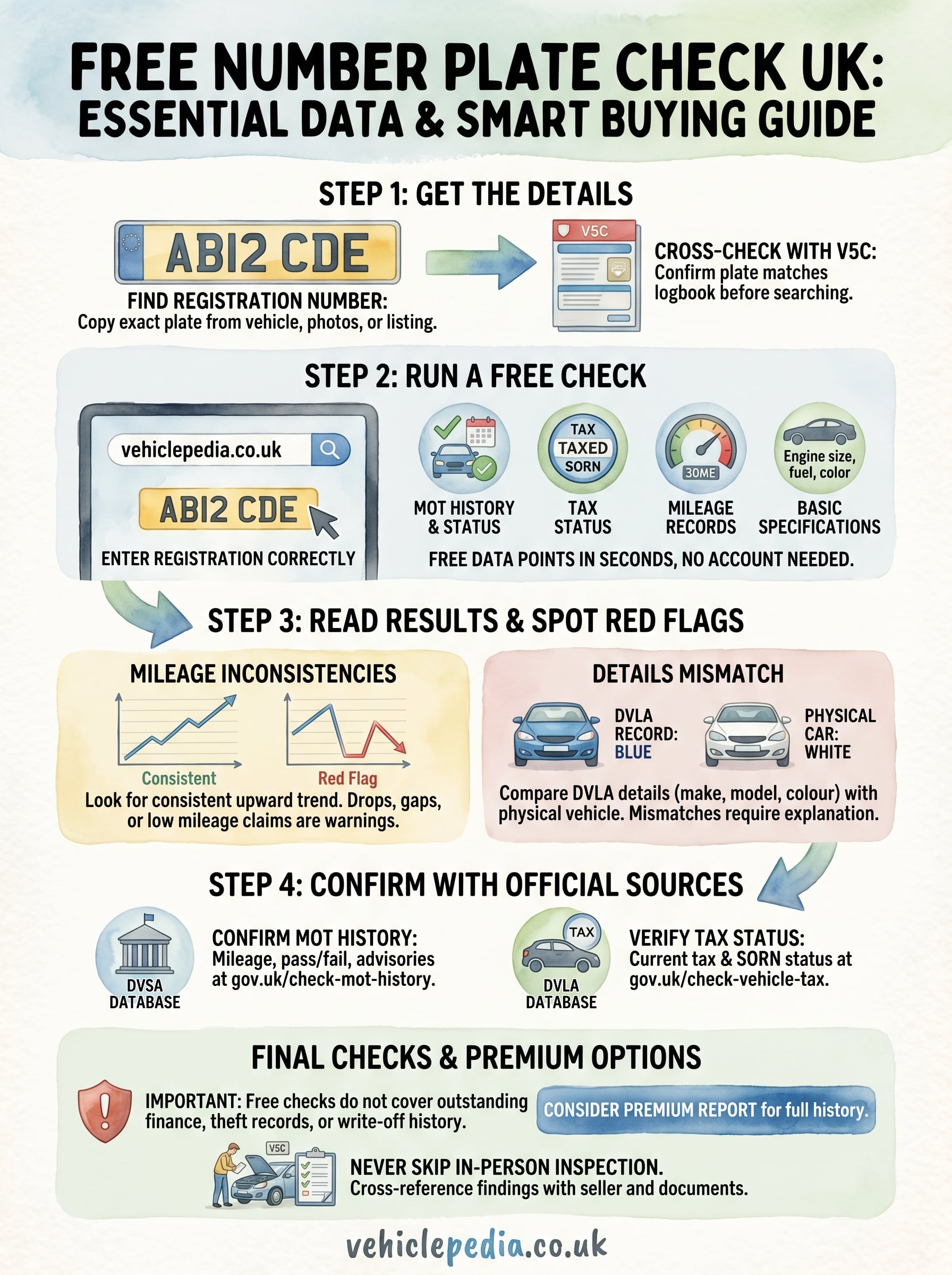
Final checks before you buy
A free number plate check UK lookup gives you a strong starting point, but treat it as the beginning of your due diligence rather than the end. Before you hand over any money, compare your check results against the physical V5C logbook in person. Confirm the registration, VIN, and keeper history all align with what you found during your research.
For private sales, the risk of buying a car with outstanding finance or a hidden write-off is real, and free data alone does not cover either. Running a premium report before you commit adds that final layer of protection, and you can preview exactly what a full report contains on our sample report page before you decide.
Never skip the in-person inspection or rely on the seller's word alone. Your research, your checks, and your own eyes together give you the clearest picture of what you are actually buying.