History Check on a Vehicle: What It Is and How to Run One
Learn how to run a history check on vehicle registration, spot hidden risks and choose free vs paid reports before buying a used car.
History Check on a Vehicle: What It Is and How to Run One
Buying a used car without checking its background is a gamble. That dent-free bodywork could be hiding a write-off record, and a clean logbook doesn't rule out outstanding finance or a stolen plate. Running a history check on vehicle records before you hand over any money tells you exactly what you're dealing with, straight from official UK sources rather than the seller's word.
So what actually counts as a proper check? It means pulling MOT history, mileage records, tax status, and ownership changes, then cross-referencing them against police and insurance databases for stolen or written-off status. Do this and you spot mismatched mileage, hidden accident damage, or a car still tied to a loan before you're the one left holding the problem.
This guide walks through what a vehicle history check actually covers, how to run one using nothing but a registration plate, and where the free checks stop short of what you need to know. We'll also show where a premium report earns its keep, and how to read the results so you're not left guessing what they mean for your purchase.
Why a vehicle history check matters before you buy
The financial risk of buying blind
Spending several thousand pounds on a used car without checking its background is a gamble few buyers would take knowingly. A vehicle accident history check can reveal that the car you're about to buy was written off eighteen months ago and patched up for resale, something a visual inspection rarely catches. Skip the check and you risk inheriting someone else's debt too: if the previous owner still owes money on the car, the finance company can legally repossess it from you, even after you've paid in full.
A five-minute registration lookup can save you from a five-figure mistake.
What a proper check actually catches
A thorough check car accident history free search, paired with mileage and ownership records, exposes the problems sellers don't volunteer. These aren't rare edge cases either; they show up often enough that skipping the check is a real financial risk, not just a theoretical one.
- Odometer fraud: mileage that's been wound back to inflate the asking price
- Insurance write-offs: cars repaired after serious damage and sold on without disclosure
- Outstanding finance: loans still attached to the vehicle that transfer risk to you
- Stolen vehicles: cars sold on with cloned plates or false paperwork
- Import irregularities: vehicles brought into the UK with incomplete or altered records
Each of these carries a different kind of cost, from a lower resale value to losing the car outright. Running the numbers against DVLA and police-backed databases before you buy turns guesswork into fact, and it costs nothing to start with a free lookup on the registration plate.
How to run a vehicle history check in the UK
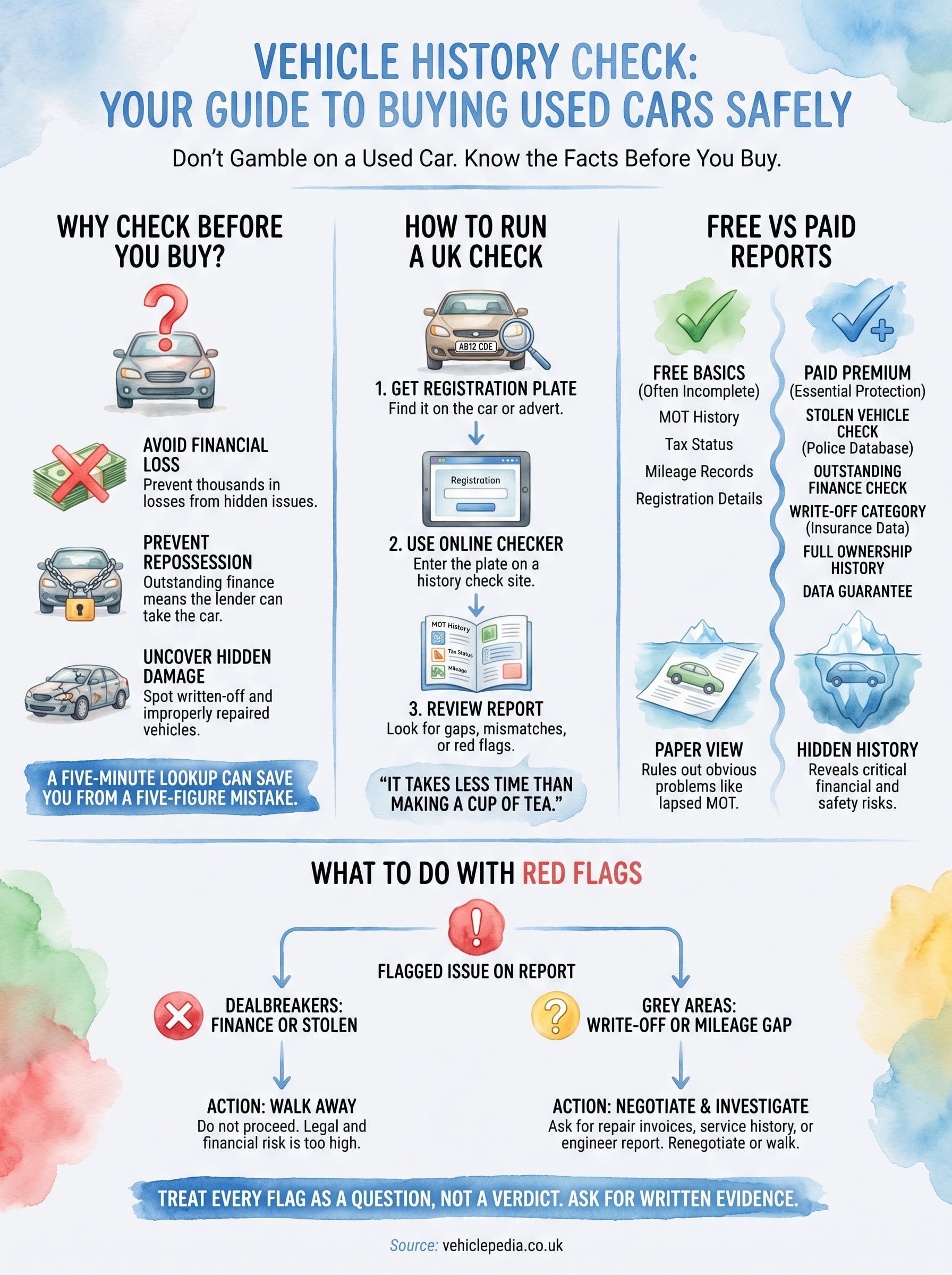
Running a UK vehicle history check takes less time than making a cup of tea. All you need is the car's registration plate, since that single string of letters and numbers unlocks everything DVLA and other official bodies hold on file. You don't need the logbook, the seller present, or any paperwork in hand, just the plate and a few minutes.
Step by step
Here's how to check vehicle history properly, from a standing start to a decision you can trust:
- Find the registration plate on the car itself or the seller's advert, and double-check it matches the V5C if you're viewing in person.
- Head to a free vehicle history report tool like Vehiclepedia's checker and enter the plate.
- Review the MOT history, tax status, and mileage record that comes back instantly.
- Note any gaps, mismatched mileage entries, or lapsed MOTs that need explaining.
- Decide whether the results warrant a paid report before you commit to buying.
One registration number and five minutes is all it takes to separate a clean car from a risky one.
Skip any step here and you're relying on the seller's version of events instead of DVLA's.
What a full vehicle history report reveals
A full vehicle history report goes well beyond the free basics, pulling together records that only trade-grade databases hold. Instead of just MOT and tax status, you get a full check against the police stolen vehicle register, insurance write-off categories, and outstanding finance agreements tied to the registration. This is where a genuine vehicle accident history check earns its cost, because it confirms whether a car was ever a Category N or S write-off, something no visual inspection will tell you.
A written-off history hides behind fresh paint far more often than buyers expect.
Ownership history matters too. A car that's changed hands five times in three years is worth questioning, and a full report shows every registered keeper change alongside colour changes and import or export status.
| Report section | What it tells you |
|---|---|
| Write-off category | Whether the car was ever declared a total loss |
| Finance check | If there's an outstanding loan attached |
| Stolen check | Police database match on the plate |
| Keeper history | Number of previous owners and change dates |
| Plate/colour changes | Signs of altered identity or hidden history |
Together, these sections turn a hopeful purchase into an informed one.
Free vs paid checks: what's the difference
A free check gives you the basics: MOT history, tax status, mileage records, and registration details. That's often enough to rule out an obvious problem car, like one with a lapsed MOT or a mileage record that doesn't add up. But if you want to check my vehicle history free and stop there, you're missing the checks that actually protect your money.
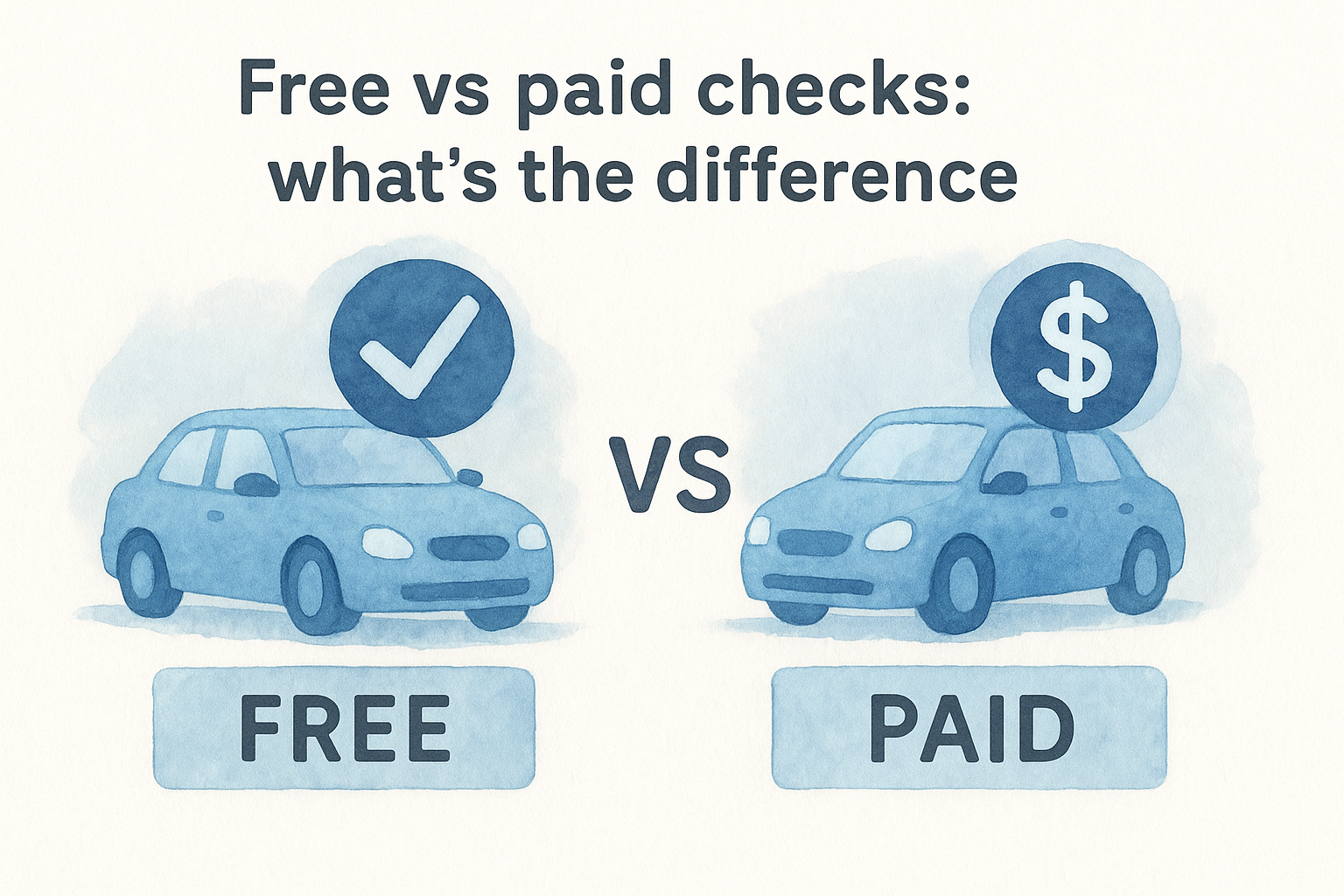
Free checks tell you what a car looks like on paper. Paid checks tell you what it's hiding.
Where premium reports earn their cost
Paid reports add the three checks that matter most for financial protection: stolen vehicle status against the police database, outstanding finance, and write-off category. These aren't available for free anywhere in the UK, because they draw on restricted insurance and police data that costs providers money to access.
| Check type | Free | Paid |
|---|---|---|
| MOT and tax status | Yes | Yes |
| Mileage history | Yes | Yes |
| Stolen vehicle check | No | Yes |
| Finance check | No | Yes |
| Write-off category | No | Yes |
A premium report from Vehiclepedia also carries a £30,000 data guarantee, so if the information turns out wrong, you're covered rather than left arguing with a seller.
What to do if a check flags a problem
Finding a red flag on a history check on vehicle results doesn't automatically mean walking away, but it does mean stopping the sale until you get answers. A lapsed MOT might just need booking in. A Category N write-off might have been repaired properly and priced accordingly. The problem is you can't tell the difference from the report alone, so treat every flag as a question for the seller, not a verdict on the car.
Never let a seller talk you past a flag the report has already raised.
Walk away or negotiate?
Outstanding finance and stolen matches are dealbreakers. Walk away, because both put your ownership at legal risk regardless of what the seller says. Write-offs and mileage discrepancies sit in a grey area: ask for repair invoices, an engineer's report, or a full service history that explains the gap, and use whatever you find to renegotiate the price or pull out entirely.
Getting the paperwork
Requesting evidence in writing protects you if things go wrong later. Ask for:
- Repair invoices for any write-off category
- Finance settlement confirmation from the lender
- A crime reference number if a stolen match needs disputing
Sellers who dodge these requests are telling you everything you need to know.
Making sense of what you've found
A history check only works if you act on it. Reading a report and shrugging off a Category S marker or a mileage gap defeats the whole point of running one. Treat every result as a decision point: clean reports mean you can proceed with confidence, and flagged ones mean you ask harder questions before any money changes hands.
Getting comfortable with how to check vehicle history properly, free first and paid when the stakes justify it, puts you in control of a purchase that's otherwise built on trust alone. You don't need to be an expert to spot a problem. You just need the right report in front of you and the willingness to walk away when it tells you something the seller hasn't.
Before you commit to any used car, see exactly what a full Vehiclepedia report looks like, so you know precisely what you're paying for when it matters.