MOT and Road Tax Check: How to Check Both by Reg
Run a free MOT road tax check by reg on Vehiclepedia to instantly see test history, expiry dates and tax status before you buy or drive.

MOT and Road Tax Check: How to Check Both by Reg
Buying a used car or just making sure your own is road legal? A mot road tax check tells you exactly where a vehicle stands, without digging through paperwork or ringing the DVLA. Every UK car needs a valid MOT and current tax to be driven legally, and letting either lapse can mean fines, points, or worse if you're stopped.
You can run a car mot and road tax check in under a minute using nothing but the registration plate. Vehiclepedia pulls live data straight from DVLA and DVSA records, so you get the actual MOT expiry date, pass or fail history, and current tax status without guessing or relying on a seller's word. It costs nothing and works for any UK-registered vehicle.
This guide walks you through exactly how to check road tax expiry and MOT dates by reg, how to tell whether road tax has actually been paid, what each result means, and what to do if you spot a problem before you hand over any money. Whether you're vetting a car you're about to buy or just keeping tabs on your own, you'll have a clear answer in the next few minutes.
What you need before checking your MOT and tax
Running a check for a car's tax and mot status doesn't require an account, a logbook, or a call to the DVLA. You need two things: the vehicle's registration number and access to a web browser. That's it. No V5C, no chassis number, no proof of ownership. This is deliberate, since both the MOT and tax registers are public, precisely so buyers can check before they commit to a purchase.
You only need a number plate and thirty seconds to check road tax status online.
The registration plate is the only key you need
Every lookup starts with the reg, so double-check you've copied it correctly before you search. A single mistyped letter or number will pull up the wrong vehicle entirely, or return no result at all. If you're viewing a car in person, photograph the plate rather than relying on memory. If you're checking a listing online, copy the reg directly from the advert rather than retyping it by hand.
Where the official data actually comes from
When you dvla check car tax and mot status through a proper lookup tool, you're pulling from two separate government-linked databases: DVSA holds MOT test history, and DVLA holds tax and registration records. Vehiclepedia queries both simultaneously in one free MOT and tax check, so a single search gives you the full picture rather than forcing you to check two different government sites separately.
| What you need | Why it matters |
|---|---|
| Vehicle registration number | Required to query DVLA and DVSA records |
| A working internet connection | Both databases are checked online, in real time |
| Nothing else | No account, payment, or paperwork needed for the free check |
Seller-provided documents are useful for other reasons, but they're not required for this check and shouldn't be treated as more reliable than the official record. A private seller might hand you a printed MOT certificate that's genuine but out of date, or one that doesn't match the car in front of you at all. Running your own free check for car tax and MOT status against the reg plate removes that uncertainty entirely, since you're reading directly from government data rather than trusting a piece of paper someone else printed.
Step 1. Check your car's MOT status online
Start with the Vehiclepedia MOT checker, enter the registration plate, and hit search. Within seconds you'll see the vehicle's MOT expiry date, so you know when the next MOT is due, plus its full test history going back years and any advisories or failures logged by the testing centre. This is the same DVSA data a garage sees when they run a check, so there's no gap between what you're shown and what's officially on record.
Getting a result takes three simple steps:
- Type the registration number exactly as it appears on the plate
- Submit the search and wait for the DVSA record to load
- Review the expiry date alongside the pass, fail, and advisory history logged for the reg
A valid MOT expiry date confirmed online is worth more than any paper certificate a seller hands you.
History matters as much as the current status. If a car has failed its last three tests on the same corroded brake line, that's a pattern worth asking about, even if it currently holds a valid pass. Look for repeated advisories too, since these often flag a problem the seller has been ignoring rather than fixing.
Just remember that a valid MOT only confirms the car passed a roadworthiness test on a specific date. It says nothing about tax, finance, or whether the vehicle has been in an accident since. That's exactly why the next check matters just as much.
Step 2. Check your car's road tax status online
Once you've confirmed the MOT, run the same registration through Vehiclepedia's free road tax lookup to see the vehicle's road tax status. This pulls straight from DVLA vehicle records, so you'll see whether the car is currently taxed, when the tax expires, and which VED band it falls into and what that costs based on emissions and engine size. There's no separate form to fill in, since the same reg you used for the MOT lookup works here too.
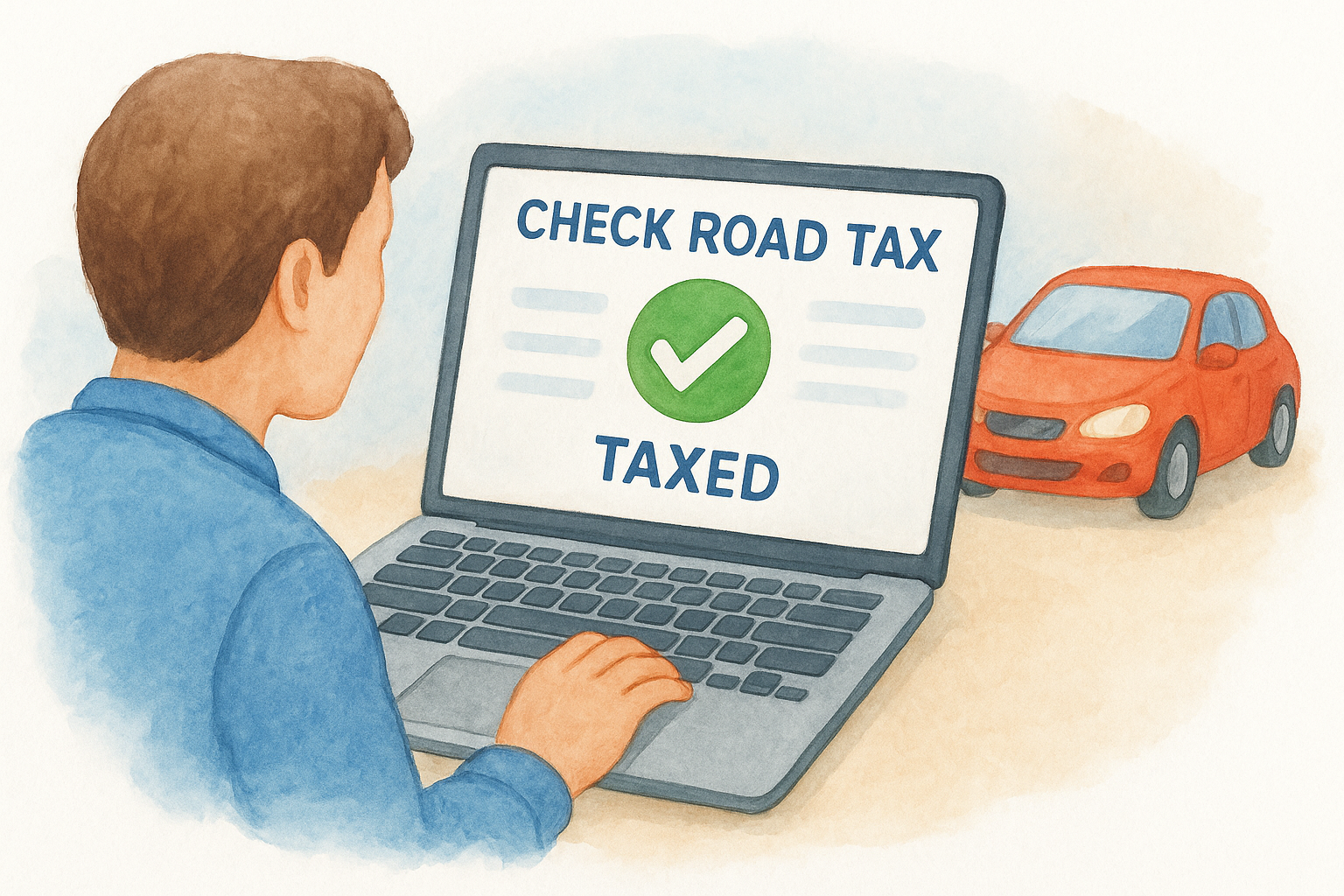
Untaxed doesn't always mean untaxable, but it does mean the current keeper hasn't paid.
Here's what a proper road tax status online check gives you:
- Enter the reg on the tax check page
- Confirm the current tax status (taxed, untaxed, or SORN)
- Note the exact expiry date shown
| Result shown | What it means |
|---|---|
| Taxed | Vehicle tax is currently paid and valid |
| SORN | Statutory Off Road Notification, car can't legally be driven |
| Untaxed | No valid tax on record, driving it is an offence |
SORN status catches a lot of buyers off guard. It simply means the previous keeper declared the car off the road, which isn't unusual for a vehicle that's been sitting on a driveway or in a garage, and it's worth knowing how long a SORN declaration lasts. Getting a check car tax free result showing SORN just means you'll need to tax it yourself before driving away, which is straightforward once ownership transfers to you.
Step 3. Understand what the results mean
Once you've run both lookups, you're holding two separate results that need reading together, not in isolation. A car can show a valid MOT and still be untaxed, or carry current tax while its MOT lapsed last month. Neither result cancels the other out, and both need to be green before the car is legal to drive on public roads.
A car needs both a valid MOT and current tax at the same time to be legally driven, one alone isn't enough.
Reading the two statuses side by side
Grouping the possible outcomes makes it obvious what action, if any, you need to take:
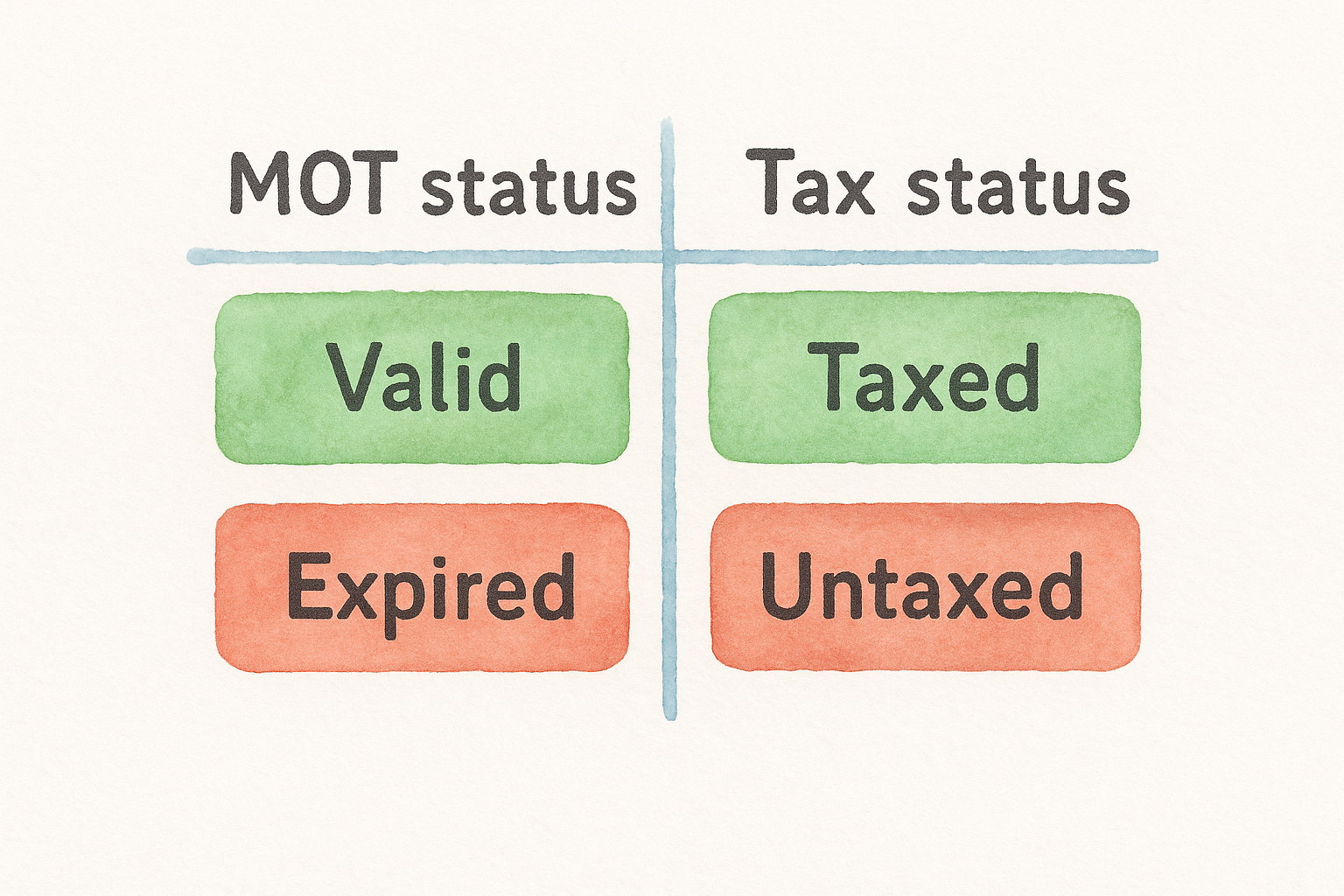
| MOT status | Tax status | What it means for you |
|---|---|---|
| Valid | Taxed | Car is legal to drive right now |
| Valid | Untaxed or SORN | Legal to own, illegal to drive until taxed |
| Expired | Taxed | Illegal to drive despite valid tax |
| Expired | Untaxed | Illegal to drive on both counts |
Expired doesn't always mean the car has a fault. Plenty of MOTs lapse simply because an owner forgot to rebook, not because the vehicle failed anything. Still, treat any expired result as a reason to ask questions before you buy, since you can't legally test drive the car yourself without valid cover on both fronts.
Finally, cross-check the dates against the seller's story. If they claim the car's been driven daily but the tax expired six months ago, that inconsistency is worth raising directly.
What to do if your MOT or tax has run out
Finding an expired MOT or lapsed tax doesn't mean the car is worthless, it just means you can't drive it until you sort the paperwork. Driving without a valid MOT or tax is a criminal offence, with fines up to £1,000 for no MOT and up to £2,500 (or more for HGVs) for no tax, so don't be tempted to risk a quick journey.
Fix the paperwork before you drive, not after you're stopped.
Getting the MOT sorted
Book a test through GOV.UK's MOT booking service straight away. One exception exists: you're allowed to drive to a pre-booked MOT test even if the current one has expired, as long as the car is roadworthy. Don't use this exception as an excuse to keep driving on an expired test for anything other than that single journey.
Getting the tax sorted
Taxing the car is quicker. You can do it online via GOV.UK's vehicle tax service using the reg and the V5C reference number, or the 11-digit number from a V11 reminder. If the car is SORN, you'll need to tax it before it touches a public road again, even for a short trip to a garage, and our guide explains taxing a car online, by phone or at a Post Office.
- Confirm the exact expiry date from your check
- Book the MOT test or renew tax online
- Avoid driving until both show as valid
Sort both issues before agreeing a sale price, since an untaxed, untested car is worth less and harder to move legally.
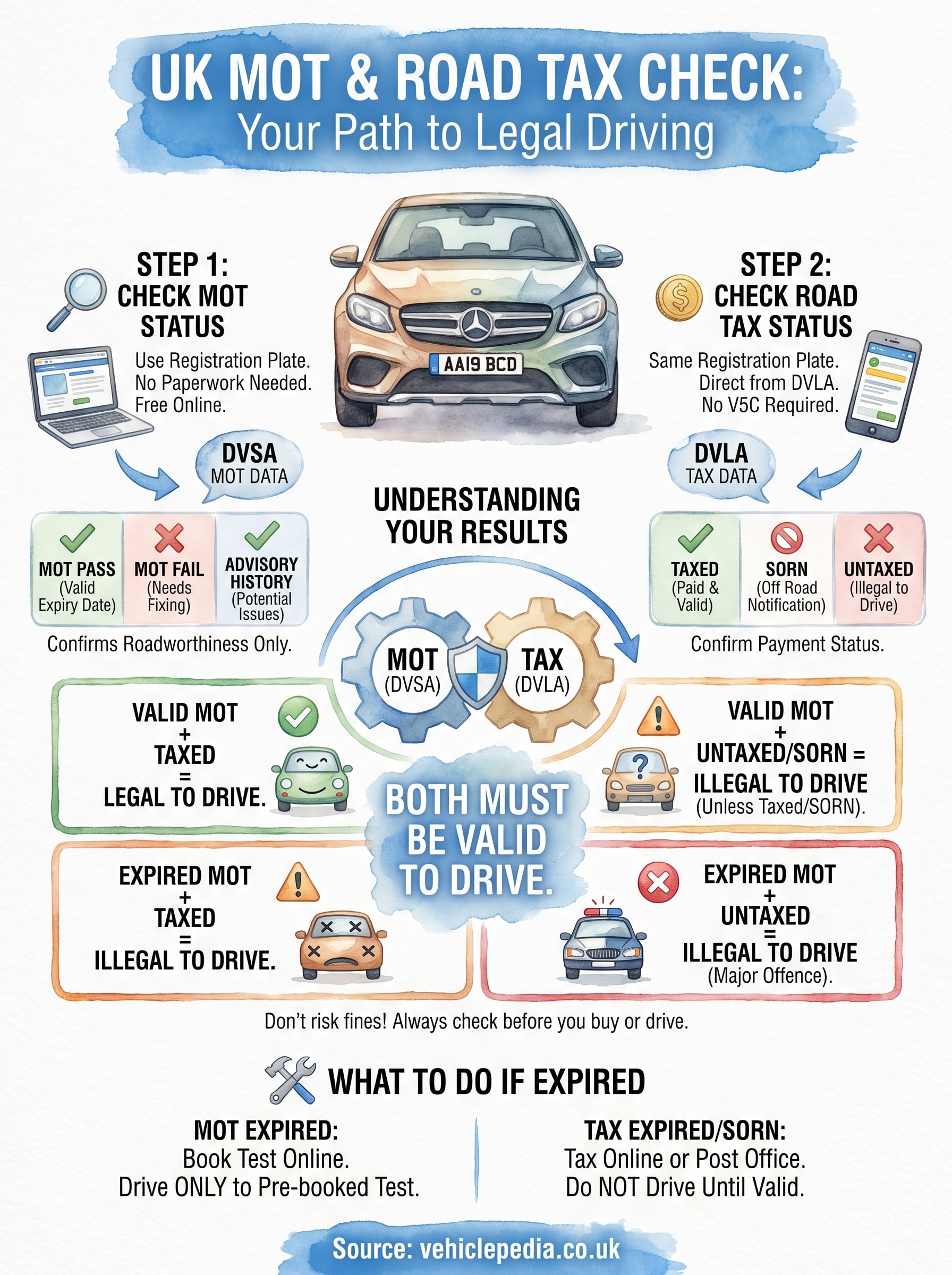
Staying legal and road-ready
Running a mot road tax check takes less time than reading a listing, and it tells you more than any seller ever will. You now know exactly what to enter, where the data comes from, and how to read MOT and tax results side by side without guessing what they mean. That's the whole point: no surprises after you've handed over cash, no assumptions based on a printed certificate someone could have altered or misplaced.
Before you buy, or before you drive your own car another mile, run both checks and confirm they're current. If you want the fuller picture beyond MOT and tax, including write-off, finance, and stolen checks, see what a complete vehicle history report includes before you decide whether you need one.