Registered Keeper vs Owner: What the DVLA Records and Why
Registered keeper vs owner DVLA explained: what each role means, who is responsible for what, and how to check, prove and change them.
Registered Keeper vs Owner: What the DVLA Records and Why
The registered keeper vs owner DVLA distinction comes down to one point: the DVLA records who is responsible for keeping a vehicle on the road, not who legally owns it. The registered keeper is the person named on the V5C logbook. They deal with tax, the MOT, insurance and any fines. The owner is the person or company that holds legal title and has the right to sell. Often they are the same person. Sometimes they are not.
This article explains what each role means and why the split matters. It also shows you how to find out who a car's registered keeper is, how to prove ownership, how to change the keeper, and whether insurers check any of it.
At Vehiclepedia we run vehicle history checks on UK cars, and this gap is where used car buyers get caught out. A seller named on the V5C may still be paying off finance, which means a lender owns the car. Knowing the difference helps you ask the right questions before you hand over any money.
Why the difference between keeper and owner matters
The two roles carry different legal duties, so confusing them can cost you a fine, a refused insurance claim or a car you cannot legally sell. The keeper runs the car. The owner holds title to it.
What the DVLA records, and what it leaves out
The DVLA's vehicle register names the registered keeper and their address. It has no record of the legal owner. That is why the V5C carries the warning that it is not proof of ownership.
In practice the DVLA treats the keeper as the person to contact. Tax notices, DVLA enquiries and police questions about the vehicle all go to the keeper first.
The DVLA tracks who keeps a car, not who owns it.
Who is responsible for what
The duties are easy to compare side by side. The keeper carries the day-to-day legal load, while the owner's main role is title and the right to sell.
| Duty | Registered keeper | Legal owner |
|---|---|---|
| Vehicle tax or SORN | Yes | No |
| MOT | Yes | No |
| Keeping the car insured | Yes | Must not let it be driven uninsured |
| Parking and speeding notices | Receives them first | No |
| Selling the car | Only if also the owner | Yes |
| Holds title to the car | No | Yes |
When the keeper and owner are different people
Several common situations split the two roles:
- Finance: with hire purchase or PCP, the lender usually remains the owner until the final payment is made, while you are the keeper.
- Leasing: the leasing company is often the registered keeper as well as the owner.
- Company cars: the company owns the car, and the employee who drives it can be the keeper.
- Family arrangements: a parent may buy a car and register their child as keeper.
Here is a worked example. A seller lists a £9,000 car and appears on the V5C as keeper, but still owes £4,000 on a PCP. The lender is the owner. If you pay the seller in full without the £4,000 being settled first, you could end up in a dispute with the lender over who owns the car.
How to find the registered keeper and prove ownership
You can ask the DVLA who a car's registered keeper is if you have a good reason. You prove ownership with paperwork such as a receipt, never with the V5C.
How to ask the DVLA who the registered keeper is
The DVLA does not hand out keeper details on request. You need reasonable cause, such as another driver hitting your parked car or a private parking charge. Simple curiosity does not count. The process works like this:
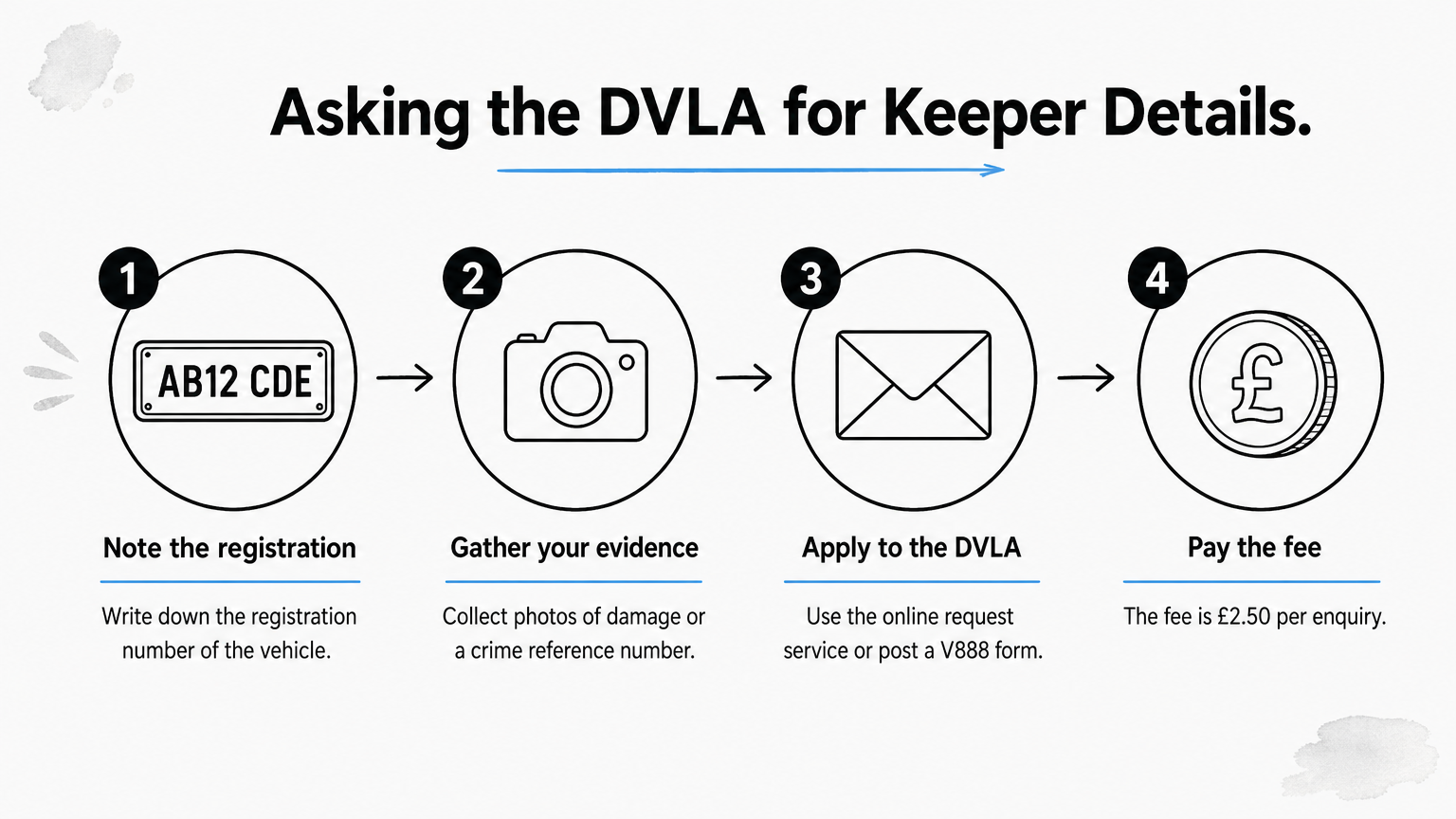
- Note the registration number of the vehicle.
- Gather evidence of your reason, such as photos of the damage or a crime reference number.
- Apply through the DVLA's request for information service or send a V888 form by post.
- Pay the fee, which is £2.50 per enquiry.
The DVLA decides whether your reason is good enough. If it is, it releases the keeper's name and address to you.
How to prove you own a car
Ownership is shown by a bill of sale or receipt from the seller, a finance settlement letter if you paid off an agreement, or a written note if the car was a gift. When you buy privately, write a receipt even if the seller does not offer one. Include both names, the date, the price, the registration number and the vehicle identification number, and have both parties sign it.
Buyers face the reverse problem and need to check the seller's right to sell. A V5C in the seller's name is not enough. Our Car Finance Check shows whether a car is still under a finance agreement, so you find out about a lender's claim before you pay.
Paperwork proves ownership, and the V5C only proves who keeps the car.
How to change the registered keeper of a car
You change the keeper by telling the DVLA about the sale, transfer or purchase. You can do it online or by post using the V5C. Both the seller and the buyer have a part to play.
Selling or giving away a car
Tell the DVLA straight away once the car has gone. Until you do, you remain the keeper on record and tickets still come to you.
- Go to the DVLA's sold or bought a vehicle service, or complete the seller's section of the V5C and post it.
- Enter the registration number and the new keeper's details.
- Give the buyer the new keeper slip from the V5C.
- Keep a copy of your receipt.
Once you tell the DVLA, your vehicle tax is cancelled. Any full months left are refunded to you.
Buying a car
As the buyer, check that the name and address on the V5C match the seller before you pay. Then make sure the DVLA is told you are the new registered keeper. The seller can do this online, or you can use the new keeper slip.
Tax does not transfer with the car, so you must tax it yourself before driving it away. You also need insurance in place from the moment you take it.
Until the DVLA is told about the sale, the seller stays liable as the keeper.
Do insurers check who the registered keeper is?
Yes, insurers can check, and they sometimes do. At quote stage they ask whether you are the keeper and the owner. They may check the answers if something looks wrong or a claim is made.
What insurers ask and why it matters
You do not have to be the registered keeper to insure a car by law. Some insurers still refuse to cover a driver who is not the keeper or owner, and others charge more. Answer the keeper and owner questions accurately. Wrong details can lead to a claim being refused or a policy being cancelled.
Separately, the DVLA runs its own insurance checks. If a registered car has no insurance and has not been declared off the road with a SORN, the DVLA can send the keeper a fixed penalty of £100. That is another reason to update the keeper details when you sell.
Main driver, named drivers and fronting
Every policy has a main driver, who must be the person who drives the car most. The main driver does not have to be the keeper or the owner. A married couple often has one spouse as keeper and the other as main driver.
Problems start when the main driver is named wrongly. Listing a parent as main driver when a young driver does most of the driving is called fronting, and it is a form of insurance fraud. If the person who drives most changes, tell your insurer.
Insurers can verify the keeper, so give them the true picture.
Keeper and owner: the short version
The DVLA records the registered keeper, who deals with tax, MOT, insurance and tickets. The legal owner holds title and the right to sell. You prove ownership with a receipt, finance papers or a gift note, never with the V5C alone. When you buy, sell or insure a car, treat the two roles as separate questions.
If you are buying a used car, check the finance and police records before you commit. You can see what that covers in our sample report.