Number Plate Check Free UK: What It Reveals About Any Car
Run a number plate check free UK with Vehiclepedia to reveal MOT, tax, mileage and history—then decide if a premium report is worth it.
Number Plate Check Free UK: What It Reveals About Any Car
Buying a used car without checking its background is a gamble most people can't afford. A number plate check free UK buyers can run in seconds tells you far more than a quick glance under the bonnet ever could, and it costs nothing to find out.
Type any registration into a free lookup tool and you'll get an instant snapshot pulled straight from official records: current MOT status and expiry date, road tax standing, and basic details like the car's age, engine size, and colour. It's the fastest way to confirm a seller's claims match what the DVLA actually has on file, before you waste time arranging a viewing.
This article walks through exactly what a free check reveals, from mileage and ownership history to import records and fuel efficiency data, and where the limits are. You'll also see why serious issues like finance, theft, or write-off status sit behind premium reports, and when paying for that deeper check is worth it.
Why a free number plate check matters before buying
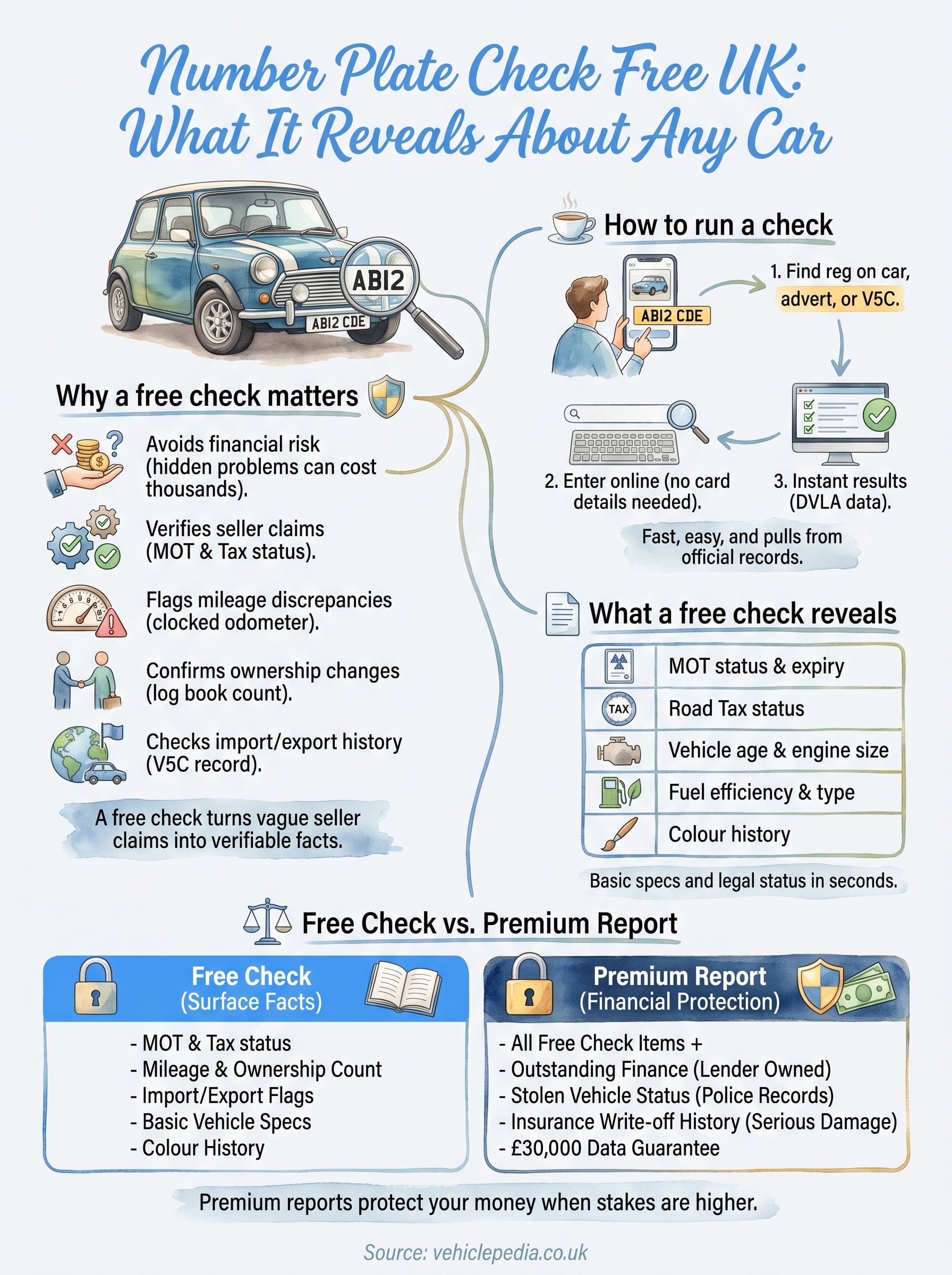
Buying a used car on trust alone puts you at serious financial risk. Sellers don't always lie outright, but they forget things, gloss over problems, or simply don't know the full history themselves. A number plate check free UK service exists precisely because the DVLA and other official bodies hold records that private sellers can't edit or hide. Running one before you hand over any money turns a guessing game into a fact-check.
The real cost of skipping a check
Consider what's actually at stake. A car advertised as taxed and MOT'd might be neither, leaving you unable to drive it home legally. One listed with "low mileage" could have a clocked odometer, something a history check often flags through mileage discrepancies recorded at previous MOT tests. These aren't rare edge cases; they're exactly the sort of gaps a two-minute lookup closes before you're standing in someone's driveway with cash in hand.
A free number plate check costs nothing but can save you thousands in hidden problems.
Common seller claims that don't hold up
Most private sellers aren't trying to scam you, but memory is unreliable and paperwork gets lost. Here's what a free check typically catches against seller claims:
| Seller's claim | What the free check confirms |
|---|---|
| "It's just passed its MOT" | Exact MOT expiry date and test history |
| "Tax is sorted" | Current road tax status and rate |
| "Low mileage, one owner" | Mileage recorded at each MOT, ownership change count |
| "Never been abroad" | Import or export flags on the V5C record |
| "Original colour" | Any logged colour changes |
Spotting a mismatch here doesn't automatically mean the seller is dishonest, but it gives you grounds to ask sharper questions before you commit.
Peace of mind isn't optional
Every year, thousands of UK buyers discover problems with a car only after they've paid for it, when a private sale offers little legal recourse. The DVLA's own vehicle enquiry service exists partly because so many disputes come down to buyers not verifying basic facts upfront, and it's worth checking directly at check-mot.service.gov.uk or gov.uk's vehicle tax checker if you want to cross-reference results yourself. Treat a free check as the first filter, not the final word. It won't catch everything, particularly finance agreements or write-off history, but it clears out the obvious red flags fast, so you spend your time and attention on cars actually worth viewing in person.
How to run a free number plate check in the UK
Running a check takes less time than making a cup of tea. Head to a vehicle history checker like Vehiclepedia, type the registration plate into the search box, and the tool pulls live data straight from DVLA and MOT records. No account, no card details, no waiting for an email. You get results on screen in seconds, which is exactly why this method has replaced phoning a seller and hoping they remember the tax status correctly.
Steps to run the check
- Find the registration plate on the car, advert, or V5C document.
- Enter it exactly as shown, including spaces, into the lookup field.
- Review the instant summary covering tax, MOT, and vehicle details.
- Cross-check the results against what the seller told you.
- Decide whether the car's worth a closer look, or a premium report.
Get the registration exactly right first time, one wrong character returns the wrong car entirely.
What you actually need
You don't need much to start. A working registration number and an internet connection cover it. You don't need to register the car in your name, own it, or even be near it, which makes this useful for checking a car you've only seen in a photo.
- The full number plate, spelled correctly
- A phone or laptop with internet access
- Two minutes, roughly
That's the entire barrier to entry. Compare this to the paperwork and phone calls a check used to require, and it's clear why free lookups have become the first step for almost every serious used car buyer in the UK, not an optional extra.
What a free check reveals about any car
Every number plate check free UK drivers run pulls from the same core dataset the DVLA maintains, so the results are consistent regardless of which tool you use. You get a snapshot of the car's legal status, its basic specifications, and a handful of history markers that hint at bigger stories worth investigating further.
The essentials you'll see instantly
Look past the marketing and the output is fairly standard across free checkers. Here's what typically shows up on screen:
| Data point | What it tells you |
|---|---|
| MOT status and expiry | Whether it's currently roadworthy and legal to drive |
| Road tax status | If tax is paid, due, or the car is SORN |
| Vehicle age and engine size | Confirms the seller's advert matches DVLA records |
| Fuel type and efficiency | Running costs and emissions banding |
| Colour history | Any recorded changes since first registration |
A free check turns vague seller claims into verifiable facts in under a minute.
The history clues hiding in plain sight
Beyond the basics, most checkers surface mileage recorded at past MOT tests, which is often the first sign of a clocked odometer if the numbers don't climb steadily. You'll also see import or export flags, useful if a seller insists the car's always been UK-registered when the V5C says otherwise. Ownership change counts appear too, though not the names of previous owners, just how many times the log book has changed hands.
Taken together, these details won't catch everything a car's hiding, but they give you enough to separate a straightforward sale from one that needs closer questioning before you go any further.
Free check vs premium report: what's the difference
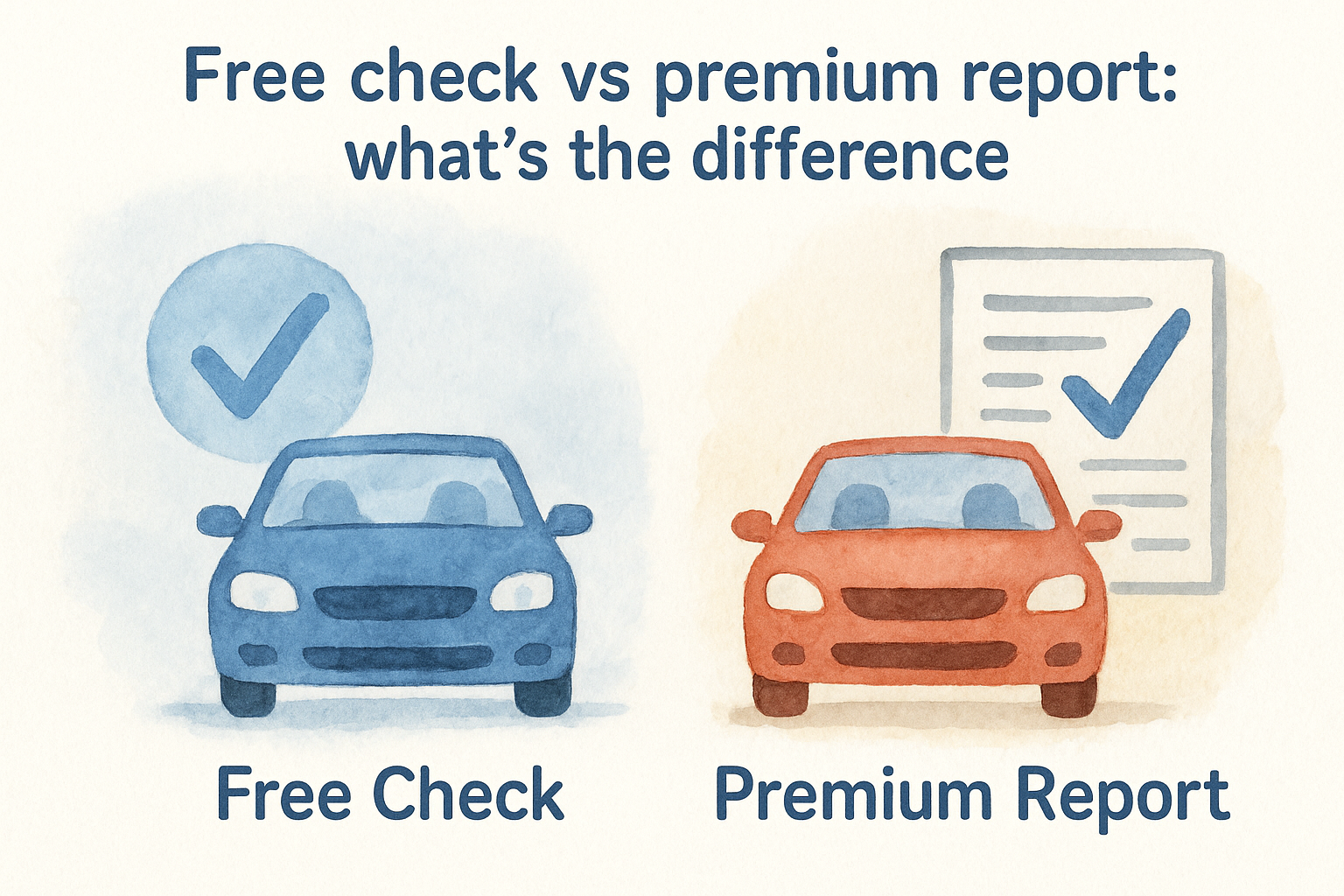
Free checks tell you what's legal and visible on the surface, but they stop short of the details that actually protect your money. A premium vehicle history report digs into police records, insurance registers, and finance company databases, none of which are open to a free tool. That gap matters most when the car looks perfect but hides something no seller would volunteer.
What premium reports add
Generally, premium reports cover three things a free check can't touch:
| Check type | Free check | Premium report |
|---|---|---|
| MOT and tax status | Yes | Yes |
| Mileage and ownership count | Yes | Yes |
| Outstanding finance | No | Yes |
| Stolen vehicle status | No | Yes |
| Insurance write-off history | No | Yes |
Having that finance check alone can save you from buying a car that's still legally owned by a lender, something a private seller might not even realise themselves.
A free check confirms the basics, a premium report protects your money.
When it's worth paying
Justifying the cost comes down to what's at stake. If you're spending a few hundred pounds on a runabout, a free check plus a good look round the car probably covers you. If you're handing over several thousand pounds for something you've only seen once, a £30,000 data guarantee on a premium report, the kind Vehiclepedia offers on paid checks, gives you legal backing if the data turns out wrong. Sample reports let you see exactly what you're paying for before you commit, which removes the guesswork most buyers worry about when upgrading from free to paid.
Know before you buy
A number plate check free UK buyers can run gives you the facts, not just the seller's word. Tax status, MOT history, mileage records, and basic specs all confirm whether an advert matches reality, and it costs you nothing to find out. That's enough to filter out cars not worth your time, but it won't catch finance agreements, theft records, or write-off history hiding beneath a clean-looking listing.
Spending thousands on a car deserves more than a free snapshot. When the stakes are higher, a premium report closes those gaps with the same official sourcing and a data guarantee behind it. Before you commit either way, have a look at a sample premium report so you know exactly what you're getting. Check first, buy second, and you'll rarely get caught out.