What Does V5C Stand For? Meaning and Importance Explained
Find out what does V5C stand for, what it proves, key fields to check, and why pairing it with a vehicle history check protects buyers.
What Does V5C Stand For? Meaning and Importance Explained
You've spotted the term on a car listing or found the document itself in the glovebox, and now you're wondering what does V5C stand for. It's a fair question, because DVLA paperwork isn't exactly written in plain English. The good news is that once you understand this one document, a lot of the confusion around buying or owning a car in the UK clears up fast.
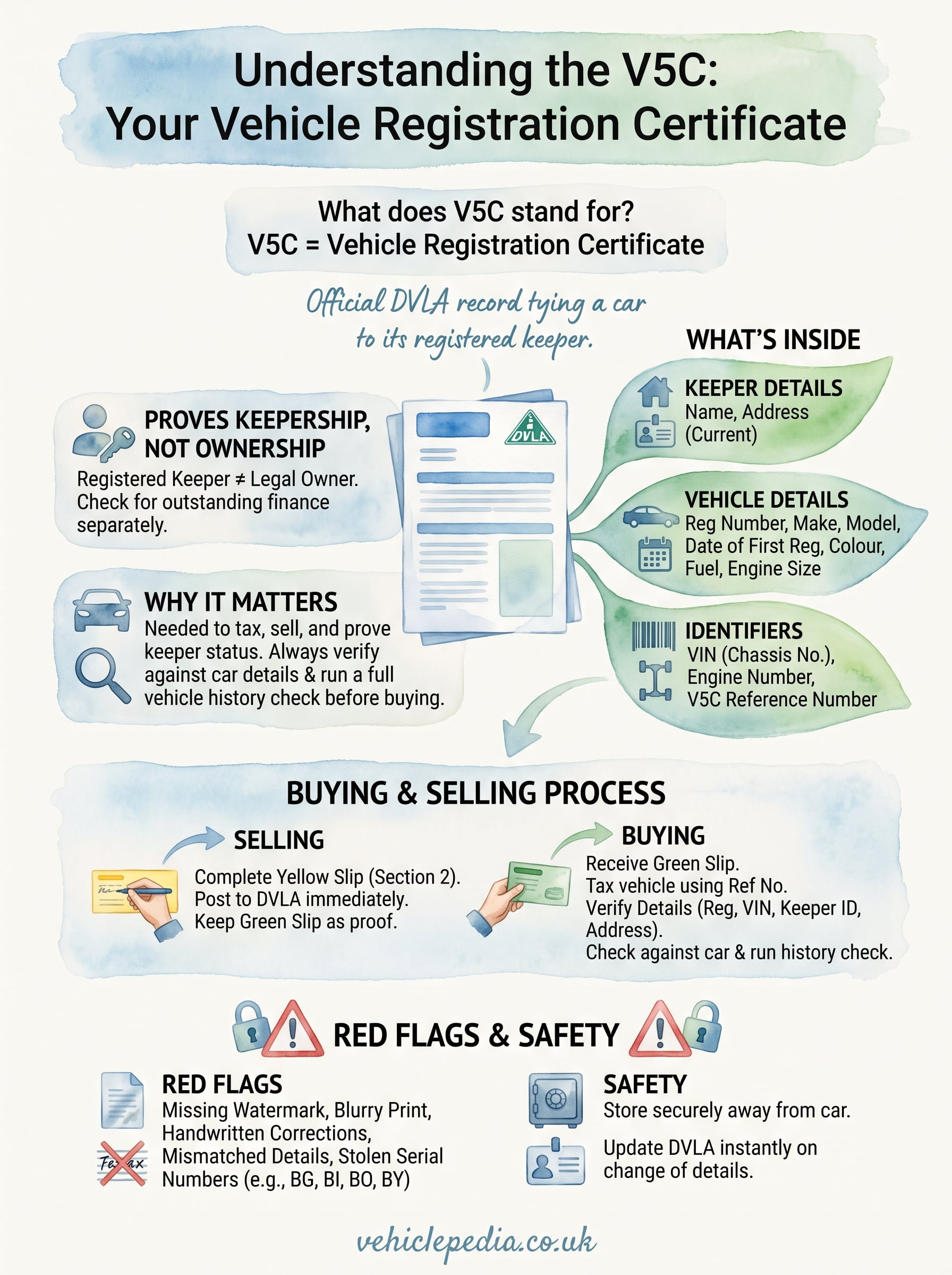
V5C stands for Vehicle Registration Certificate, and it's the official record that ties a specific car to its registered keeper according to the DVLA. Some people still call it the V5C logbook, a leftover name from older paper registration systems, but V5C is the correct term you'll see on government forms and correspondence. It confirms details like the registered keeper's name, the vehicle's technical specs, and its registration history.
In this article, we'll break down exactly what information sits inside a V5C, why it matters when you're buying or selling a car, and how it connects to the wider vehicle history checks you should run before handing over any money. If you're researching a used car right now, understanding this document is a solid first step.
Why the V5C matters for car owners and buyers
The V5C isn't just a formality you file away and forget. It's the document that links you, legally, to a specific vehicle in the eyes of the DVLA. Without it, you can't tax the car, you'll struggle to sell it properly, and you'll have a hard time proving you're the person the DVLA has on record as the registered keeper. That last point catches a lot of people out, so it's worth spelling out clearly.
The V5C proves keepership, not ownership
Here's the bit that trips up new buyers: the V5C shows who the registered keeper is, not necessarily who legally owns the car. If a vehicle is still on finance, the finance company may hold legal ownership even though your name sits on the logbook. That's exactly why a V5C alone can't tell you whether a car is free and clear, and why knowing what a full vehicle check reveals matters just as much as the paperwork in the glovebox.
A V5C tells you who's responsible for a car, not whether it's safe to buy.
Why buyers should never skip this check
Sellers sometimes wave a V5C around as proof that everything's above board, but a genuine-looking document doesn't rule out an outstanding loan, a write-off in the car's past, or a mismatched mileage record. Checking a car's registration details against what's actually on the V5C, and then running a car history check on that plate, gives you the full picture rather than half of it. This is where services like Vehiclepedia's free car check earn their keep, letting you cross-reference the seller's paperwork against official DVLA data before you commit any money.
Owners benefit from understanding the V5C too, not just buyers. Keeping the details current, correct address, correct name, correct vehicle spec, avoids fines and speeds up any future sale. Getting this document right from day one saves you paperwork headaches down the line, whether you're taxing the car next month or selling it in three years.
What information your V5C contains
Open up a V5C and you'll find a lot more than a name and address. The document is split into sections covering the registered keeper's details, the vehicle's technical identity, and its registration history. Understanding the layout helps you spot when something's missing or doesn't match the car in front of you.
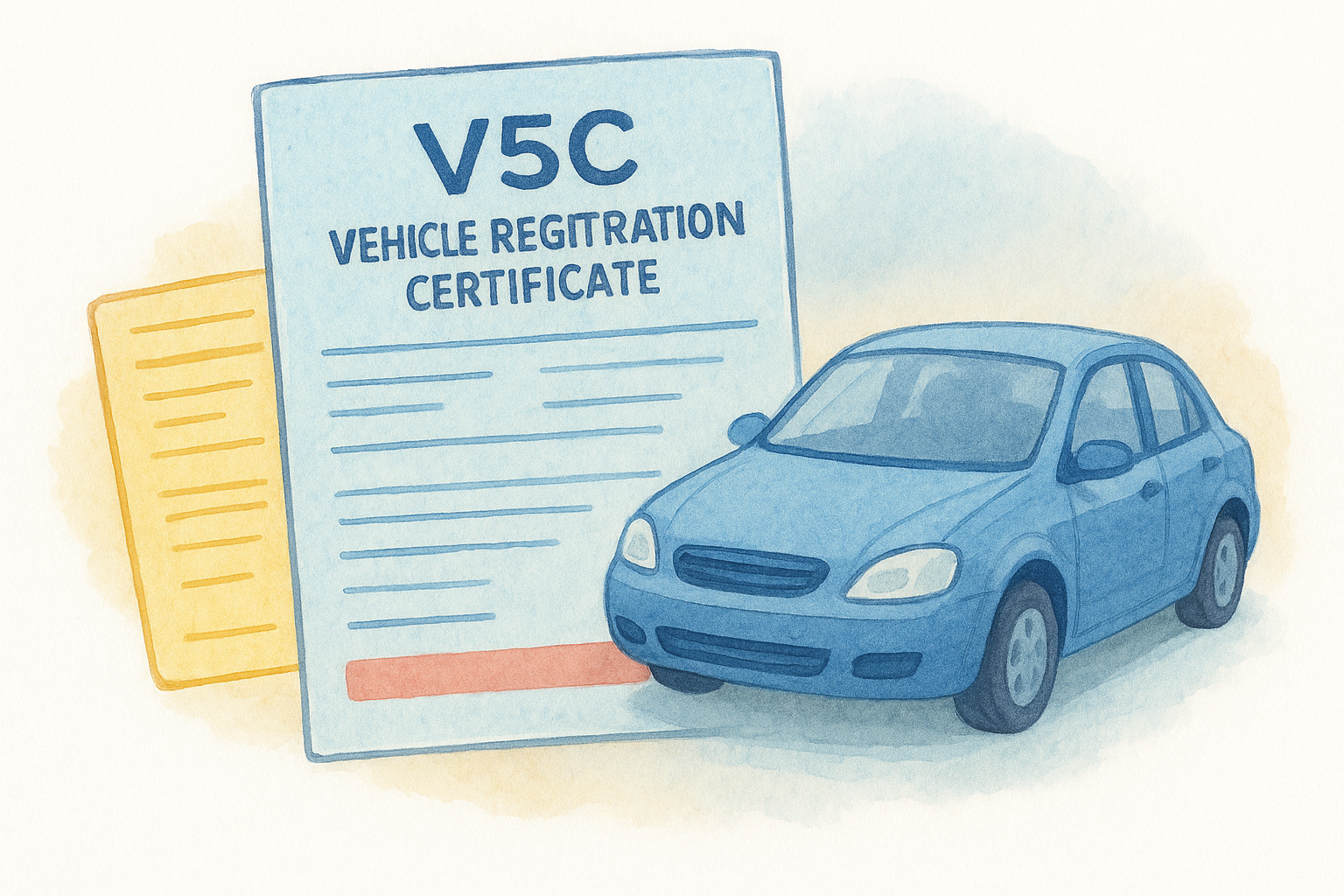
Section two, the yellow slip, is the part you hand over when selling. Section one stays with you as the new keeper. Between them, the certificate carries the core facts the DVLA holds on record:
| Field | What it tells you |
|---|---|
| Registration number | The plate the car is legally registered under |
| Make and model | Manufacturer details, matched against the logbook |
| Date of first registration | How old the car actually is |
| VIN and engine number | Unique identifiers used to confirm the vehicle's identity |
| Registered keeper's name and address | Who the DVLA holds responsible for the car |
| Colour, fuel type, and engine size | Technical spec used for tax and MOT purposes |
| V5C document reference number | An 11-digit number used when taxing or checking the vehicle online |
Given how much sits on one form, it's worth double-checking every field against the actual car rather than skimming past it. A mismatched VIN or engine number is one of the clearest signs something's wrong, so it's worth knowing how to verify the VIN on the logbook against the car before buyers overlook it until it's too late.
How to use your V5C when buying or selling a car
Selling a car means filling in section two of the V5C, the yellow slip, with the buyer's name, address, and the sale date, then posting it to the DVLA the same day you hand over the keys. Keep the green "new keeper" slip as proof you've notified the DVLA, because that's your evidence if a parking fine or speeding ticket lands on your doormat for a car you no longer own. Don't rely on the buyer to sort the paperwork, that's your responsibility as the outgoing registered keeper.
Buying a car flips the process. You'll receive the green slip from the seller and use it to tax the vehicle in your name straight away, either online or by phone, using the reference number printed on the slip. If the seller can't produce a V5C at all, or hands you one with obvious corrections or a different address to the one they've given you, treat that as a red flag rather than a paperwork hiccup.
Never hand over money for a car until the V5C details match the seller and the vehicle in front of you.
Before you agree a price, run these checks against the document:
- Confirm the registration number and VIN on the V5C match the plate and chassis on the car
- Check the seller's name matches their ID
- Verify the address is current, not an old one
A quick V5C logbook check online like this takes minutes and avoids a much longer headache later.
How to replace a lost, stolen or damaged V5C
Misplacing your V5C isn't a crisis, but you shouldn't ignore it either. The DVLA charges £25 for a replacement, and you apply using form V62, which you can post off or, in most cases, complete online through the official DVLA service. Expect to wait around five working days for the new document to arrive, longer if you've also changed your name or address at the same time.
Report a stolen V5C straight away, because a blank certificate in the wrong hands is a fraud risk, not just a paperwork gap.
Damaged certificates follow the same process as lost ones, so don't try to patch up a torn or water-stained V5C yourself. A document with crossed-out sections or handwritten corrections looks suspicious to anyone checking it later, including buyers running their own vehicle history check.
What you'll need before you apply
- Your vehicle registration number
- The make, model, and colour of the car
- Your name and address as held by the DVLA
- Payment for the £25 fee, if applying by post or phone
If your car's on finance, tell the finance company you're replacing the V5C, since some lenders like to be kept informed even though the document itself only shows keeper details, not ownership. Sort this before you try to sell or tax a car in the UK, because you can't do either without a valid certificate in hand.
How to spot a fake or altered V5C
Fraudsters sometimes forge a V5C to make a stolen or cloned car look legitimate, so it pays to know what a genuine document looks like and how to check if a car is stolen by reg before you trust it. Real certificates use a specific watermark and printed security features that are hard to replicate on a home printer, and the DVLA has published guidance on what those features are if you want to check for yourself.
If the paper feels wrong, the print looks blurry, or the watermark's missing, walk away from the sale.
Red flags to check before you buy
Genuine certificates from the DVLA follow a consistent layout, so anything that deviates from the norm deserves a second look:
- No watermark visible when you hold the document up to light
- Serial numbers starting with BG, BI, BO, or BY, which the DVLA flagged as stolen stock in past years
- Blurry or smudged printing, especially around the DVLA logo
- Handwritten corrections or crossed-out fields on the registered keeper's details
- A document reference number that doesn't match what appears when you run a car history check
Questioning a seller about an odd-looking V5C won't offend a genuine one, and it protects you from buying a car tied to fraud. Running the registration through Vehiclepedia's free car check alongside a visual inspection of the paperwork gives you two independent checks instead of relying on the document alone.
Keeping your V5C safe and up to date
Store your V5C somewhere secure and dry, away from the glovebox where it's an easy grab for thieves. Treat it the way you'd treat a passport, because in the wrong hands it's a tool for cloning a car or dodging fines that should land on someone else's doorstep. Update the DVLA immediately whenever your name, address, or the vehicle's details change, since an out-of-date vehicle registration certificate causes far more hassle than the five minutes it takes to fix online.
Now you know what does V5C stand for and why it deserves more attention than most owners give it. Paperwork alone won't tell you if a car's been written off, stolen, or still has finance owing, so pair it with a proper check before you buy. Compare our report options and prices to see exactly what a full check uncovers.