What Is A Car Write-Off? Categories, Payouts & Next Steps
Learn what is a car write off, including UK categories A, B, S and N. Discover how insurance payouts work and how to spot hidden damage before you buy.
What Is A Car Write-Off? Categories, Payouts & Next Steps
If you've been in an accident or you're buying a used car, you've probably asked yourself what is a car write-off, and the answer matters more than you might expect. In short, it means an insurer has decided that repairing the vehicle isn't worthwhile, either because the cost exceeds the car's value or because the damage makes it unsafe to ever return to the road.
But not all write-offs are equal. The UK uses four categories, A, B, S, and N, and each one carries different implications for whether a car can be repaired, resold, or driven again. Understanding these categories, how payouts work, and what you're legally required to tell the DVLA can save you from costly mistakes, whether you're dealing with your own written-off car or considering buying one.
That's exactly the kind of risk a proper vehicle history check is designed to catch. At Vehiclepedia, we help UK car buyers uncover write-off history using official data sources, so you can spot potential problems before you hand over any money. Below, we'll break down everything you need to know about car write-offs, from categories and insurance payouts to your next steps.
Why a car write-off matters when buying used
When you're buying a used car, the seller doesn't always volunteer that it was previously written off. That means you could be paying full market value for a car that has a damaged history, reduced structural integrity, or repairs carried out to a poor standard. Understanding what is a car write off and how to spot one before you buy is one of the most important steps you can take to protect yourself.
The financial impact on a written-off car's value
A car with a write-off marker on its history is worth significantly less than an equivalent vehicle with a clean record. Depending on the category of write-off, the reduction can be anywhere from 20% to well over 50% of the vehicle's market value. If you buy without knowing this, you're effectively overpaying for a damaged asset, and that problem becomes painfully clear the moment you try to sell it on or make an insurance claim.
A written-off car can also be harder and more expensive to insure, because some insurers apply higher premiums or refuse cover altogether once they see a write-off marker on the vehicle's record.
Beyond the money, there's a safety concern that's harder to put a number on. Category A and B write-offs should never reappear on the road, but some do, after being illegally re-registered or having their identity cloned using parts from another vehicle. Even Category S cars, which can legally return to the road, must be professionally repaired and independently inspected before they're roadworthy again.
Why sellers don't always disclose write-off history
Private sellers are not legally required to tell you a car was written off, so the responsibility sits firmly with you to check before you buy. Some sellers genuinely don't know, particularly if they bought the car second-hand themselves after it was repaired and returned to market. Others know exactly what they're selling and rely on buyers skipping their due diligence.
Running a check against official databases before you hand over any money tells you whether the car carries a write-off marker, what category it falls under, and whether the return to road was handled correctly. Without that check, you're taking a risk that could cost you far more than the price of the report itself. A few minutes spent verifying a vehicle's history is the simplest way to avoid inheriting someone else's problem.
How insurers decide a car is a write-off
When an insurer assesses a damaged vehicle, they run a cost-benefit calculation. An adjuster compares the estimated repair cost against the car's pre-accident market value, commonly called the actual cash value. If the repairs push past a certain threshold, the insurer declares the car a write-off rather than authorising the garage to proceed.
The repair cost threshold
Most UK insurers apply a threshold of around 50% to 70% of the car's market value, though this figure varies by insurer and policy. So if a car is worth £8,000 and the garage quotes £5,500 to repair it, many insurers will write it off rather than pay for work that approaches their internal limit. The age, mileage, and pre-accident condition of the vehicle all feed into the market value the insurer assigns before they even look at the repair estimate.
Insurers also factor in salvage value, meaning the amount they can recover by selling the damaged vehicle for parts or scrap, which can tip the balance toward a write-off even when repairs look borderline.
Safety as a deciding factor
Knowing what is a car write off in full means recognising that cost isn't always the only trigger. Some vehicles sustain structural damage so severe that no repair can return them to a safe standard, regardless of the bill. In those cases, an insurer will write the car off on safety grounds alone, and the category assigned reflects whether the vehicle can ever legally return to the road.
A qualified engineer or specialist assessor may be brought in to confirm the extent of the damage before the insurer finalises their decision. If the chassis, crumple zones, or other safety-critical components are beyond repair, the write-off stands even if the cosmetic damage looks minor from the outside.
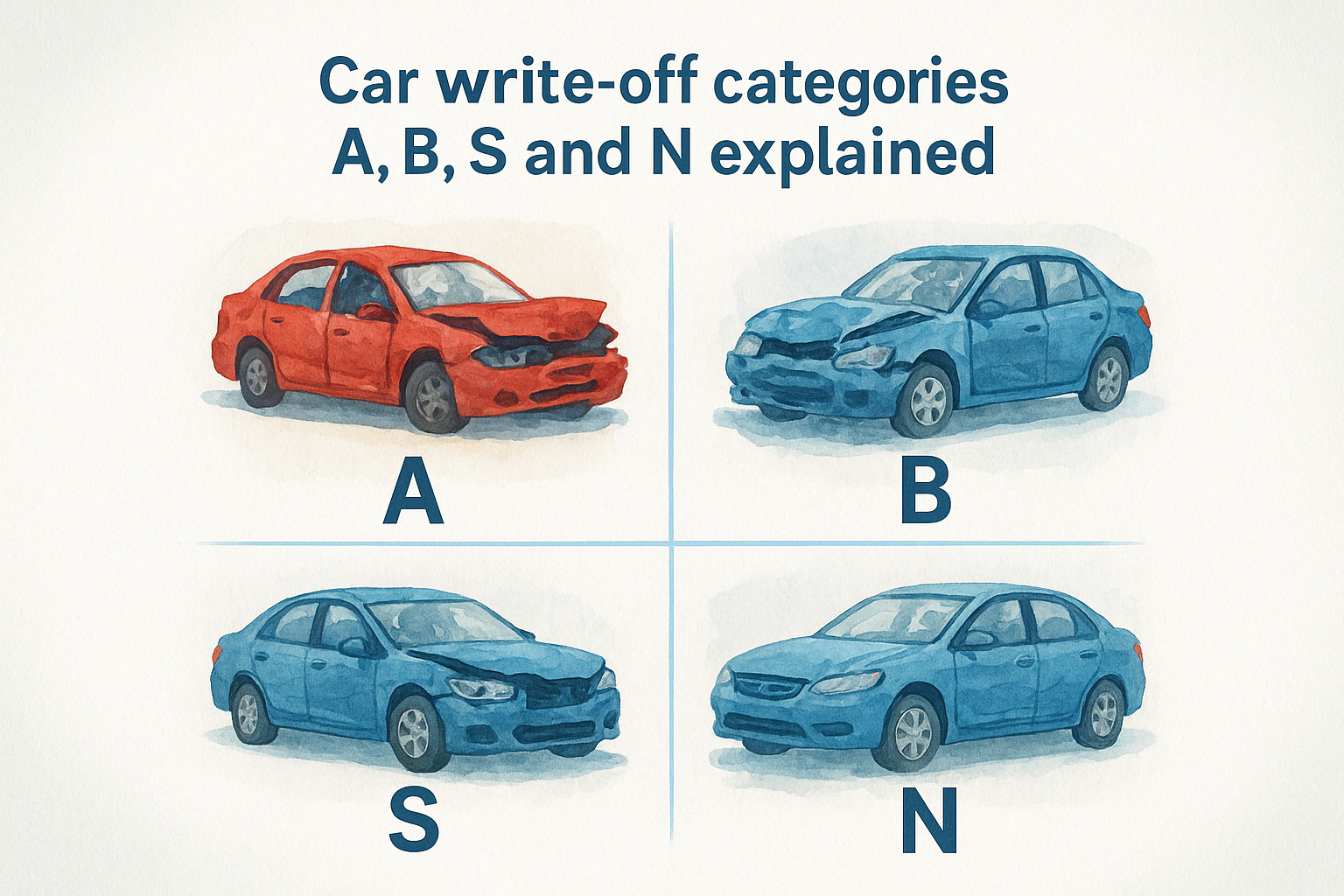
Car write-off categories A, B, S and N explained
The UK uses four write-off categories to classify the extent of damage and what can legally happen to the vehicle afterwards. Knowing what is a car write off in each category helps you understand exactly what you're dealing with, whether you're making a claim or researching a used car.
Categories A and B: permanent write-offs
Category A is the most severe outcome. The car must be crushed in its entirety, including every panel and component, with nothing salvaged for resale. The vehicle must never reappear on the road in any form whatsoever.
One step below that sits Category B. Here, the body shell must still be destroyed, but undamaged parts such as the engine or interior components can be stripped first and sold separately before crushing. Neither category can return to the road under any circumstances.
If a vehicle you're considering carries a Category A or B marker on its record, walk away, because it should never legally be driven again.
Categories S and N: repairable write-offs
Category S covers vehicles with structural damage to the chassis, frame, or other load-bearing components. These cars can legally return to the road, but only after professional repair and independent inspection confirm the vehicle meets the required safety standard.
Category N involves non-structural damage only, such as electrical faults, cosmetic problems, or mechanical issues that leave the car's frame untouched. These vehicles are generally cheaper to fix than Category S, but both categories carry a permanent write-off marker on the vehicle's history. Before buying either, you should verify what repairs were done and confirm they were carried out by a qualified and reputable repairer, not a quick fix designed to flip the car for profit.
What happens after a write-off and DVLA steps
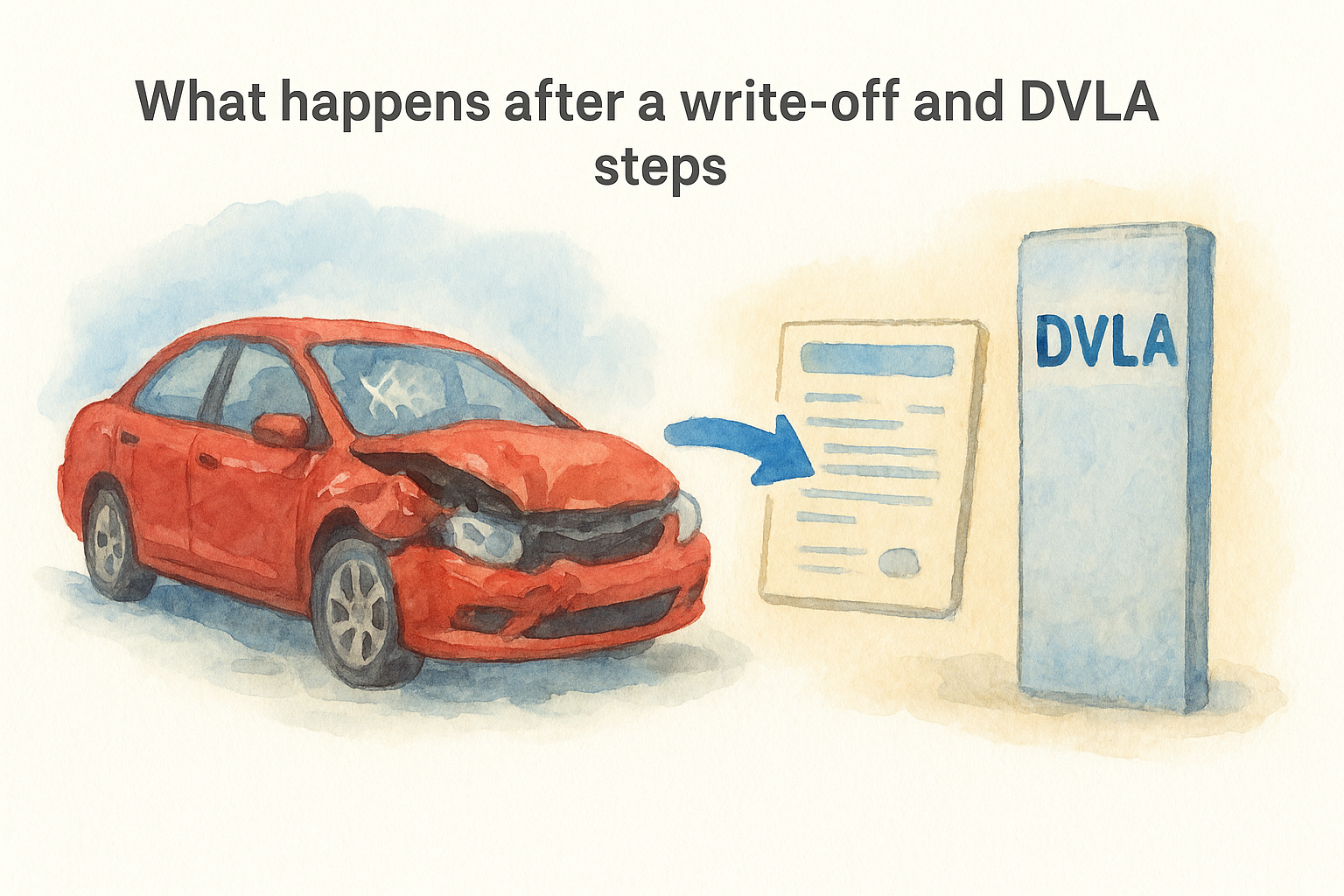
Once an insurer declares your car a write-off, ownership of the vehicle typically transfers to the insurer as part of the settlement process. They will either retain the salvage and sell it through an approved auction, or in some cases offer you the option to buy back the wreck at a reduced sum. What happens next depends on which category the vehicle falls into, and there are legal steps you need to follow regardless of whether you keep the car or hand it over entirely.
Notifying the DVLA
Understanding what is a car write off in legal terms means recognising that the DVLA must be informed when a vehicle is declared a total loss. For Category A and B vehicles, the insurer is responsible for notifying the DVLA that the vehicle has been destroyed, and the registration is permanently removed from the database. You should also send the relevant section of your V5C logbook to the DVLA to confirm you are no longer the registered keeper.
If the DVLA is not properly notified, a destroyed vehicle can remain active on official records, which creates the conditions for fraud, including cloning.
Your V5C and returning to the road
For Category S and N write-offs that you intend to repair and keep, the V5C must be updated to reflect the change in status. Once repairs are complete, a Category S vehicle requires a professional inspection before you can drive it legally. You are responsible for ensuring all repair documentation is in order before the car goes back on the road. Keeping thorough records of who carried out the work and what was replaced protects you if questions arise during a future sale or insurance claim.
Payouts, disputes and finance on a written-off car
When your insurer declares a vehicle a total loss, they offer a settlement based on the car's pre-accident market value, not what you originally paid for it or what you still owe. Knowing what is a car write off in financial terms helps you assess whether that figure is fair before you sign anything.
How your payout is calculated
Your insurer establishes the car's actual cash value by checking current market prices for equivalent vehicles, using trade guides and comparable listings. Make, model, mileage, age, and overall condition all feed into the number they settle on.
Gathering strong documentation before you engage with the insurer puts you in a better position to push back on a low offer. Service history, recent MOT certificates, and receipts for parts or repairs all support a higher valuation, so keep hold of anything that demonstrates how well the car was maintained.
If you think the settlement is too low, compile comparable listings from the used car market and present them formally to your insurer before accepting anything.
What happens if you dispute the settlement
You have the right to formally challenge the insurer's valuation if you can show the car was worth more. Most insurers run an internal complaints process that you need to exhaust first before taking things further.
If you still cannot reach an agreement, the Financial Ombudsman Service provides a free, impartial resolution service for complaints against UK financial firms, and their decision is binding on the insurer.
Outstanding finance on a written-off car
When a financed vehicle is written off, the insurer pays the finance company directly, not you. If that payout falls short of the remaining balance, you are still responsible for covering the difference.
GAP insurance is designed specifically to bridge that shortfall, so if you regularly buy on finance, it is worth adding alongside your standard motor policy before you need it.
Key takeaways before you buy or claim
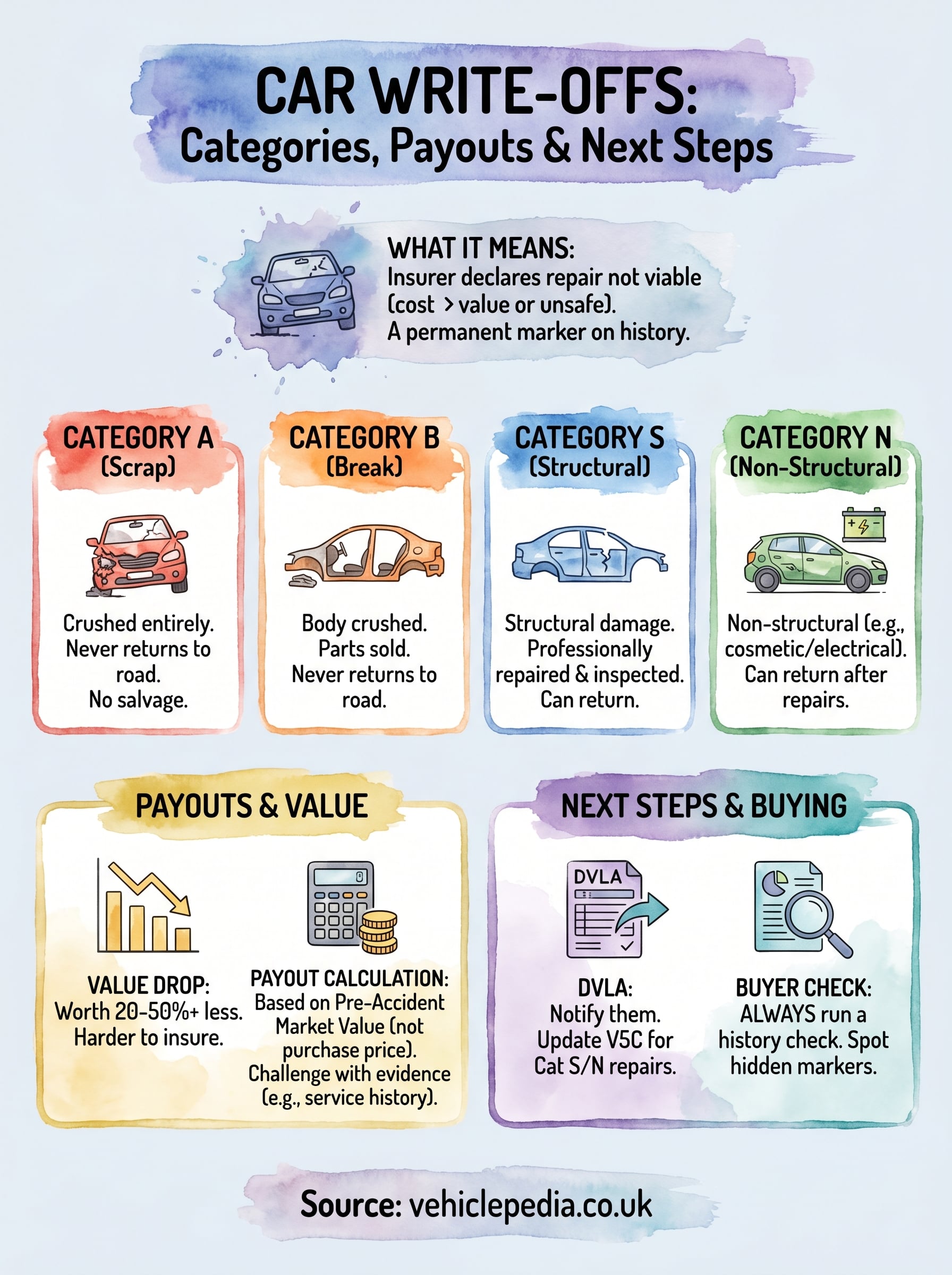
Now that you understand what is a car write off and how the category system works, the priority is using that knowledge before you sign anything. Category A and B vehicles must never return to the road under any circumstances. Category S and N cars can be legally repaired and resold, but both carry a permanent marker that affects resale value and can complicate insurance cover. Always confirm which category applies before you commit to anything.
If you're buying used, never take the seller's word alone on a car's history. Run a proper vehicle history check to confirm whether a write-off marker exists, what category it falls under, and whether any repairs meet the required safety standard. If you're making a claim, gather evidence early to support your valuation and challenge a low offer if needed. Before you hand over any money, check the car's full history with a Vehiclepedia sample report and know exactly what you're buying.