Vehicle Finance Details Check: How to Check Online
Run a vehicle finance details check by reg number to spot outstanding loans before you buy, avoid repossession risk, and know what to do if it's flagged.

Vehicle Finance Details Check: How to Check Online
Buying a used car that turns out to have outstanding finance attached to it is one of the most costly mistakes a buyer can make. The debt sits with the vehicle, not the seller, which means a lender can legally repossess the car even after you've paid for it in full. That's why a vehicle finance details check has become a standard step for anyone serious about buying used, right alongside checking the mileage and service history.
Running a vehicle finance details check online is quick, and you only need the registration number to get started. Within minutes you can find out whether a car is logged against an active finance agreement, has been marked as an insurance write-off, or shows signs of a mismatched history that points to something being hidden.
This article walks you through exactly how the process works, what information a finance check actually reveals, and where to run one using official UK data sources rather than guesswork. We'll also cover what to do if a check flags an issue, so you know your options before you hand over any money.
Why checking for outstanding finance matters
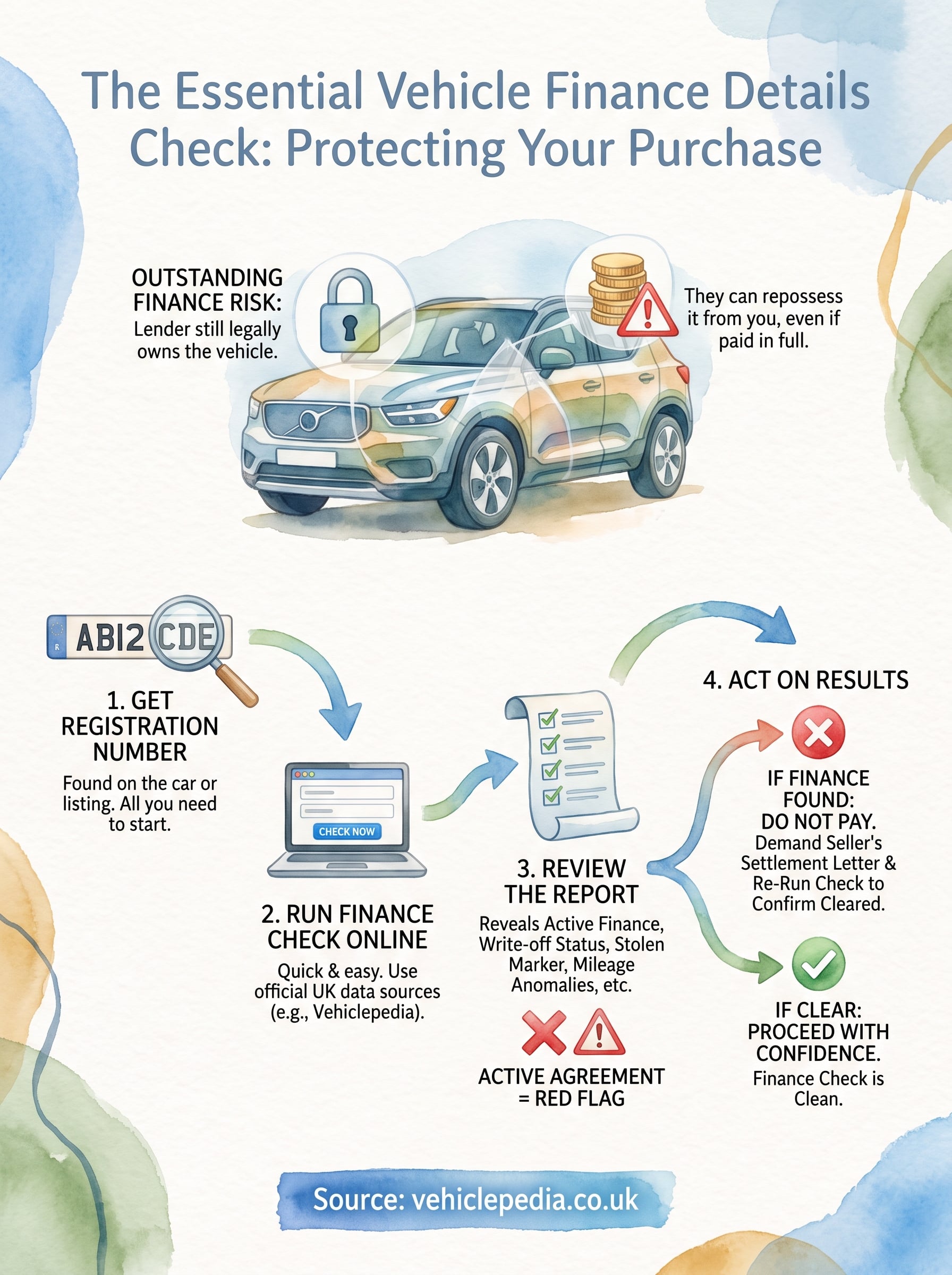
Repossession is the risk that catches most buyers off guard. Outstanding finance on a car means the lender still legally owns some or all of the vehicle until the agreement is settled, even if the person selling it to you has possession of the logbook and keys. If the previous owner defaults or simply never finishes paying, the finance company has the right to reclaim the car from you, the new owner, regardless of how much you paid or how many months you've driven it. This isn't a rare technicality either; it's a well-established principle of UK consumer law, and it's the single biggest reason a vehicle finance details check exists as a product in the first place.
A car bought with hidden finance can be repossessed from you even after you've paid in full.
Sellers don't always disclose finance deliberately to deceive you. Sometimes they genuinely believe the agreement is settled, or they're behind on payments and hoping to offload the problem before it catches up with them. Either way, the burden of discovering the truth falls on you as the buyer, because private sales carry no automatic protection. Unlike buying from a dealer, where consumer rights legislation gives you some recourse, a private purchase is largely a case of buyer beware.
The financial fallout if you skip the check
Think about what's actually at stake beyond losing the car itself. You could lose the purchase price, face the cost of arranging alternative transport at short notice, and still have no legal claim against the finance company that reclaims the vehicle, because their agreement was with the previous keeper, not you. Some buyers find themselves fighting for months to recover money from a seller who has since disappeared or spent the cash.
- Repossession: the lender can take the car back at any time, with no obligation to compensate you
- No refund guarantee: recovering your money from a private seller can take months, if it happens at all
- Wasted costs: insurance, tax, and any repairs you've already paid for are lost along with the car
- Legal disputes: proving you were an innocent buyer can involve solicitors and small claims court
Why this matters more with private sales
Dealers have a legal duty under the Consumer Rights Act 2015 to sell vehicles that match their description and are free from undisclosed problems, which gives you a route to a refund if finance turns up later. Private sellers have no such obligation. The Financial Conduct Authority, which regulates car finance agreements in the UK, confirms that ownership stays with the lender until the debt is cleared, which is exactly why a vehicle finance details check online matters just as much for a private-plated hatchback as it does for a nearly new dealer-sourced SUV.
Given all this, treating a finance check as optional makes little sense when it costs so little time and money compared with what's at risk. A five-minute lookup against a registration number is a small price for the certainty that the car you're about to buy is genuinely yours to keep.
How to check a vehicle's finance details online
Running a vehicle finance details check takes less time than making a cup of tea, and you don't need any paperwork from the seller to do it. All you need is the car's registration number, which you can read straight off the plate before you even view the vehicle in person, and there's plenty you can check by number plate alone. Most checking services, including Vehiclepedia, ask for nothing more than that plate to pull data from official records and return a result within seconds.
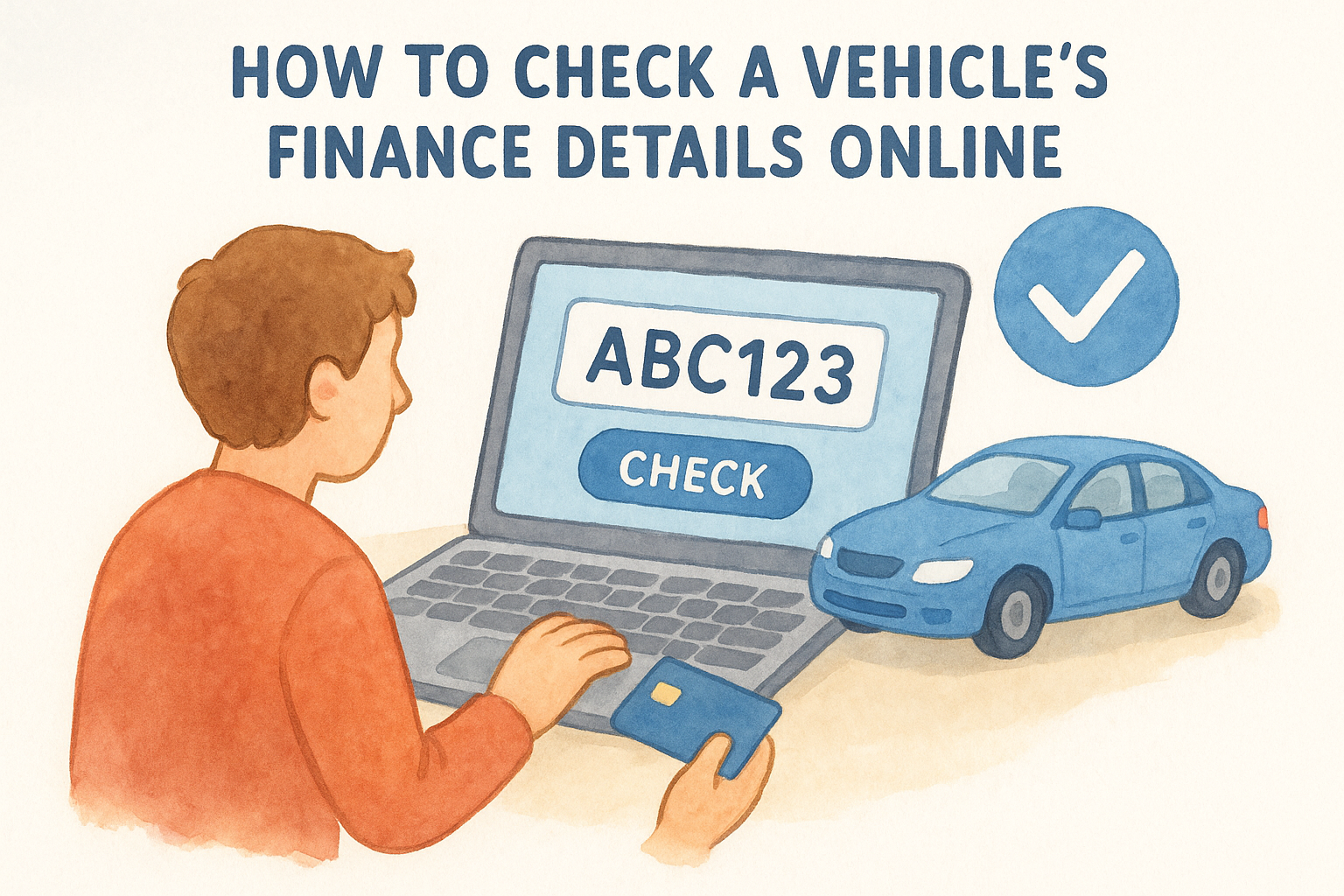
Getting started only requires a few basics, so gather these before you run the check:
- The full vehicle registration number, typed exactly as it appears on the plate
- Optionally, the make and model, which some services use to confirm you've entered the correct plate
- A card or account ready for payment, since finance status sits behind the premium report tier on most platforms, so it's worth knowing what a premium finance check costs up front
- Five minutes of your time, ideally before you agree a price or hand over any deposit
Running the check step by step
Once you have the registration number, the process itself is straightforward and follows the same pattern across most reputable UK checking services:
- Go to the vehicle check tool and enter the registration plate.
- Review the free summary, which typically confirms MOT status, tax status, and basic vehicle details.
- Select the premium finance check, which searches finance registers, write-off records, and stolen vehicle databases in one report.
- Pay the one-off fee, usually a few pounds, and wait for the report to generate.
- Read the results before you view the car or transfer any money, not after.
Never agree to buy a car before the finance check comes back clear.
Skipping straight to a viewing without running this check first is the single most common mistake buyers make, because once you're standing in front of the car and the seller is friendly and the price feels fair, it's easy to talk yourself out of due diligence. Doing the check from your phone before you even arrange a viewing removes that pressure entirely. Timing also matters here: a finance check is only as reliable as the moment it's run, so if there's a gap of more than a day or two between checking and buying, it's worth running it again to be certain nothing has changed.
What a finance check report actually shows you
Opening a finance check report for the first time can feel like reading a bank statement for a car you don't yet own, but the layout is simpler than it looks. The core result is a straightforward flag: either the vehicle shows no recorded finance against it, or it comes back with an active agreement logged by a lender. Most reports also state the type of agreement, such as hire purchase or a personal contract plan, though the finance company's name and exact settlement figure usually stay private for data protection reasons. That single flag is the piece of information most buyers are really paying for.
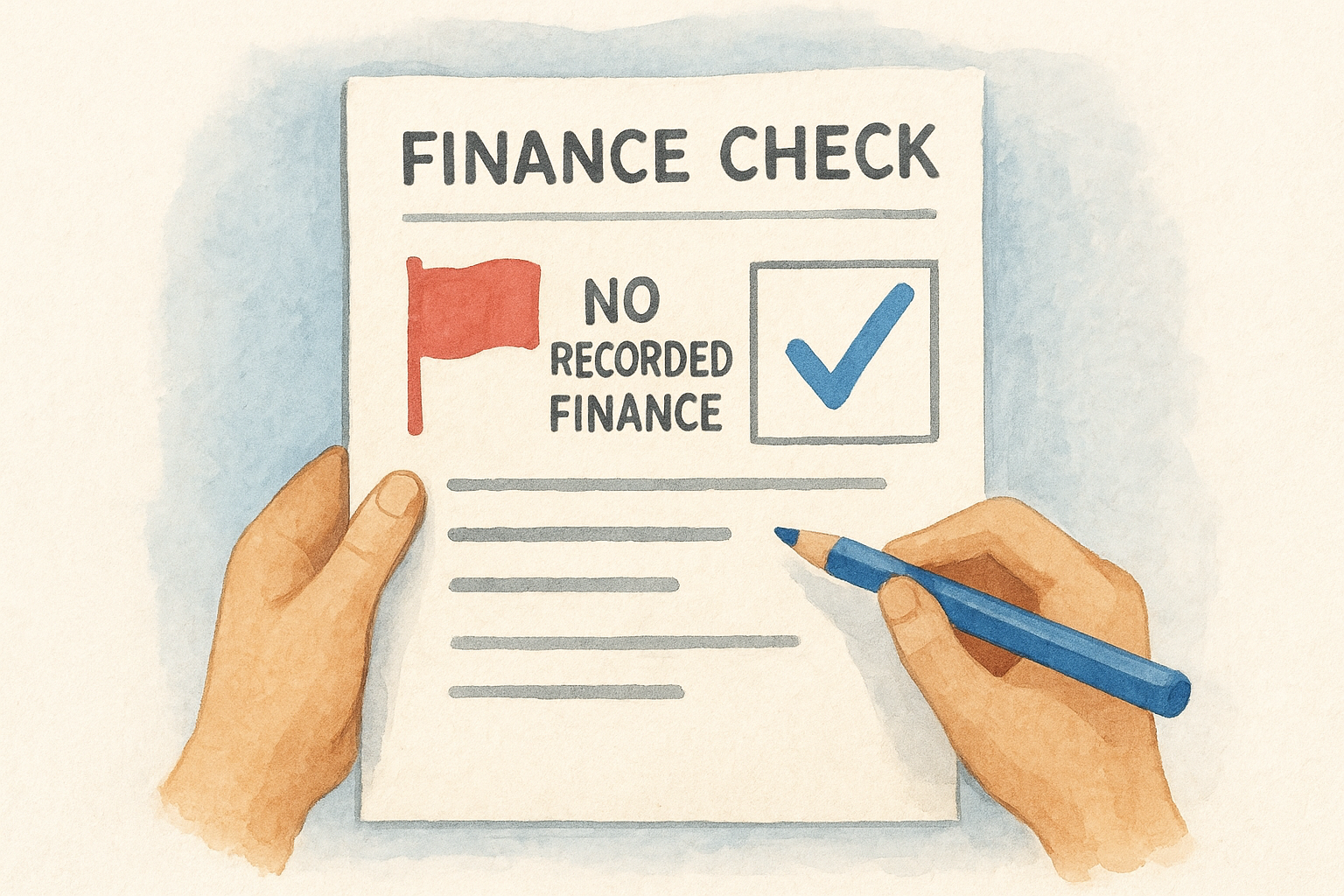
If the report shows an active finance agreement, walk away until it's resolved.
What sits alongside the finance flag
Beyond the finance status itself, a full vehicle finance details check online typically bundles in several related checks, because the same registers that track lending also flag other red flags worth knowing about before you buy.
| Report section | What it tells you |
|---|---|
| Finance status | Whether an agreement is currently active against the vehicle |
| Write-off category | Whether an insurer has recorded the car as a total loss (Cat N, S, or older codes) |
| Stolen marker | Whether the plate or VIN appears on the police stolen vehicle database |
| Mileage anomalies | Whether recorded mileage readings have dropped or jumped between MOT tests |
| Plate and colour changes | Whether the registration or colour has changed since first registration |
| Import/export status | Whether the vehicle was brought into or out of the UK |
Reading the result correctly
Context matters more than the raw flag alone. A car that shows finance from years ago that's since been settled won't reappear on current registers, so what you're seeing is always the live, present-day status rather than a full repayment history. Seeing a write-off marker alongside a finance flag is a particularly strong warning sign, since it suggests the vehicle may have been in a serious accident while still owed to a lender. Understanding these combinations, rather than reading each line in isolation, is what turns a basic report into a genuinely useful buying decision, and it's exactly why checking finance details shouldn't be treated as a box-ticking exercise separate from everything else a history check reveals.
What to do if a car has outstanding finance
Finding an active finance marker doesn't automatically mean the deal is dead, but it does mean you stop everything until you get clarity. Don't hand over any money or sign anything until the situation is resolved, no matter how convincing the seller sounds or how good the price looks. Your first move is simple: show the seller the report and put the right questions to the seller about it. Genuine sellers who are close to settling a hire purchase or personal contract plan know whether they can legally sell a financed car, usually know exactly what's outstanding, and can produce a settlement letter from the lender within a day or two.
Treat an outstanding finance flag as a hard stop, not a negotiation point.
Getting proof the debt is cleared
Once a seller claims the finance is settled, ask them to get written confirmation directly from the lender rather than taking their word for it. A settlement letter should state the account is closed and the vehicle is free from any charge. If they're unwilling or unable to provide this, treat it as a serious warning sign rather than an oversight.
- Ask the seller to contact their finance company for a settlement letter showing a zero balance
- Request the letter be dated recently, ideally within the last few days
- Confirm the registration number and VIN on the letter match the car in front of you
- Re-run the check after a few days to confirm the record has updated, following the same steps for confirming whether finance is still owed
When to walk away completely
Sometimes the seller can't or won't provide proof, or the settlement figure is larger than the sale price, meaning they'd be selling a car they don't have the money to clear. In these cases, walking away is the only sensible option, however much you like the car. Reporting the situation to the finance company is also worth doing if you suspect someone is trying to sell a financed vehicle without disclosing it, since lenders take an active interest in protecting their security on the vehicle. The Financial Conduct Authority maintains oversight of firms offering car finance, and its consumer guidance confirms that buyers have no automatic protection against repossession once ownership disputes arise. Losing a car you like is frustrating, but it's nothing compared with losing one you've already paid for.
Buying with confidence
A vehicle finance details check costs a few pounds and takes minutes, yet it stands between you and a car that could legally be repossessed at any moment. Getting the registration number, running the check before you view the car, and reading the results properly are three simple steps that remove almost all of the risk from buying used. Outstanding finance isn't rare, and sellers don't always know or disclose it, so treating this check as routine rather than optional protects both your money and your peace of mind.
Skipping this step to save a few pounds makes no sense when the alternative is losing the entire car. Before you arrange a viewing or agree a price, see exactly what a full finance and history report includes, so you know precisely what you're paying for before you commit.