Car Insurance Write Off Categories UK: A, B, S & N Guide
Understand car insurance write off categories UK. Learn how Category A, B, S, and N markers impact a vehicle's safety, resale value, and insurance.
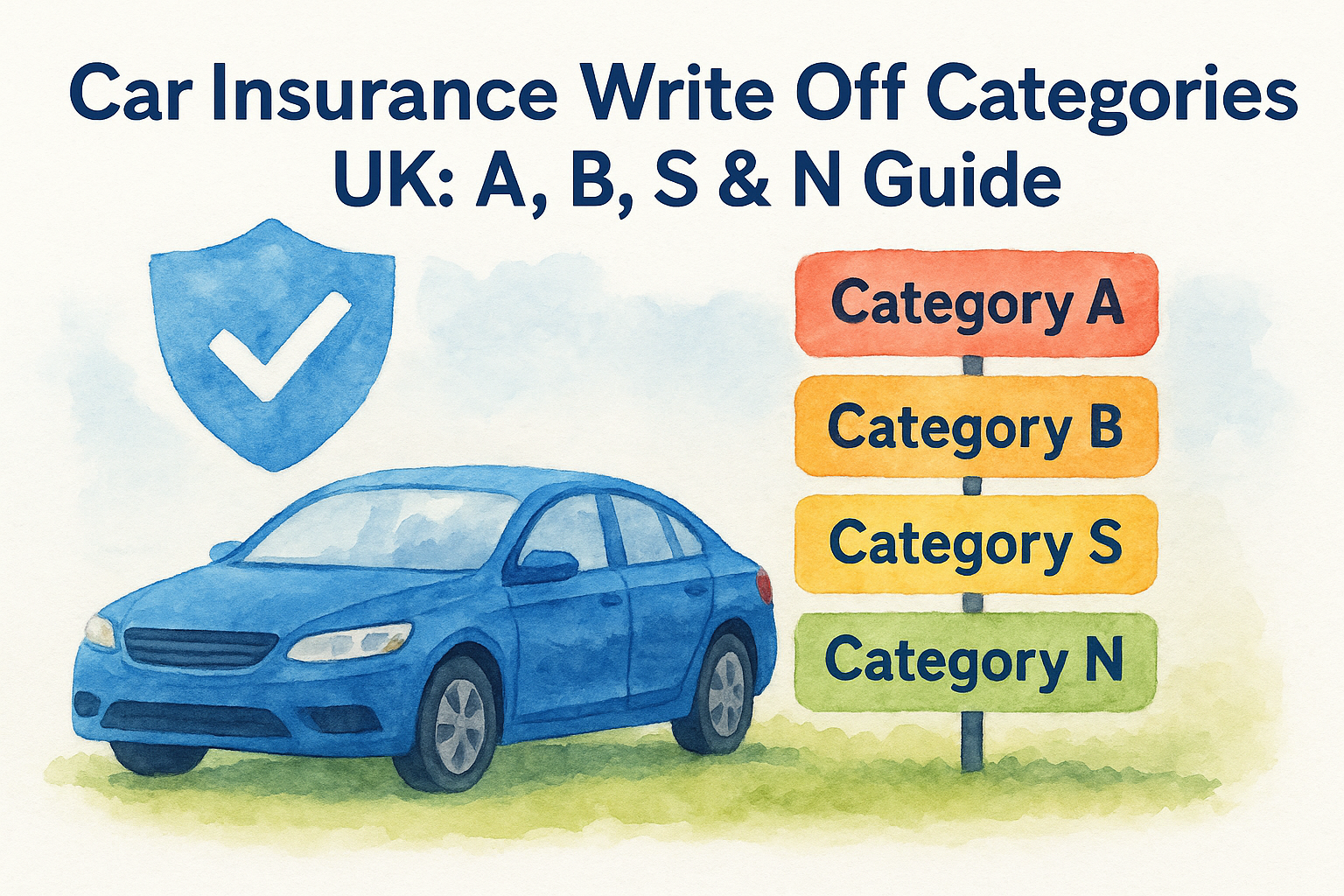
Car Insurance Write Off Categories UK: A, B, S & N Guide
If you're buying a used car and spot the words "Category S" or "Category N" in a listing, your first reaction might be to walk away. That's not always the wrong instinct, but it's not always the right one either. Understanding the car insurance write off categories UK insurers use is essential before you make any decision, because each category means something very different about the severity of damage and whether the vehicle can legally return to the road.
When an insurer declares a car a write-off, it doesn't necessarily mean the vehicle is destroyed. It means the cost of repair exceeded what the insurer was willing to pay relative to the car's value. The four categories, A, B, S, and N, range from cars that must be crushed to those with relatively minor damage that's already been fixed. Knowing the difference can save you from a costly mistake or, in some cases, help you spot a genuine bargain.
At Vehiclepedia, we help UK car buyers uncover a vehicle's history before handing over any money, including whether it's been recorded as an insurance write-off. This guide breaks down each category in plain terms, explains what it means for you as a buyer or owner, and covers the legal and practical details you need to make a confident, informed choice.
Why write-off categories matter
The write-off category assigned to a vehicle stays on its record permanently. Once an insurer logs a car as a write-off with the relevant databases, that information is attached to the vehicle registration number for life. That fact alone changes how the car is valued, insured, and sold going forward, which is why understanding the car insurance write off categories UK system matters whether you are buying, selling, or simply insuring a vehicle. Treating all write-offs as equal is one of the most common and costly mistakes used car buyers make.
The impact on a car's market value
A write-off marker reduces a car's market value significantly, even after repairs are completed to a professional standard. Buyers treat write-off history as a risk factor, and that perception pushes down asking prices across the used car market. A Category S car, for example, may sell for 20% to 40% less than an identical model with a clean history, depending on the extent of the original damage and the quality of the repair work. Sellers sometimes price write-off cars attractively to move them quickly, but the discount needs to account for the ongoing impact on resale value, not just the current repair cost.
Even a well-repaired write-off carries a permanent record, so always factor that reduced resale value into your offer from the start.
The impact on insurance and finance
Insuring a write-off vehicle is more complicated than insuring a standard used car. Some insurers refuse to cover write-offs entirely, while others only offer third-party cover or apply higher premiums to reflect the perceived structural or safety risk. If you plan to finance a write-off purchase, you may find lenders equally cautious. Many mainstream finance providers will not offer a loan against a vehicle that carries a write-off marker on its history, which limits your options and can affect the overall cost of buying the car.
Why buyers carry the most risk
When you search for a used car, a seller is not legally required to volunteer information about a previous write-off, although they must not actively misrepresent the vehicle's condition. That gap in disclosure rules means the responsibility sits with you to check the history before you commit. Purchasing a vehicle without knowing its category can leave you with a car that is difficult to resell, harder to insure, and in the most serious cases, unsafe to drive. Checking the write-off status of any car you are seriously considering is not optional; it is a basic step in protecting your money and your safety.
How insurers decide a car is a write-off
When your car is damaged in an accident or suffers flood, fire, or theft damage, your insurer sends an assessor to examine the vehicle. The assessor compares the estimated repair cost against the car's pre-accident market value, a figure known as the total loss threshold. If the repair bill reaches a certain percentage of what the car is worth, the insurer declares it a write-off and assigns one of the car insurance write off categories UK insurers are required to follow.
The total loss threshold
Most UK insurers write a car off when repair costs reach roughly 50% to 70% of the vehicle's pre-accident market value, though the exact figure varies between insurers and individual policies. A car valued at £5,000 with £3,500 in estimated repair costs will almost certainly be written off, even if the vehicle is technically fixable and the damage looks straightforward. That threshold explains why older, lower-value cars are written off far more frequently than newer models for a comparable level of physical damage.
The market value your insurer uses is their own calculation, not the price you originally paid or what you see similar cars listed for in private sale adverts.
What assessors look at
An assessor examines considerably more than the visible damage to your vehicle. They factor in labour costs, parts availability, and potential hidden structural damage that only becomes clear once repairs begin. The assessor also checks whether the damage affects safety-critical components such as the chassis, crumple zones, or airbags, because that finding directly shapes which category the insurer assigns. Two cars with visually similar damage can end up in very different categories based entirely on what sits beneath the bodywork.
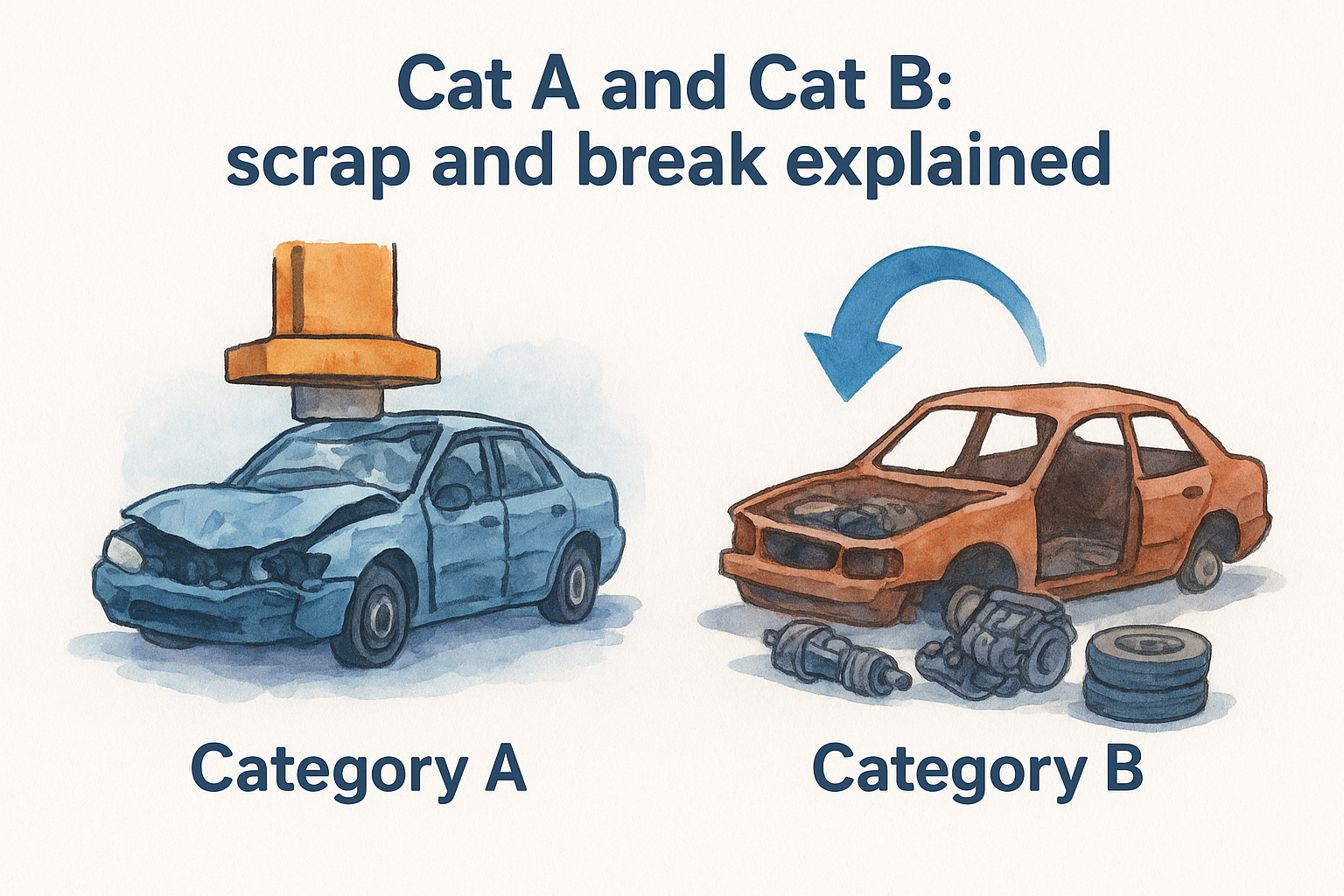
Cat A and Cat B: scrap and break explained
At the most severe end of the car insurance write off categories UK system sit Category A and Category B. These are the two categories where a vehicle can never legally return to UK roads, regardless of the condition of individual components. If a car receives either of these labels, the outcome is fixed: it will be scrapped or broken for parts under controlled conditions.
Category A: crush only
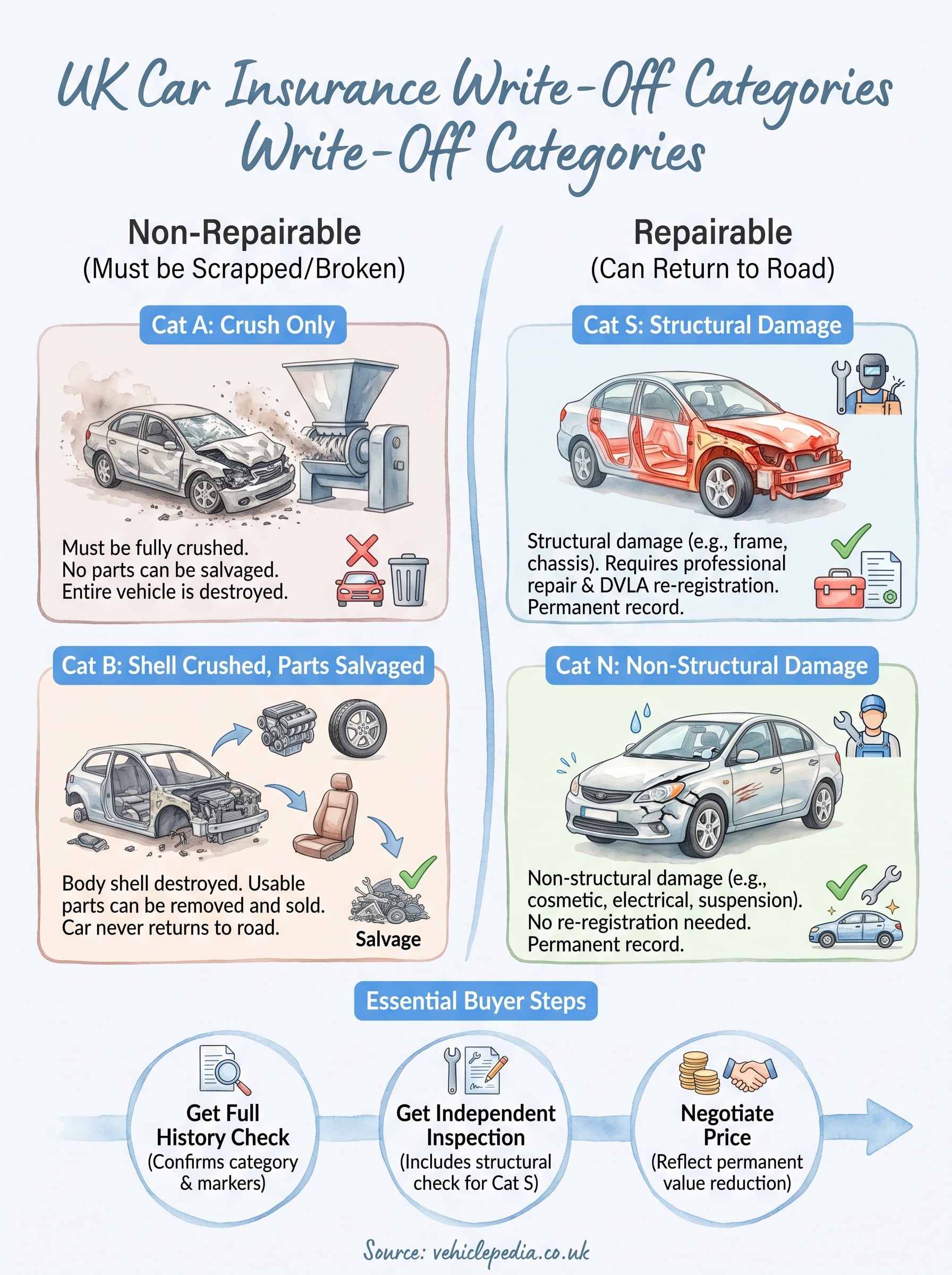
A Category A write-off represents the worst possible outcome for a vehicle. The car, along with every single part attached to it, must be crushed and destroyed in its entirety. Nothing from a Cat A vehicle can be salvaged for resale or reuse, not the seats, not the windows, not the electronics. This category typically applies to cars that have suffered catastrophic damage from fire, flood, or a severe collision, where the structural integrity and safety systems are so compromised that no individual component can be trusted.
If you ever see a Cat A vehicle advertised for sale anywhere, that listing is illegal, and you should report it immediately.
Category B: shell crushed, parts salvaged
Category B differs from Cat A in one key way: the car's usable parts can be removed and sold before the body shell is destroyed. Mechanical components, interior trim, and other salvageable items can legally enter the used parts market. However, the vehicle's body shell must still be crushed and can never be repaired or returned to the road.
Parts commonly salvaged from Cat B vehicles include:
- Engines and gearboxes
- Wheels and tyres
- Interior seats and trim
- Electronic modules and sensors
For buyers, this distinction is mostly academic since you will never purchase a Cat B car as a running vehicle. For mechanics and parts suppliers, Cat B vehicles provide a legal source of second-hand components at considerably lower cost than new parts.
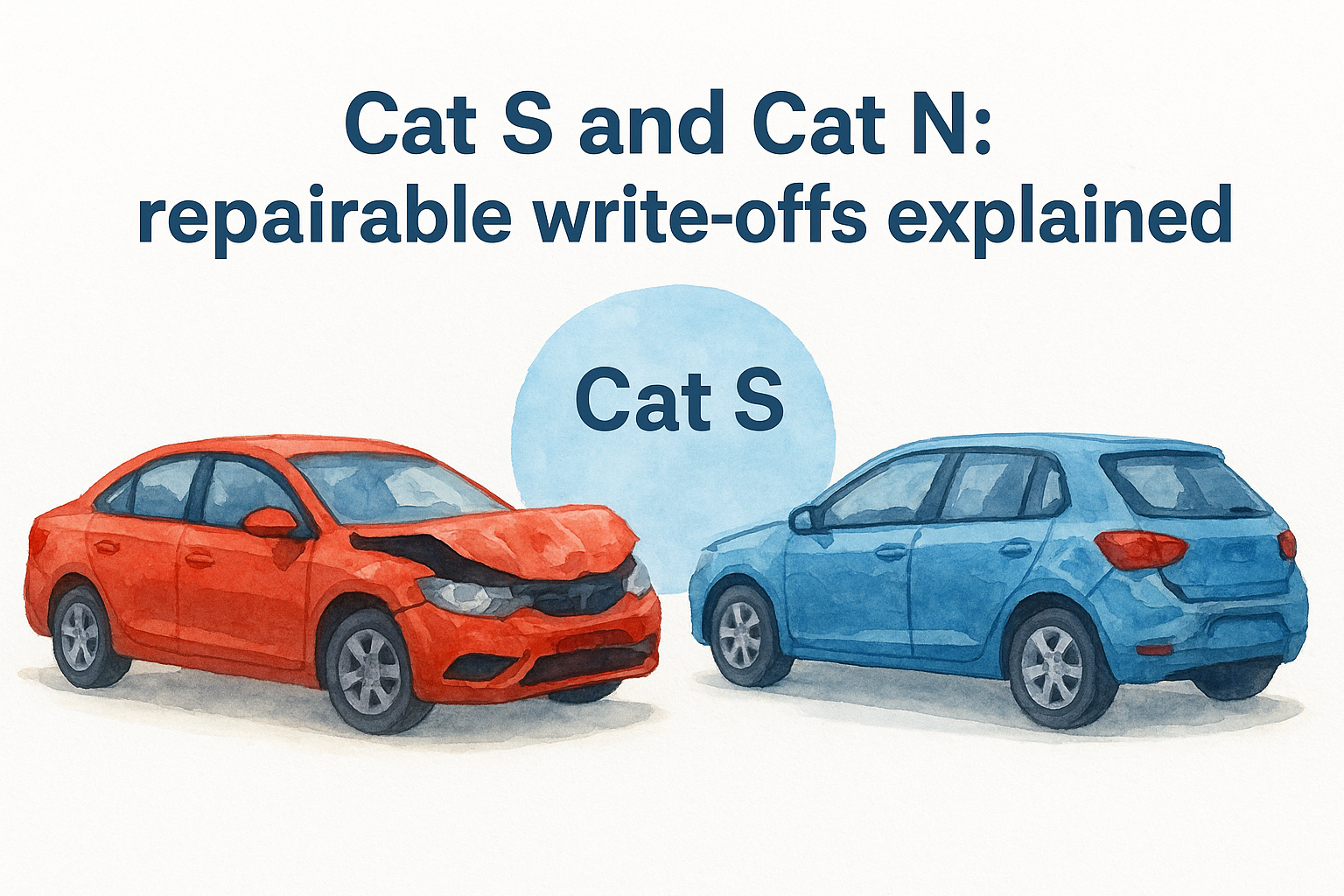
Cat S and Cat N: repairable write-offs explained
Categories S and N sit at the less severe end of the car insurance write off categories UK system, and both represent vehicles that can legally return to the road after being repaired. However, "repairable" does not mean "identical to before," and understanding the distinction between these two categories is critical before you consider buying one.
Category S: structural damage
A Category S write-off has suffered structural damage, meaning the vehicle's core frame, chassis, or crumple zones were affected by the incident. The car must be repaired by a qualified professional before it can be driven legally, and once repaired, it must be re-registered with the DVLA. The write-off marker stays on the vehicle's history permanently, regardless of how well the repair work was carried out.
A Category S car repaired to a professional standard can be roadworthy, but you should always verify the quality of that work with an independent inspection before buying.
Structural repairs are expensive and technically demanding. Poor workmanship on a Category S vehicle can leave hidden weaknesses in the crumple zones or frame that affect how the car performs in a future collision, which makes an independent structural check non-negotiable.
Category N: non-structural damage
Category N covers write-offs where the damage was entirely non-structural, meaning the car's frame and safety-critical components were unaffected. Damage in this category typically involves cosmetic bodywork, electrical systems, or mechanical components such as braking and suspension parts. A Cat N vehicle does not need to be re-registered before returning to the road, although the write-off marker remains on its record permanently.
Common reasons a car receives a Cat N classification include:
- Damaged bumpers, doors, or body panels
- Electrical faults caused by water ingress
- Suspension or steering component failure
- Airbag deployment without any structural impact
How to buy a Cat S or Cat N car safely
Buying a Cat S or Cat N vehicle is not inherently risky if you approach it correctly. Both categories appear within the car insurance write off categories UK system as repairable, but the safety of your purchase depends entirely on how thoroughly you verify the car before committing. Skipping checks to save time is where buyers consistently lose money.
Get an independent inspection
Before you hand over any money, book an independent mechanical inspection from a qualified engineer who has no connection to the seller. For a Cat S car specifically, that inspection must include a structural assessment to confirm the frame and crumple zones were repaired to a safe standard. A routine service check is not sufficient for a vehicle that has suffered structural damage.
Spend £150 to £250 on an independent inspection now, and you avoid the risk of spending thousands on hidden structural problems later.
Look for an inspector who provides a written report covering both visible and hidden damage. That document protects you legally and gives you solid grounds to renegotiate the price if issues surface during the assessment.
Check the vehicle's full history
Run a full vehicle history check before you even view the car in person. A history check confirms the write-off category, shows whether the vehicle was properly re-registered after repair, which is a legal requirement for Cat S, and flags any outstanding finance or additional markers that could complicate ownership further down the line.
Negotiate the price accordingly
A write-off marker permanently reduces resale value, so your opening offer should reflect that reduction. Research equivalent vehicles with clean histories and apply a meaningful discount. Factor in the cost of your inspection, any remedial work identified in the report, and the lower price you will realistically achieve when you sell the car on.
Key takeaways
The car insurance write off categories UK system divides write-offs into four distinct levels of severity. Category A and Category B vehicles can never legally return to UK roads; Category A requires full destruction of every component, while Category B allows usable parts to be salvaged before the body shell is crushed. Both Category S and Category N vehicles can return to the road after repair, but Category S involves structural damage and requires professional repair plus re-registration with the DVLA, while Category N covers non-structural damage only.
Every write-off marker stays on a vehicle's record permanently, affecting its resale value, insurance options, and finance eligibility for the lifetime of the car. Your strongest protection as a buyer is a full history check paired with an independent inspection before you commit to any purchase.
View a sample vehicle history report to see exactly what a full check reveals before you hand over your money.