What To Look For When Buying A Used Car: 16 Key Checks
Avoid costly mistakes with 16 essential checks. Learn what to look for when buying a used car, from mechanical faults to hidden finance and MOT history.

What To Look For When Buying A Used Car: 16 Key Checks
Buying a used car can save you thousands compared to buying new, but it comes with risks that a shiny coat of paint can easily hide. Knowing what to look for when buying a used car is the difference between driving away with a bargain and inheriting someone else's expensive problem. From dodgy mileage readings to hidden finance agreements, the UK used car market throws plenty of pitfalls at unprepared buyers.
The good news? Most of these risks are avoidable with the right checks. A thorough inspection covers three key areas: the car's physical condition, its legal documentation, and its history. Skip any one of these and you leave the door open to costly surprises down the line.
This guide walks you through 16 essential checks to carry out before handing over your money. We've built it around the same data points we use at Vehiclepedia when compiling vehicle history reports from official sources like the DVLA, the UK Police Database, and insurance registers, so you can approach your next purchase with confidence rather than crossed fingers.
1. Run a Vehiclepedia free car check
Before you look at the car in person, run a free vehicle history check at Vehiclepedia using the car's registration plate. This takes less than a minute and immediately surfaces information that the seller may not volunteer. It's one of the most important steps in understanding what to look for when buying a used car, and it costs you nothing to start.
What you can confirm for free from the reg plate
A free Vehiclepedia check pulls data directly from the DVLA and other official UK sources, giving you verified details on the vehicle's make, model, colour, engine size, and year of manufacture. You also get the current MOT status, full MOT history including past failures and advisories, road tax status, and any import or export records. This information alone lets you cross-reference what the seller is telling you against what official records actually say before you travel to view the car.
What premium checks add and when they matter
The free check gives you a solid foundation, but a premium report goes further in three critical areas. First, it checks whether the car has outstanding finance registered against it. If it does, you could legally inherit that debt when you take ownership. Second, it runs the registration against the UK Police Database to flag stolen markers. Third, it identifies whether an insurer has written the car off and under which category. These checks matter most when the seller is private, the price seems too good for the age and mileage, or the history feels thin.
Always run the premium check before handing over any money, not after. Reversing a purchase once funds have transferred is far harder than walking away before you pay.
How to interpret results and decide your next step
When your results come back, compare every detail against what the seller told you and what appears on the V5C logbook. If the registered colour, engine size, or number of previous keepers does not match, ask for a clear explanation before you go any further. A clean report does not guarantee the car is in perfect mechanical shape, but it confirms the legal status is clear. Use the report as your decision filter: a flagged result means you investigate further or walk away, not that you negotiate a small discount and carry on regardless.
2. Confirm the V5C details match the car
The V5C logbook is the official vehicle registration document in the UK and one of the most important pieces of paperwork when thinking about what to look for when buying a used car. Always ask to see the V5C before you agree to anything, and check every detail in person rather than accepting photos sent by the seller.
What to match on the V5C
Cross-reference the V5C against the physical car on several key points. Check the make, model, colour, engine size, and year of first registration are consistent with what you can see. Also confirm the number of previous registered keepers matches what the seller claims. A private seller who claims to be the first owner but the V5C shows three previous keepers should prompt a direct question.
Where to find the VIN on the vehicle
The Vehicle Identification Number (VIN) appears in multiple places on the car. Check the VIN plate on the dashboard, visible through the windscreen from outside, and compare it to the number printed in the V5C. You will also find the VIN stamped into the chassis, typically on a plate in the engine bay or on the body sill. All three should match exactly, with no signs of tampering or re-stamping.
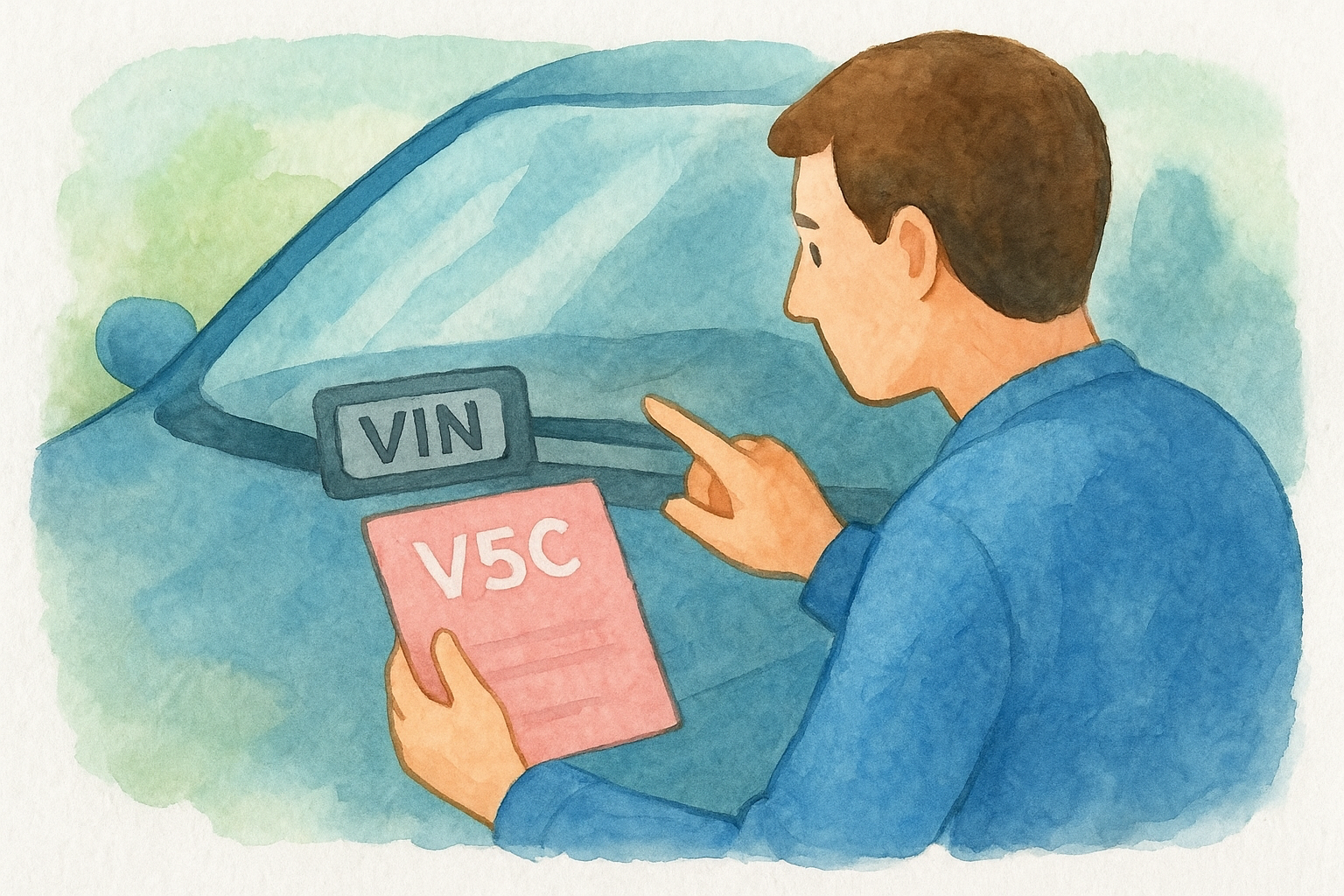
If the VIN plate looks disturbed, scratched around the edges, or the number does not match the V5C, stop the inspection immediately and do not buy.
Red flags that suggest a cloned or misdescribed car
Cloned vehicles carry the identity of a legitimate car but are actually stolen or written-off. Watch for a V5C that looks freshly printed, has corrections written in by hand, or lists an address that does not match the seller's location. A mismatched VIN between the dashboard plate, chassis stamp, and V5C is the clearest single warning sign you can find.
3. Check MOT status and MOT history
The UK MOT test is a legal annual safety check that every vehicle over three years old must pass to remain road legal. Your Vehiclepedia free check includes a full MOT history pulled from the DVSA, making it one of the most useful data points when deciding what to look for when buying a used car.
How to read MOT passes, failures and advisories
Each MOT record shows a pass or fail result, the test date, the mileage recorded at testing, and any advisory notes or failure reasons attached to that test. Advisories are not failures, but they flag items testers consider worth monitoring. Pay close attention to them because an advisory from two years ago that remains unresolved suggests the owner has been driving the car without fixing a known issue.
A string of clean passes tells a positive story, but so does a string of tests that barely scraped through with multiple advisories each time.
Patterns that signal neglect or hidden problems
Look across the full test history rather than just the most recent result. A pattern of recurring failures for the same component, such as brakes or suspension, suggests a car that receives the minimum work to pass rather than one that is properly maintained. Gaps in the testing timeline are equally telling; a two-year gap could mean the car sat unused, was driven illegally, or was kept off UK roads entirely.
What to ask the seller about repairs and retests
Ask the seller directly whether they hold receipts for repair work done to clear any past MOT failures. A straightforward seller keeps their paperwork. If they cannot explain how a recorded failure was resolved before the next test, treat that as a gap in the maintenance story worth investigating before you commit.
4. Verify road tax and SORN status
Road tax is a legal requirement for any vehicle driven or parked on a public road in the UK. Checking this is a quick but important step when thinking about what to look for when buying a used car, because an untaxed car tells you something about how the current keeper has managed the vehicle.
How to check current tax status
You can check the current Vehicle Excise Duty (VED) status of any UK vehicle using its registration plate on the GOV.UK vehicle enquiry service. The result will confirm whether the car is taxed, the expiry date of the current tax, and whether it holds a Statutory Off Road Notification instead. This takes under a minute and is free to use.
Tax does not transfer with the car when ownership changes, so even a currently taxed vehicle becomes untaxed the moment you take over as keeper.
What SORN can mean and when it raises risk
A Statutory Off Road Notification means the registered keeper has declared the vehicle is off the public road. This is not automatically a problem; many stored or project cars carry a SORN. However, a car presented as regularly driven but showing a SORN on official records is a clear inconsistency you need the seller to explain before you go any further.
What you need to tax the car as the new keeper
Once you take ownership, you must tax the car before driving it away. You can do this online via GOV.UK using the new keeper slip from the V5C. Budget the cost of the first tax payment into your purchase, especially on higher-emission vehicles where rates can be significant.
5. Confirm the car has no outstanding finance
Outstanding finance is one of the less visible risks when thinking about what to look for when buying a used car. In the UK, a finance agreement is secured against the vehicle itself, not the person who took it out. If you buy a car that still has an active finance agreement, the lender retains a legal interest in it and can repossess it even after you have paid in full.
Why finance checks matter in the UK
Unlike other debts, car finance does not automatically clear when a vehicle changes hands. The original finance agreement stays active until the borrower settles it. This means a private seller can list a car for sale without telling you they still owe money on it, and you would have no way of knowing without running a finance check against the registration.
A Vehiclepedia premium report checks for registered finance markers before you commit, giving you legal protection and peace of mind before any money changes hands.
Common types of finance to watch for
The most common agreements you will encounter are Hire Purchase (HP) and Personal Contract Purchase (PCP). Under both arrangements, the finance company legally owns the car until the final payment is made. Conditional sale agreements work similarly. Each of these creates a registered marker that a finance check will surface if it remains active.
What to do if a finance marker appears
Do not proceed on the assumption the seller will clear it before handover. Ask for written confirmation from the lender that the finance is settled, and verify the settlement directly. If the seller cannot provide this, walk away.
6. Check theft and police interest markers
A stolen vehicle check is one of the most direct ways to protect yourself when thinking about what to look for when buying a used car. If you unknowingly purchase a stolen car, the police can seize it without compensation, leaving you out of pocket and without a vehicle.
What a stolen marker means for you as a buyer
When a vehicle carries an active stolen marker on the UK Police Database, the legal position is straightforward: you have no right to keep it. The car remains the property of whoever it was stolen from, or their insurer if a claim was paid out. Possession of a stolen vehicle can also expose you to serious questions from police, even if you purchased it in good faith.
Run a Vehiclepedia premium check before handing over any payment, as this pulls directly from police records and surfaces any active markers against the registration.
How theft checks work at a high level
A theft check runs the vehicle's registration and VIN against the UK Police National Computer via official data feeds. The check confirms whether the vehicle has been reported stolen and not yet recovered. It also flags any police interest markers that may be attached to the record, giving you a clear status before you commit.
What to do if details do not add up
If the check returns a clean result but the seller is evasive about where they obtained the car, trust that instinct. Ask for a clear ownership trail going back at least one previous keeper. A seller who cannot explain how the car came into their possession is a reason to walk away, regardless of what the paperwork shows on the surface.
7. Check write-off and insurance category
Understanding whether a car has been written off by an insurer is a core part of knowing what to look for when buying a used car. A write-off check through a Vehiclepedia premium report surfaces this information directly from insurance registers, so you know the vehicle's full insurance history before you commit to any purchase.
What insurance write-offs mean in practice
When an insurer decides repair costs exceed the car's market value, they declare it a total loss and assign it an insurance category. The car may still be roadworthy after repair, but its insurance history is permanently affected. This distinction matters because many buyers assume write-off equals scrap, when in reality a repaired write-off can look perfectly normal from the outside.
Common categories and how they affect value
The UK uses four main categories. Category A and Category B vehicles must be scrapped and can never legally return to the road. Category S (structural damage) and Category N (non-structural damage) can be repaired and re-registered, but their write-off status stays on record permanently and typically reduces resale value by 20 to 40 percent compared to a clean equivalent.
Always factor this reduction into your offer if a Category S or N marker appears, and confirm that any structural repairs were carried out to a professional standard.
When to walk away versus when to investigate
A Category A or B marker means you walk away immediately, with no exceptions. For Category S, the key question is whether the structural repairs were completed properly, ideally by a main dealer or accredited bodyshop with documented sign-off. Category N carries lower risk but still warrants receipts for any corrective work carried out before you agree on a price.
8. Look for mileage tampering and inconsistencies
Clocking, where a seller winds back the odometer to inflate a car's apparent value, remains one of the oldest tricks in the used car market. Knowing what to look for when buying a used car includes spotting mileage inconsistencies before they cost you in accelerated wear and a lower resale price than you paid.
How to sanity-check mileage against age and wear
Average UK mileage sits around 10,000 to 12,000 miles per year. Multiply the car's age by that figure and compare it to the claimed reading. If a five-year-old car shows 20,000 miles, the interior, pedals, and seat bolsters should reflect genuinely light use. Heavy wear on steering wheels, gear knobs, and seat edges on a supposedly low-mileage car is a strong visual signal that the numbers do not tell the full story.
How MOT mileages help you spot rollbacks
Your Vehiclepedia free check includes every recorded MOT mileage across the vehicle's full test history. Plot these figures in sequence and they should always increase. A recorded drop between any two tests is direct evidence of odometer tampering, and a drop of even a few hundred miles should stop your inspection immediately.
If the mileage recorded at an earlier MOT exceeds what the seller quotes today, do not buy the car under any circumstances.
Questions that often expose clocking
Ask the seller directly: "Can you show me the full service history?" A genuine record lists mileages at each service that align with the MOT history. Discrepancies between service stamps and MOT records usually cause a seller to stumble, and that hesitation tells you everything you need to know.
9. Inspect bodywork, paint and panel gaps
Bodywork inspection is one of the most revealing physical checks in understanding what to look for when buying a used car. Sellers frequently present cars after a fresh clean and polish, which can mask crash repairs, corrosion, and panel replacements that significantly affect the car's structural integrity and resale value.
How to spot crash repairs and resprays
Stand at each corner of the car and look along the length of each panel in natural daylight. Fresh paint often appears slightly different in texture or sheen compared to original factory finishes. Run your hand along panel surfaces and feel for rippling or uneven texture, which suggests filler has been used beneath the paint to smooth out impact damage.
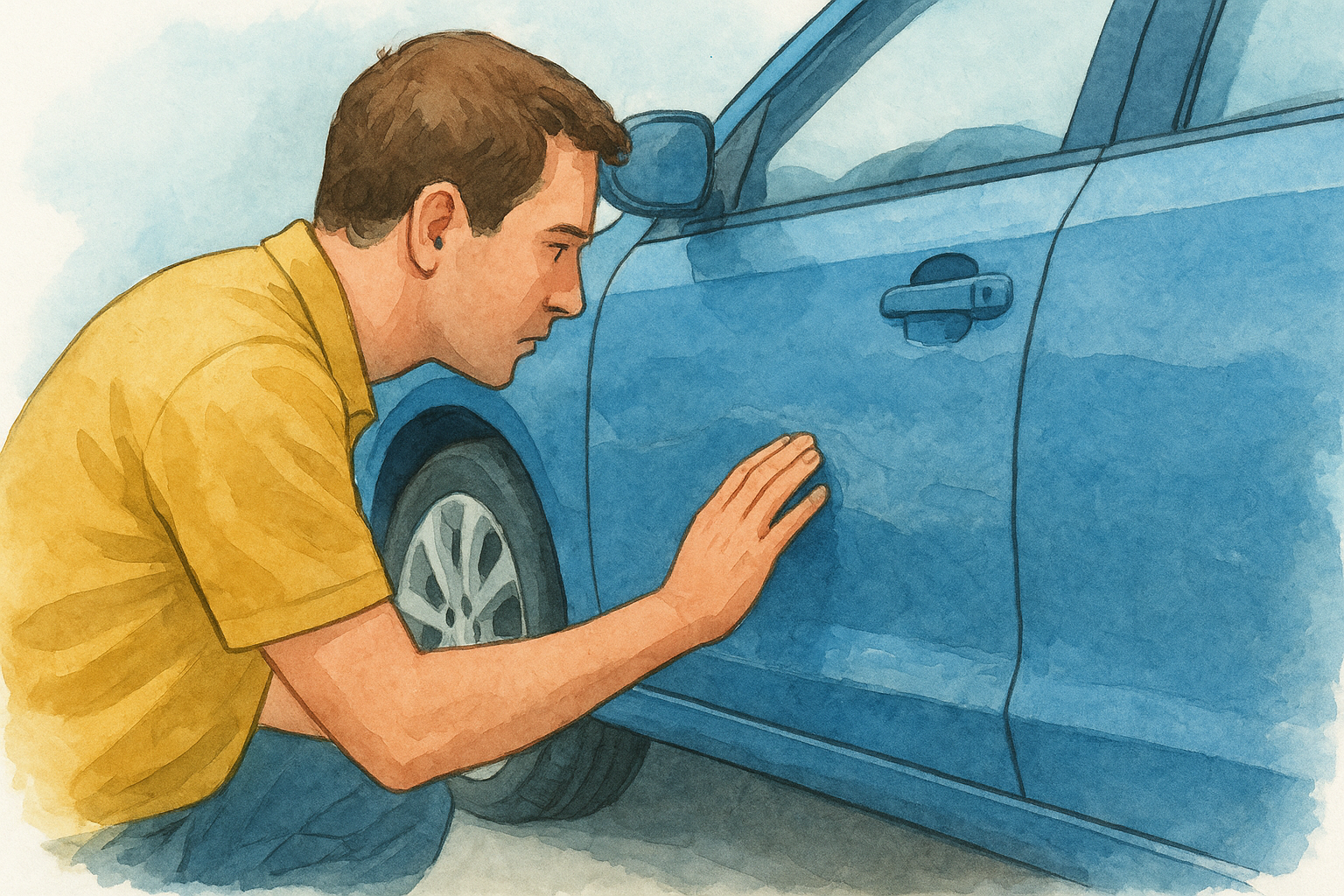
Check door shuts, the boot lip, and the inner edges of the bonnet for overspray, as painters frequently miss these areas when masking a car for a respray.
What uneven gaps and mismatched paint suggest
Crouch down and look at the gaps between adjacent panels, such as the bonnet and wings, or the doors and sills. Factory gaps are consistent from one side of the car to the other. Uneven or tapered gaps on one side compared to the opposite side indicate that a panel has been replaced or that the car's structure has been bent and pulled back into approximate shape.
Where sellers hide damage and what to check there
Pay particular attention to the front and rear bumper corners, the lower sills, and the wheel arch lips. These areas absorb minor impacts regularly and sellers often touch them up rather than carry out proper repairs. Probe any bubbling paintwork around arch lips with your fingernail; if the surface feels soft, corrosion or filler sits underneath.
10. Check tyres, wheels and brakes basics
Tyres, wheels, and brakes are the three components most directly responsible for keeping you safe on the road, and they are also among the most expensive to replace. Checking them carefully is a practical part of knowing what to look for when buying a used car, and the inspection itself takes only a few minutes at the roadside.
Tread depth, age codes and uneven wear
UK law requires a minimum tread depth of 1.6mm across the central three-quarters of the tyre and around its full circumference. Use a tread depth gauge or the 20p coin test to check each tyre individually. Beyond depth, look at the age code moulded into the sidewall, shown as a four-digit number indicating the week and year of manufacture. Tyres older than six years carry increased blowout risk regardless of remaining tread.
Uneven wear across the width of a tyre, heavier on one edge than the other, points to incorrect tracking or suspension wear that will cost you money to correct.
Wheel damage and what it implies for alignment
Kerbed alloys are cosmetic, but buckled or cracked wheels indicate harder impacts that can disturb wheel alignment and stress suspension components. Run your hand around the inner rim of each wheel and feel for ripples or flat sections, which are harder to spot visually from the outside.
Brake feel and visual checks you can do on-site
Look through the wheel spokes and check the brake disc thickness and rotor surface for deep scoring or rust grooves. Thin discs and heavy scoring mean an imminent replacement. Ask the seller to confirm whether the brake pads have been checked recently, and note any pulling or vibration during your test drive as a follow-up indicator.
11. Check under the bonnet for leaks and fluids
Lifting the bonnet takes thirty seconds and reveals more about a car's maintenance history than most sellers expect. Fluid levels, residue marks, and general engine bay condition tell a direct story about how the previous owner treated the car. Knowing what to look for when buying a used car includes reading these physical signs before you agree on anything.
Oil, coolant and brake fluid checks that matter
Pull the oil dipstick, wipe it clean, reinsert it fully, and pull it again for an accurate reading. The oil level should sit between the marked minimum and maximum lines and appear dark amber rather than black or gritty. Milky or frothy oil on the dipstick or around the inside of the filler cap points to coolant mixing with engine oil, which is a classic indicator of a blown head gasket.
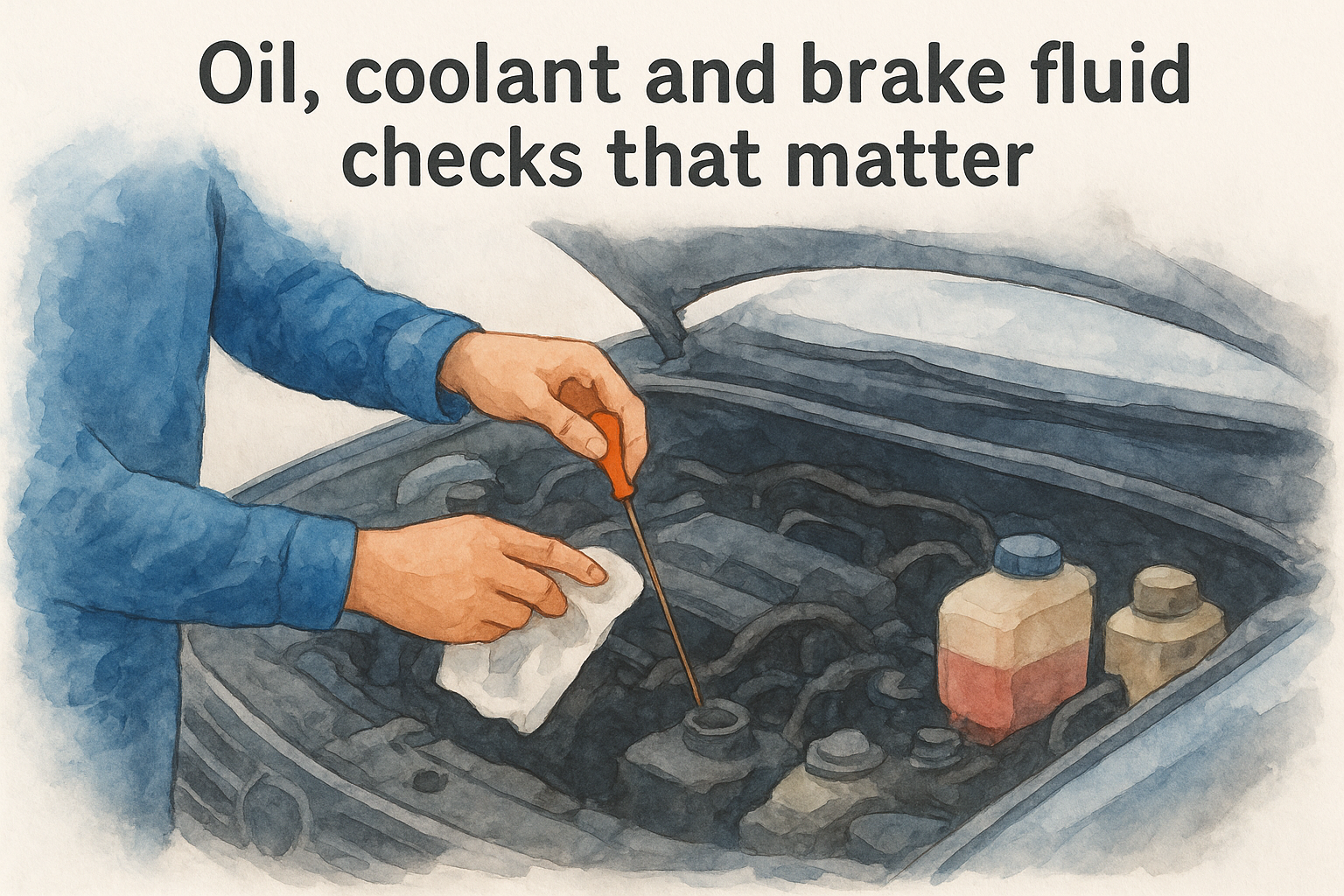
Check the coolant reservoir level against the marked lines and confirm the fluid looks clean rather than rusty or cloudy. Verify the brake fluid level sits within the acceptable range on the translucent reservoir before moving on.
Leaks, smells and residue to take seriously
Scan the engine bay floor and underside for fresh oil patches or dried residue trails. Multiple stains spread across the underside suggest ongoing fluid loss rather than a single minor seal weep. Oil burning on a hot exhaust produces an acrid smell that persists at idle, and any odour of this kind points to gasket or seal failures worth investigating properly.
If you detect a burning oil smell during the test drive, treat it as a structural mechanical concern rather than a routine maintenance item.
Signs of overheating or poor maintenance
Look for white crusty residue around the coolant cap and expansion tank, which points to repeated pressure loss in the cooling system and a history of overheating. Cracked rubber hoses and perished auxiliary belts visible in the engine bay signal irregular servicing, and replacing these components once they fail adds real cost that you should factor into your offer.
12. Check interior wear, electrics and warning lights
The interior is one of the hardest things to fake over time. Genuine low-mileage cars show light wear on high-contact surfaces, while heavily used vehicles reveal their true history through worn fabrics, plastics, and controls. Knowing what to look for when buying a used car means reading these physical signals before you make any commitment.
Interior condition versus claimed mileage
Driver's seat bolsters and steering wheel rims wear faster than almost any other surface inside a car. Heavy cracking or flattening on a vehicle claiming modest miles is a direct signal that the odometer does not tell the full story. Check these specific areas for wear that outpaces the claimed mileage:
- Driver's footwell carpet and pedal rubbers, which thin and compress under frequent use
- Seat fabric and base foam, which flatten noticeably on the driver's side at high mileage
- Gear knob and handbrake grip, which smooth off with prolonged handling
Electrical features you should test quickly
Work through every electrical feature methodically during your visit: windows, mirrors, heated seats, air conditioning, and the audio system. Sellers rarely volunteer known electrical faults, yet repairs are consistently expensive. Pay particular attention to central locking and the boot release mechanism, as both fail gradually and often signal deferred maintenance across the whole car.
If the seller rushes your interior checks or discourages you from testing specific features, treat that as a deliberate attempt to conceal a fault.
Dashboard lights and what normal start-up looks like
Turn the ignition to position two before starting the engine and watch the instrument cluster warning lights illuminate briefly before extinguishing. Any warning that remains on after the engine fires, particularly the engine management, oil pressure, or battery light, points to an undisclosed problem.
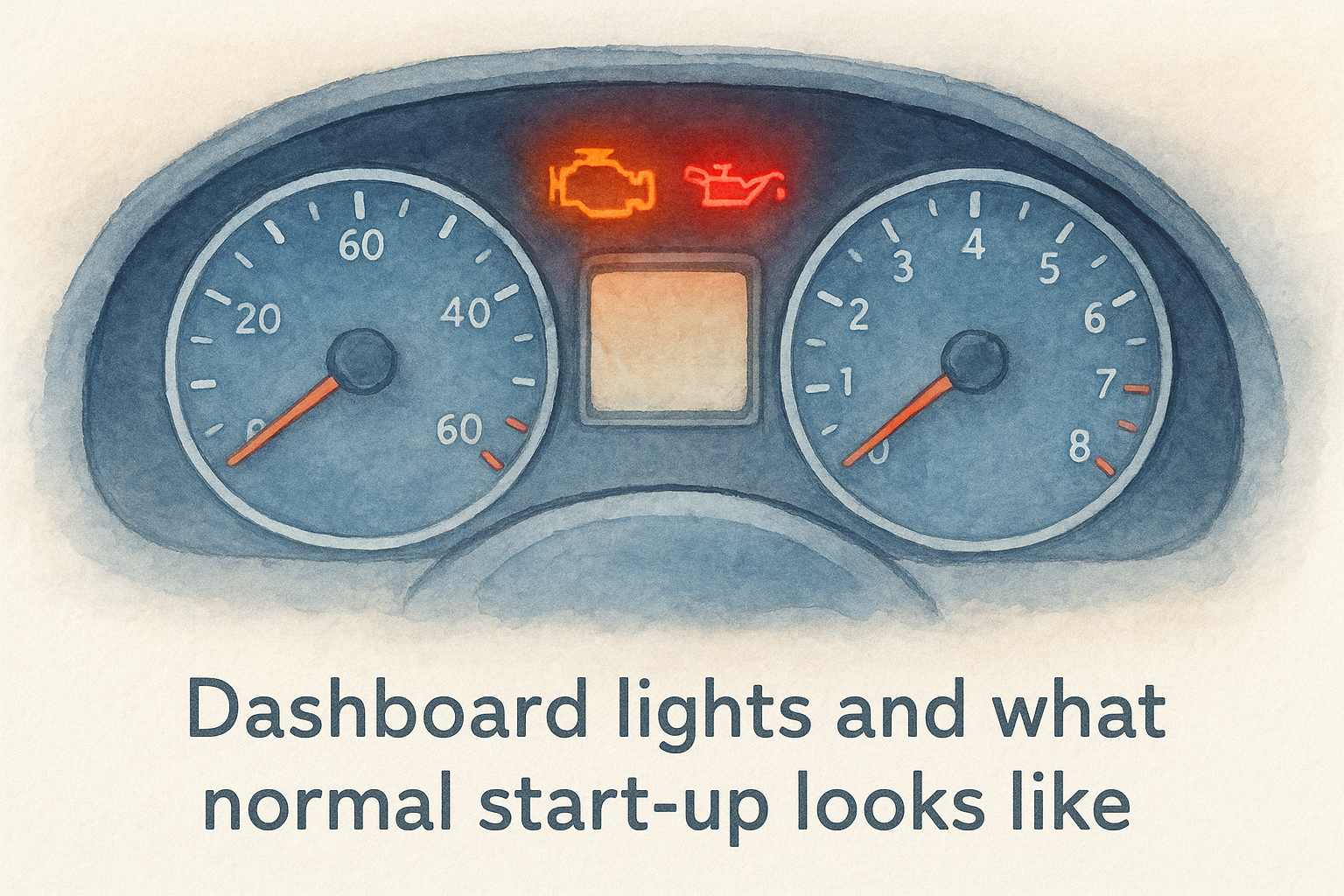
Confirm with the seller whether any persistent warning light has been investigated recently. A seller who dismisses a lit warning symbol as unimportant is either uninformed about the vehicle or actively avoiding the conversation, and neither outcome works in your favour.
13. Spot rust, corrosion and underbody damage
Rust is one of the most underestimated risks when thinking about what to look for when buying a used car. The UK's combination of wet winters and road salt accelerates corrosion far more aggressively than in drier climates, and bodywork that looks presentable from the outside can be quietly rotting underneath. Catching this early saves you from expensive repairs or, worse, a car that fails its next MOT.
Rust hotspots on common UK cars
Focus your inspection on the areas that corrode first and fastest on UK roads. Check the wheel arch lips and sills closely, as these trap moisture and road debris constantly. Also inspect the lower edges of all four doors, the boot floor, and the area directly behind the rear wheels. Bubbling or blistering paint on these surfaces usually means active corrosion underneath the surface coat rather than a cosmetic issue you can ignore.
Underbody checks you can do without a ramp
You do not need specialist equipment to check the underside. Crouch beside each corner of the car and look under the sills and wheel arches with a torch. Tap the sill sections with your knuckle; a hollow or crumbling sound instead of a solid knock tells you the metal has corroded through internally. Also check the spare wheel well in the boot, as water pools there and rust takes hold quickly in that enclosed space.
If the seller has applied fresh underseal recently, ask why, as it is a common method used to conceal deteriorating metal beneath a clean-looking surface.
When corrosion becomes an MOT and safety issue
Rust on structural components such as chassis rails, sill sections, and subframe mounting points causes MOT failures, not just cosmetic deductions from your offer. A tester can fail a vehicle for corrosion within 30cm of a suspension or steering mounting point, which puts these failures firmly in safety-critical territory. Factor full repair costs into your negotiation, or walk away if the extent of damage is unclear without a ramp inspection.
14. Test drive for engine, clutch, gearbox and steering
A test drive is not optional when figuring out what to look for when buying a used car. Physical and digital checks tell you the legal and historical picture, but only driving the car reveals how it actually performs under normal conditions. Insist on a test drive of at least 15 to 20 minutes across a mix of road types, including a dual carriageway if possible.
Cold start checks and idle behaviour
Ask the seller to leave the car cold for your visit. A cold start exposes problems that disappear once the engine warms up and tolerances change. Listen for rattles, tapping, or rough idle in the first 30 seconds; a healthy engine settles to a smooth, consistent idle quickly. Excessive smoke from the exhaust on start-up, particularly blue or white smoke, points to oil burning or coolant loss.
If the seller refuses to let you be present for a cold start, treat that refusal as a deliberate attempt to hide a fault that only presents when the engine is cold.
How to assess clutch bite, gear changes and slip
Find the clutch bite point early in the drive on a gentle slope. A bite point that sits very high in the pedal travel suggests a worn clutch approaching the end of its life. Run through all gear positions including reverse, and pay attention to any crunching, resistance, or refusal to engage cleanly.
Steering, suspension and braking behaviour on the road
Drive over varied road surfaces and listen for knocking or clunking from the suspension, which points to worn bushes or ball joints. Check that the steering sits naturally straight without pulling to one side, and test the brakes firmly at a safe speed to confirm they stop the car in a straight line without vibration or pulling.
15. Review service history and key maintenance jobs
Service history gives you the clearest picture of how a previous owner treated a car over time. When considering what to look for when buying a used car, a thick folder of genuine stamped receipts consistently tells a more trustworthy story than a verbal assurance that the car has been "well looked after."
What counts as good service evidence
Good service evidence means dated stamps from recognised garages or franchised dealers matched by invoices that show what work was actually done. Stamps alone without supporting receipts are easy to falsify, so ask to see both. Digital service records from manufacturer portals are increasingly common and harder to fake than paper stamps, making them particularly reassuring when they align with the MOT mileage history.
Major jobs to confirm by mileage and age
Certain maintenance items carry serious consequences if missed. Confirm these key jobs before agreeing on any price:
- Cambelt or timing chain service at the manufacturer's recommended interval, as a snapped belt typically destroys the engine entirely
- Coolant flush and thermostat check, which most manufacturers specify every four to five years regardless of mileage
- Brake fluid change, recommended every two years across most makes
- Spark plug replacement on petrol engines at the correct mileage interval
A Vehiclepedia MOT history check cross-references recorded mileages against service stamps, helping you identify gaps where scheduled maintenance should have taken place.
How to price missing history into your offer
Missing history is not automatically a dealbreaker, but it is always a direct negotiating point. Calculate the cost of overdue service items and deduct that figure from your opening offer. If the cambelt record is absent on a high-mileage car, factor in the full replacement cost, which can reach several hundred pounds on many common engines.
16. Pay safely and complete the DVLA transfer
The final stage of knowing what to look for when buying a used car is ensuring the handover itself is secure. Rushing through payment and paperwork at this point can undo every check you have done up to now, so treat this step with the same care as the inspection.
Safe payment methods and paperwork to request
Use bank transfer rather than cash for any significant purchase, as it creates a traceable record you can reference if a dispute arises later. Request a signed receipt from the seller that includes the sale price, the date, both parties' full names, and the vehicle registration number. Also collect the V5C new keeper slip at the point of handover and confirm all details match what you verified earlier.
Never hand over payment before the V5C is physically in front of you and every detail aligns with what the official records showed.
How to complete the keeper change correctly
Notify the DVLA of the keeper change online at GOV.UK using the new keeper slip immediately after the purchase. The seller should separately notify the DVLA using their own section of the V5C logbook. You will receive a new V5C in your name within five working days. Hold onto the new keeper slip as proof of ownership until the updated document arrives.
Insurance and road legality before you drive away
Arrange valid motor insurance before you drive the car away from the seller's location. Driving without insurance is a criminal offence in the UK, regardless of how short the journey home is. Road tax does not transfer to a new keeper, so you must also purchase a valid tax period before using the car on a public road, which you can complete online using the new keeper slip reference number.
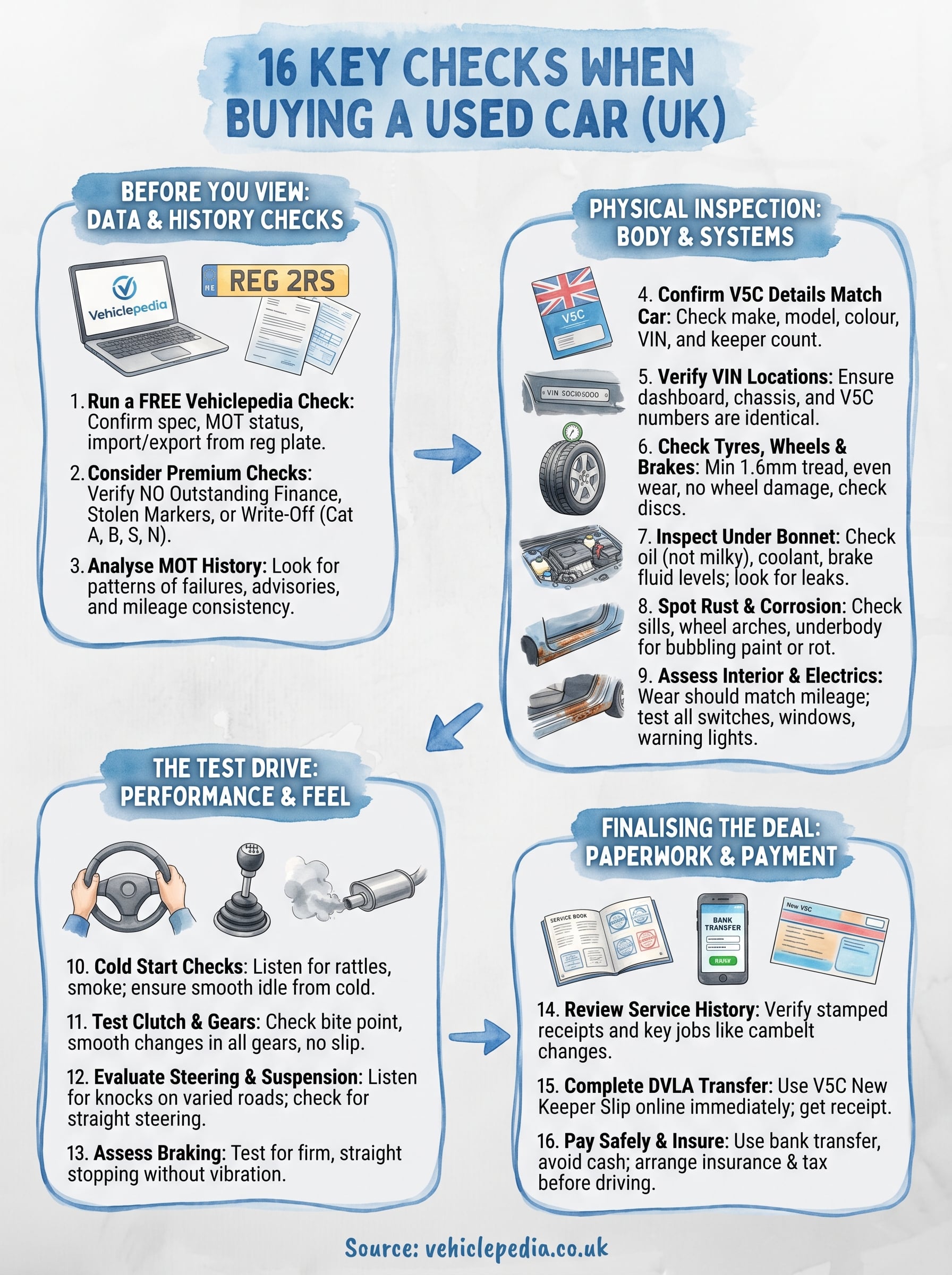
Next steps before you buy
You now have a complete picture of what to look for when buying a used car, from the first history check right through to the DVLA transfer. Every check on this list exists to protect your money and keep you legally safe, and none of them take more than a few minutes to complete. The sellers most likely to object to a thorough inspection are the ones you most need to walk away from.
Start with the data before you start with the drive. Running a vehicle history check costs nothing for the core details and takes under a minute to return results that could save you thousands. If the check raises questions, investigate them before viewing the car in person rather than after. You can view a sample Vehiclepedia premium report to see exactly what a full check covers before you commit to a purchase.